All inclusive service
No hidden fees

Prices from £19.99
Review More Prices
Your privacy is important, Prescription Doctor are committed to keeping your details completely confidential.
This is why we also take steps to conceal your prescription products under two layers of packaging.
We have a commitment to delivering a discreet service and understand your need for privacy. We ship all orders via a trackable courier using discreet, plain packaging.
Once your order is dispatched you will receive a tracking number via sms and email.
We deliver medications between Monday and Saturday. You can upgrade to Saturday delivery on Friday.
You should receive a tracking number with your order which you can use this number to track your parcel online. This should give you a clear indication of where your parcel is. If you haven’t received your parcel in the time frame given by our couriers, contact your local depot to find out where it is. You can also contact our support team who will do this for you.
On checkout you will be asked to leave your mobile number so our courier can text you about the delivery. This is also useful if the courier has problems finding your address. We will not use your mobile number for anything else.
You can pay for your order using credit, debit card or via bank transfer.
If you don’t have a credit or debit card you can pay via bank transfer. We will give you a unique reference number at checkout along with details of how to make the transfer. Once the money has cleared in our account, we will process your order.
We are a completely secure site and take many measures to ensure your details are kept safe. We understand that you have a right to extreme privacy when purchasing sensitive health medications. All information that you provide to us is stored on our secure servers. Any payment transactions will be encrypted using SSL technology.
You can pay for your order using credit, debit card and bank transfer.
Card Payment: Please notify us that you wish to cancel your order. Your refund will show available In 1 - 3 days.
Bank Transfer: A member of our team will contact you requesting for your bank details. These details are only used to transfer the funds back into your account.
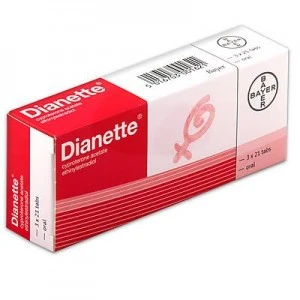
Dianette is a prescription medicine used to treat moderate to severe acne linked to androgen sensitivity and hirsutism (excessive hair growth) in women of reproductive age. For acne, it's usually prescribed only after topical treatments and oral antibiotics have failed to control the condition. The medication contains the active ingredients cyproterone acetate and ethinylestradiol, a combination commonly known as co-cyprindiol.
Although Dianette also works as a combined hormonal contraceptive, it carries a higher risk of blood clots (venous thromboembolism) than levonorgestrel-containing combined pills. For this reason, it shouldn't be prescribed for contraception alone – more appropriate alternatives are available where contraception is the sole aim. Dianette has a similar risk of thromboembolism as desogestrel (the active ingredient in Cerazette and Cerelle), gestodene (in Femodette and Femodene), or drospirenone (found in Lucette and Yasmin).
Seek advice from your prescriber before starting Dianette to check it's the right option for you.
Acne is one of the most common inflammatory skin conditions in the UK, affecting most people at some point in their lives. While it commonly begins during puberty, it can persist or develop well into adulthood. Indeed, research suggests it affects up to 12% of women and 3% of men over the age of 25.
A bacterium called Cutibacterium acnes (C. acnes) feeds on this excess sebum and multiplies. As the bacteria proliferate, they produce fatty acids and other substances that irritate the skin and trigger inflammation, causing the characteristic red spots and blemishes.
Hormones play a major role. Androgens such as testosterone promote sebum production, which is why acne is common during puberty and can flare during certain phases of the menstrual cycle, early pregnancy, or in conditions like polycystic ovary syndrome (PCOS).
Dianette works through its two active ingredients, targeting different aspects of androgen-related skin conditions:
Overall, by reducing sebum levels, Dianette deprives C. acnes of its primary food source, which indirectly reduces bacterial counts and the resulting inflammation.
However, Dianette doesn't have direct antibacterial activity. It targets the underlying hormonal causes of excess sebum rather than the bacteria themselves.
The time it takes Dianette to start working varies from person to person. Studies show that some women notice a reduction in acne after just one 21-day treatment cycle. For most women, it takes at least 3-4 months of treatment before you see significant improvement. Your clinician will review your progress to ensure Dianette remains the right treatment for you.
For women with an excess of androgens (male sex hormones), Dianette is considered a highly effective treatment for acne. Clinicians will weigh the benefits of this medication against the potential risks before deciding to prescribe it. Several clinical studies have assessed Dianette's effectiveness.
One open-label study (where participants know what they received) of 890 women with varying severities of facial acne gave them six cycles of co-cyprindiol. A 'good' or 'very good' therapeutic response, defined as a total lesion count reduction of more than 50%, was seen in 82.8% of patients. A similar response was seen across all acne severities. By the end of the study, 64.3% of women displayed a lower clinical grade of acne.
Another multi-centre study of 133 women aimed to compare the effectiveness of cyproterone acetate/ethinylestradiol with a standard combined oral contraceptive pill. After only 4 months of treatment, the patients using cyproterone acetate/ethinylestradiol had a significantly greater reduction in the number of acne lesions compared to the standard oral contraceptive group. By the end of the sixth treatment cycle, the average reduction in lesions was 70% in the cyproterone acetate/ethinylestradiol group, compared with 35% in the standard oral contraceptive group.
Whilst clinical studies have demonstrated the effectiveness of Dianette, research has also highlighted the need for caution given an increased risk of potentially serious side effects when compared to levonorgestrel-containing contraceptive pills. As such, Dianette should not be used solely as a contraceptive and should be discontinued 3 months after acne has been controlled. Further discussion of the risks and side effects of Dianette use can be found below.
Dianette is taken as a once-daily tablet to help bring acne or hirsutism under control. Each strip contains 21 tablets, marked with the days of the week.
If you're starting Dianette for the first time, take your first tablet on day one of your next period. Continue with one tablet daily for 21 consecutive days, then take a 7-day tablet-free break, during which you'll normally have a withdrawal bleed. Begin your next strip on day 8, even if the bleed hasn't fully finished.
Starting on day one of your period means contraceptive protection kicks in from the first tablet and carries through the 7-day break, provided you've taken the previous strip correctly. Bear in mind this contraceptive effect is incidental to Dianette's role as an acne treatment – it shouldn't be prescribed for contraception alone.
For more information about switching from an alternative method of contraception, after a miscarriage, or after pregnancy, review the Patient Information Leaflet included with the medication.
If you are less than 12 hours late with a missed pill, take it straight away. You should then continue taking Dianette at the usual time, even if that means you take two pills in one day. Your contraceptive protection should not be compromised.
If you are more than 12 hours late with a pill or have missed more than one pill, your contraception may be reduced. Take your most recently missed pill as soon as you remember, even if that means you take two at once. Take a pill every day at the usual time for the next seven days. If you come to the end of the strip, start a new one without taking the usual seven-day break. You probably won't have a withdrawal bleed until the end of the second strip. If you don't have a bleed after you have finished the second strip, do a pregnancy test. Use barrier protection (condoms) for seven days after missing a pill.
If you have missed a pill from the first week of your strip (days 1 to 7) and you had sex in that week, you could become pregnant. Urgently contact your doctor or pharmacist.
If you have missed any pills and do not have a bleed in the first pill-free break, you may become pregnant. Contact your doctor or do a pregnancy test.
If you start a new strip late (a pill-free break longer than seven days), you may not be protected from pregnancy. If you have had sex in the last seven days, you may not be protected. Seek urgent advice from your doctor or pharmacist. You should use barrier contraceptives (condoms) for seven days.
More advice on missed or lost pills, and diarrhoea and vomiting, is available in the Patient Information Leaflet that comes with the medication.
Taking more than one pill is unlikely to be harmful. However, you may feel sick, vomit, or bleed from the vagina. Even pre-pubescent girls who accidentally take Dianette may experience bleeding. Speak to your doctor if you have taken too many Dianette pills.
Once your acne has cleared, it's generally recommended to stop taking Dianette 3 months after it clears. Your prescriber should periodically review the need to continue treatment, typically around 6 months.
If you still need contraception after stopping Dianette, your prescriber can help you switch to a suitable alternative. Be aware that acne symptoms can return after stopping treatment; your prescriber can advise on next steps if this happens.
You should also stop taking Dianette if you are planning to become pregnant. It is best to use another method of contraception until you have had a proper period, as healthcare professionals rely on the date of your last menstrual period to tell when your baby is due.
Before taking Dianette for the first time, you should review the following important safety information. If you have any concerns or questions about Dianette, you should speak to your prescriber.
Like all medicines, Dianette can cause side effects, though not everyone will experience them. Nevertheless, it's a good idea to have a clear understanding of what you could expect before starting treatment.
Possible side effects of Dianette include:
Common (may affect up to 1 in 10 people) | Uncommon (may affect up to 1 in 100 people) | Rare (may affect up to 1 in 1,000 people) |
|---|---|---|
|
|
|
Please note that the above is not a complete list of possible Dianette side effects. More details can be found within the Patient Information Leaflet enclosed with the medication. If you experience any adverse reactions, you can report them to your clinician or use the MHRA's Yellow Card scheme.
Although they are uncommon, serious side effects can occur. If you experience any of the following, seek urgent medical attention:
You may need to stop taking Dianette. Speak to your doctor urgently for advice.
Combined hormonal contraceptives, including Dianette, have been linked to a small change in the risk of certain cancers. A very slight increase in breast cancer diagnoses has been observed among women who are currently using, or have recently stopped using, combined oral contraceptives. The excess risk appears to fade gradually after treatment stops, eventually returning to the baseline level observed in women who haven't used these medicines.
Long-term use of combined hormonal contraceptives has been associated with a small increase in cervical cancer risk in some studies. Some women have a small amount of unexpected bleeding or spotting while they are taking Dianette, especially during the first few months. Usually, this is nothing to worry about and will stop within a few days. You may also experience unexpected bleeding if you do not take your pills regularly. Speak to your doctor if bleeding or spotting continues beyond the first few months, starts after you've taken Dianette for a while, or continues after you have stopped taking Dianette.
Following a 2020 safety review, Dianette's product information was updated to include a warning about meningioma – a type of tumour that develops on the membranes surrounding the brain and spinal cord. It should not be used in women with a current or previous meningioma. Seek medical attention straight away if the following symptoms occur:
If you have concerns about your cancer risk, discuss them with your prescriber before starting or continuing Dianette treatment.
Dianette carries a 1.5 to 2 times higher risk of venous thromboembolism (blood clots in the veins) compared with levonorgestrel-containing combined oral contraceptives. While the overall risk remains rare, it's an important safety consideration.
Your risk of venous or arterial blood clots may be higher with increasing age, if you smoke, are overweight, have high blood pressure, have a family history of blood clots, heart attack or stroke at a young age, have recently given birth, or have certain conditions such as PCOS, diabetes, high cholesterol, migraines, heart problems, sickle cell disease, or systemic lupus erythematosus.
Seek urgent medical help if you experience:
Although Dianette is an effective treatment for acne, it may not suit everyone. It could interact with other medicines or worsen existing medical conditions, so consider this carefully before you start taking it.
You must not use Dianette if you:
If you experience any of these conditions for the first time whilst taking Dianette, stop taking it and seek immediate medical advice.
Dianette may not be suitable for everyone. Before taking Dianette for the first time, tell your prescriber if any of the following apply to you:
Certain medicines can reduce Dianette's effectiveness, increase the risk of side effects, or cause unexpected bleeding. Dianette may also affect how other medications work. Always tell your prescriber about any medicines, supplements, herbal remedies, or over-the-counter products you're taking. Tell your prescriber if you are taking any of the following:
You should also inform your prescriber if you are taking medicines for the treatment of:
Dianette shouldn't be taken alongside certain hepatitis C antiviral combinations, particularly those containing ombitasvir, paritaprevir, ritonavir, dasabuvir, glecaprevir, pibrentasvir, sofosbuvir, velpatasvir, or voxilaprevir, as combining them can cause significant rises in liver enzymes. If you're being treated for hepatitis C, your prescriber will need to review your medication before starting or continuing Dianette.
Do not take Dianette if you are pregnant, planning on becoming pregnant, or are breastfeeding. If you think you may be pregnant, take a pregnancy test before you stop taking Dianette. For more advice on managing acne whilst you are pregnant, seek advice from your doctor.
Dianette is commonly prescribed for women with polycystic ovary syndrome (PCOS) who experience androgen-related acne or hirsutism. PCOS is a hormonal and metabolic disorder affecting women of reproductive age. Women with this condition also experience irregular periods, weight difficulties, and fertility changes. For more advice about PCOS, speak to your doctor.
Acne can return after stopping Dianette. If this happens, speak to your prescriber, who can discuss whether restarting treatment or trying an alternative treatment is appropriate. Over time, acne patterns can change, so you and your doctor should regularly review your treatment progress to ensure Dianette is still the right option for you.
For most women, Dianette can significantly reduce acne. However, as with any acne treatment, you may find it gets worse at first before you see improvement. If Dianette makes your acne worse, speak to your prescriber. They may recommend switching to an alternative treatment.
Yasmin is a combined oral contraceptive pill that is often recommended for its positive effects on reducing acne. Unlike Dianette, it is primarily licensed as a contraceptive. Both Dianette and Yasmin have a slightly increased risk of blood clots when compared to levonorgestrel-containing pills.
Ultimately, deciding which is best for you should involve discussing the benefits and risks of both with your prescriber. If your acne is severe, many prescribers recommend Dianette if other treatments, including hormonal ones, have failed.
Drinking alcohol in moderation is unlikely to impact the effectiveness of Dianette. However, be aware that heavy drinking may impact your ability to take pills properly and can increase your risk of vomiting. Always stick to the government recommendations of not exceeding 14 units of alcohol per week.
No. Dianette is a prescription-only medication that you can get from a licensed pharmacy after consulting a trained prescriber. This ensures Dianette is the right medication for you and that you can take it safely, taking into account your medical history and current medications.
Your doctor should review your treatment progress and continue to check that Dianette remains a suitable treatment option.
Yes, you can buy Dianette online from a reputable pharmacy such as Prescription Doctor, after a brief consultation to determine whether it suits your circumstances. You can complete this at any time from home, so there's no need for an appointment. Just answer a few short questions, and our team will take care of the rest.
Our specialist clinicians will review your information to decide if Dianette is safe and suitable for you to take. If so, we dispatch your order from our General Pharmaceutical Council-registered pharmacy in plain packaging for complete discretion. Orders approved before 3pm on a weekday are also eligible for next-day delivery.
Keep out of reach and sight of children. Do not store above 25°C. Do not use Dianette after the expiry date printed on the strip. Do not dispose of medicines down the drain or in the household waste. Your local pharmacist can help you to dispose of medication responsibly.
Sources
© 2013 - 2026 Al Muhsineen Limited. All Rights Reserved. Registered Pharmacy: 34 Halliwell Road, Bolton BL1 8RL. Registered Office: 254 First Floor, Shearbrow, Blackburn, England, BB1 8DS
Don't have an account?
Your account will be automatically created after placing your first order.