All inclusive service
No hidden fees

_0.webp)
Prices from £29.99
Review More Prices
Your privacy is important, Prescription Doctor are committed to keeping your details completely confidential.
This is why we also take steps to conceal your prescription products under two layers of packaging.
We have a commitment to delivering a discreet service and understand your need for privacy. We ship all orders via a trackable courier using discreet, plain packaging.
Once your order is dispatched you will receive a tracking number via sms and email.
We deliver medications between Monday and Saturday. You can upgrade to Saturday delivery on Friday.
You should receive a tracking number with your order which you can use this number to track your parcel online. This should give you a clear indication of where your parcel is. If you haven’t received your parcel in the time frame given by our couriers, contact your local depot to find out where it is. You can also contact our support team who will do this for you.
On checkout you will be asked to leave your mobile number so our courier can text you about the delivery. This is also useful if the courier has problems finding your address. We will not use your mobile number for anything else.
You can pay for your order using credit, debit card or via bank transfer.
If you don’t have a credit or debit card you can pay via bank transfer. We will give you a unique reference number at checkout along with details of how to make the transfer. Once the money has cleared in our account, we will process your order.
We are a completely secure site and take many measures to ensure your details are kept safe. We understand that you have a right to extreme privacy when purchasing sensitive health medications. All information that you provide to us is stored on our secure servers. Any payment transactions will be encrypted using SSL technology.
You can pay for your order using credit, debit card and bank transfer.
Card Payment: Please notify us that you wish to cancel your order. Your refund will show available In 1 - 3 days.
Bank Transfer: A member of our team will contact you requesting for your bank details. These details are only used to transfer the funds back into your account.
The Evra patch is a branded contraceptive treatment that releases hormones into the body through the skin to stop pregnancy from occurring.
Evra patches are a type of combined contraception because they contain synthetic versions of both oestrogen and progesterone. Specifically, they contain a progestogen called norelgestromin and an oestrogen called ethinylestradiol. Unlike the combined pill, which is usually taken daily, Evra transdermal patches are replaced weekly, followed by a 7-day break, which can make them a more convenient option for some people.
The patch is more than 99% effective when it is used correctly, but when typical use is considered, such as forgetting to change the patch, the NHS states it is closer to being 91% effective. This means that each year, 9 out of 100 people who use the patch will get pregnant.
While there are several combined oral pills available to help prevent pregnancy, Evra is the only contraceptive patch that is licensed in the UK.
Evra patches work similarly to the combined pill, except they are applied to the skin each week rather than swallowed as a tablet every day. The patches are approximately 4.5 cm by 4.5 cm and contain a synthetic oestrogen and progestogen, which are released through the skin into the body.
These hormones work together to stop pregnancy by:
This three-pronged action of ovulation prevention, thinning of the womb lining, and sperm inhibition greatly reduces the chances of becoming pregnant, provided the Evra patch is used correctly.
Evra patches start working immediately to prevent pregnancy if you start using them on day 1 of your period (when you experience your first bleed that month). Should you decide to begin on any other day, it’s recommended to speak to a clinician about temporarily using additional non-hormonal forms of contraception.
Evra patches are applied to the skin each week for 3 weeks, followed by a patch-free week, during which you should get a withdrawal bleed similar to a period.
To apply the patch, you should:
Evra patches should be worn for exactly 7 days before being removed and replaced with a new one. Repeat this process for a further 2 weeks until you reach day 21. From days 22 to 28, do not wear a patch. You should experience a withdrawal bleed at this time.
Once the patch-free week has ended (on day 29), apply a new patch and continue the process. You should do this even if you are still bleeding. It’s important to rotate your application site every week to avoid skin irritation.
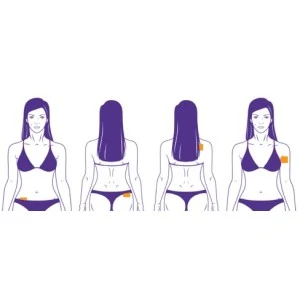
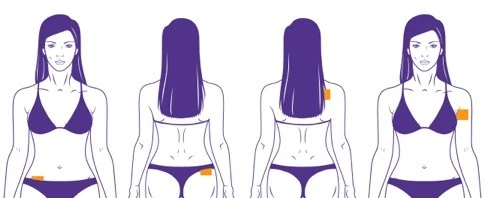
Evra patches should be applied to a clean, dry, hair-free area of the skin that is not rubbed by tight clothing, and never on your breasts. Suitable areas are:
You should apply the patch exactly as instructed by a clinician.
While wearing an Evra contraceptive patch, you can shower, exercise, and swim as normal without the patch coming off. You should check that the patch is still in place after participating in any of these activities.
It’s recommended to start using Evra transdermal patches on day 1 of your period (when you first notice a bleed), as this will ensure you are protected from pregnancy immediately. If you begin on any other day, speak to your clinician about temporarily using a non-hormonal form of contraception (such as condoms).
If you switch to Evra from a combined contraceptive pill, you should:
If you switch from a progestogen-only or mini pill to Evra, you should:
Evra patches can also be applied for extended use to delay your period. If you use it in this manner, you will wear an Evra patch for 9 weeks, followed by a patch-free break of 4 or 7 days. However, this is called a tailored regimen and considered off-label use because it does not follow the prescribed patch instructions.
If you’re thinking about using Evra patches in this way, you should consult your clinician before commencing treatment. Other medications are available to delay your period.
Should the patch become loose, lift at the edges or fall off, you should not try to re-stick it with tape. If it does come away completely, your next course of action depends on how long it has been missing.
If you forget to change your patch:
At the start of a patch cycle (day 1)
In the middle of your patch cycle (week 2 or 3) and up to 48 hours late
In the middle of your patch cycle (week 2 or 3) and 48 hours or more late
At the end of your patch cycle (week 4)
If you forget to remove your patch:
You can stop using the Evra patch whenever you want, with no need to “wean” yourself off it. Some people have reported experiencing irregular or little-to-no menstrual bleeding when ceasing treatment. This is particularly the case within the first 3 months of stopping, or if their periods were irregular before starting Evra.
| Feature | Evra patch | Combined pill |
|---|---|---|
| Active ingredients | Versions of oestrogen and progestogen | Versions of oestrogen and progestogen |
| Usage | One patch is applied weekly for three weeks, followed by a one-week break | Daily or with a 7-day break (depending on treatment) |
| Benefits | Can be easier to remember for some people. Efficacy is not affected by sickness and diarrhoea | A reversible method of contraception which can reduce period pain, improve acne, and regulate menstruation |
| Convenience | Once-weekly application, but may be visible on the skin | Involves daily use, but it is not noticeable |
| Blood clot risk | 6 to 12 people out of 10,000 per year | 5 to 7 people out of 10,000 per year |
If the Evra patch is used correctly, it is more than 99% effective at preventing pregnancy. However, with typical use, such as forgetting to change the patch, it is closer to 91% effective, meaning 9 out of 100 people will get pregnant each year using the Evra patch.
Compliance with the method of contraception can play a key role in its efficacy. One study found that people were more likely to comply with the contraceptive patch than the combined pill.
Although the Evra transdermal patch is considered safe and well-tolerated, side effects or other adverse reactions can still occur. Having a clear understanding of what you may experience is crucial before commencing treatment, so we recommend familiarising yourself accordingly. If you have any questions, our specialist clinicians are happy to help.
Like any medication, the Evra patch can have potential side effects, although not everyone experiences them. Possible Evra patch side effects include:
Very Common/Common Side Effects (may affect up to 1 in 10 people) | Uncommon Side Effects (may affect up to 1 in 100 people) | Rare Side Effects (may affect up to 1 in 1,000 people) |
|---|---|---|
| Acne or skin rash Breast pain or tenderness Breast enlargement/lumps Changes in menstrual bleeding Diarrhoea Dizziness Feeling tired or unwell Headaches Migraine Mood changes Muscle spasms Nausea Skin irritation Stomach ache Thrush Weight gain | Abnormal breast milk production Allergic reaction Eczema or skin redness Hair loss High blood fat levels High blood pressure Increased appetite Loss of interest in sex Premenstrual syndrome Sensitivity to light Sleep issues Vaginal dryness Water retention | Abnormal taste Anger or frustration Blood clots Fluid retention Gallstones Increased interest in sex Issues wearing contact lenses Itchy skin Severe allergic reaction Vaginal discharge |
Please note that this is not a complete list of potential Evra patch side effects. More details can be found within the Patient Information Leaflet that comes with the medication.
You should discuss any concerns about side effects with a healthcare provider. Alternatively, you can report any Evra side effects to the Medicine and Healthcare products Regulatory Agency’s (MHRA) Yellow Card Scheme.
Like all combined contraception methods, there is a slightly increased risk of developing a blood clot when using Evra. This risk may be higher than with some combined pills.
Potential signs of a blood clot include:
The table below outlines the possible risks of developing a blood clot when using combined contraception:
Category | Risk of developing a blood clot in a year |
|---|---|
People who are not using a combined pill/patch/ring and are not pregnant | About 2 out of 10,000 people |
People using a combined pill containing levonorgestrel, norethisterone, or norgestimate | About 5 to 7 out of 10,000 people |
Evra users | About 6 to 12 out of 10,000 people |
It’s important to note that the overall risk of a blood clot occurring while administering the Evra patch is still low, although it is at its highest when in the first year of treatment or if you’re restarting combined contraception after a break of 4 weeks or more. The risk also increases if you:
When you stop using Evra transdermal patches, your risk of a blood clot returns to normal within a few weeks. If you have any concerns, please speak to your clinicians before starting the medication.
While breast cancer has been discovered in more women who take combined contraceptives such as Evra patches, it is unknown whether this is caused by the treatments themselves or because individuals using the medication are examined more often, so there is a better chance of the condition being spotted.
After stopping combined contraceptives for 10 years, the additional risk of developing breast cancer will be the same as that of people who have never taken the medications.
Evra patches are intended for people aged 18 to 45, but may not be suitable for everyone. You should not use Evra contraceptive patches if you:
Before using Evra patches, you should let a clinician know if you are:
The Evra patch may be less effective for people who weigh over 90 kg. It is important you let your clinician know if you are more than 90 kg, as they may suggest an alternative method of contraception.
While most combined oral contraceptives contain lactose, Evra transdermal patches do not. This may make the treatment more suitable for people with certain sugar intolerances. Always consult a clinician before starting a new treatment.
Before using the Evra patch, you should tell the clinician if you are taking any other prescribed, over-the-counter, or herbal medicines.
Do not use Evra if you have hepatitis C and are taking any medicines that contain:
Some medicines can also stop Evra patches from working properly. These include:
Evra can also make these medications less effective:
Most antibiotics are considered safe to use with Evra transdermal patches and will not interfere with their effectiveness. The main exceptions to this rule are rifampicin and rifabutin, which impact enzymes in the liver.
Evra patches should not be used if you are or think you may be pregnant. If you fall pregnant while using the medication, stop it straight away and speak to a clinician. You should also seek medical advice if you’re planning to have a baby before commencing treatment.
Do not use Evra patches if you are currently breastfeeding or plan to do so. If you are considering contraception while breastfeeding, speak to a clinician or midwife about suitable options.
Yes, Evra transdermal patches are considered combined contraceptives, as they contain two active ingredients that work together to prevent pregnancy. Ethinylestradiol (oestrogen) and norelgestromin (a progestogen) mimic naturally occurring hormones in the body and are released into the body through the skin.
Yes, the Evra patch can be used to delay periods. If you’d like to do this, apply a patch at the beginning of week 4 (day 22) instead of taking the 1-week break. You may experience light or breakthrough bleeding. Do not wear more than 6 patches in a row (more than 6 weeks).
When you’ve worn 6 patches, do not apply one in week 7. Take a 7-day break, then apply a new patch and restart the cycle, using this as day 1. Always consult your clinician before deciding to delay your period. Other treatments are also available for this purpose.
Yes, it is possible to apply a new Evra patch once a week without taking a break, a process known as continuous use. You won’t experience a withdrawal bleed with this method, but some bleeding may still occur. More personalised ways of using contraceptive patches are considered off-label and should always be approved by a doctor or clinician before you start.
The best place to put Evra patches ultimately depends on personal preference and what you find easiest. That being said, there are several guidelines you should follow. These include ensuring the site is clean, dry, and hairless, usually on the buttocks, upper back, upper outer arm, or stomach.
Avoid placing them where they’ll be rubbed by tight clothing or where friction will occur. Change the application spot each time to avoid skin irritation. Never apply Evra patches to the breasts.
Yes, acne is listed as a common side effect of Evra patches that could affect up to 1 in 10 women. This could just be the result of temporary flare-ups as your body gets used to the medication. If the condition does not clear after 3 months of use, consult a clinician, as they may recommend another form of contraception.
That said, the Evra patch could also improve the appearance of acne. A review of clinical studies found this to be the case and suggested it could be due to the patch's progesterone component, which doesn’t stimulate androgen (male hormone) receptors.
Although weight gain is listed as a potential side effect of Evra patches, there is no solid medical evidence to suggest that combined contraceptives cause weight fluctuations. If you do notice any changes, they will likely be caused by increased appetite or water retention rather than body fat.
If you are concerned about possible Evra patch side effects, speak to a doctor or clinician. You could also seek advice if you require support to lose weight.
No, you cannot buy the Evra patch over the counter. This is because it is classified as a prescription-only medication (POM) and must be prescribed by a doctor or other qualified prescriber to ensure it is safe for you to use. The decision is usually made by reviewing your medical history and any other treatments you are taking.
Yes, you can get the Evra patch on the NHS from places like GP surgeries and sexual health clinics. This would involve an in-person visit, which can put some people off. As a result, some women prefer the convenience and confidentiality of obtaining a private prescription online.
Yes, you can buy the Evra patch online from reputable pharmacies such as Prescription Doctor. You’ll begin with a brief questionnaire to provide information about your medical history and any other treatments you may be taking. Your details are then reviewed by a clinician to determine if your chosen medication is suitable for your circumstances.
If approved, your order is dispatched by our General Pharmaceutical Council-registered pharmacy in plain packaging. Next-day delivery is available for orders approved before 3pm on a weekday (excluding Bank Holidays).
Store Evra patches in their original container to protect them from moisture and light. Do not refrigerate or freeze, and ensure they are always kept out of the sight and reach of children or animals. Always check the expiry date on the label and do not use it after this point.
Information about how to dispose of the patches is on the Patient Information Leaflet. Special considerations are needed, as used patches will still contain active hormones.
Although Evra patches are effective in preventing pregnancy, they are not suitable for everyone. Alternative options are available, including the combined pill, mini pill, contraceptive ring, and condoms. If you’re unsure about which treatment is most appropriate for your circumstances, seek advice from a doctor or clinician.
At Prescription Doctor, we also have an emergency contraception service where you can order the morning-after pill.
Product Name: Evra Patch
Active Ingredient(s): Ethinylestradiol (Oestrogen) and norelgestromin acetate (Progestogen)
Manufacturer: Gedeon Richter Plc
Description: Evra Patches are applied directly to the skin and applied weekly to prevent pregnancy
Exemption: Subject to medical prescription. May not be suitable for anyone >90 kg.
Administration: Applied directly to the skin
Presentation: Patches
Available Strength: 203 micrograms/24 hours of norelgestromin + 33.9 micrograms/24 hours of ethinylestradiol per transdermal patch. One patch is applied weekly for three weeks
Application: Women over 18
Dosage: One patch every 7 days after 3 weeks, with a 7-day break
Alcohol Consumption: No influence
When Pregnant: Do not take. Speak to your doctor for further advice.
When Breastfeeding: Do not take. Speak to your doctor for further advice.
© 2013 - 2026 Al Muhsineen Limited. All Rights Reserved. Registered Pharmacy: 34 Halliwell Road, Bolton BL1 8RL. Registered Office: 254 First Floor, Shearbrow, Blackburn, England, BB1 8DS
Don't have an account?
Your account will be automatically created after placing your first order.