All inclusive service
No hidden fees

Prices from £15.99
Review More Prices
Your privacy is important, Prescription Doctor are committed to keeping your details completely confidential.
This is why we also take steps to conceal your prescription products under two layers of packaging.
We have a commitment to delivering a discreet service and understand your need for privacy. We ship all orders via a trackable courier using discreet, plain packaging.
Once your order is dispatched you will receive a tracking number via sms and email.
We deliver medications between Monday and Saturday. You can upgrade to Saturday delivery on Friday.
You should receive a tracking number with your order which you can use this number to track your parcel online. This should give you a clear indication of where your parcel is. If you haven’t received your parcel in the time frame given by our couriers, contact your local depot to find out where it is. You can also contact our support team who will do this for you.
On checkout you will be asked to leave your mobile number so our courier can text you about the delivery. This is also useful if the courier has problems finding your address. We will not use your mobile number for anything else.
You can pay for your order using credit, debit card or via bank transfer.
If you don’t have a credit or debit card you can pay via bank transfer. We will give you a unique reference number at checkout along with details of how to make the transfer. Once the money has cleared in our account, we will process your order.
We are a completely secure site and take many measures to ensure your details are kept safe. We understand that you have a right to extreme privacy when purchasing sensitive health medications. All information that you provide to us is stored on our secure servers. Any payment transactions will be encrypted using SSL technology.
You can pay for your order using credit, debit card and bank transfer.
Card Payment: Please notify us that you wish to cancel your order. Your refund will show available In 1 - 3 days.
Bank Transfer: A member of our team will contact you requesting for your bank details. These details are only used to transfer the funds back into your account.
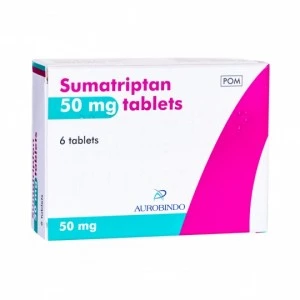
Sumatriptan is a prescription medication that is used to effectively treat migraine headaches. The active ingredient, sumatriptan, belongs to a group of medications called selective serotonin receptor agonists, also known as triptans. It is not a painkiller or preventative medication, but instead binds to serotonin receptors in the brain to relieve migraine symptoms.
Sumatriptan is available in tablet, nasal spray and injection form. It is also available as the branded form called Imigran. You can also buy sumatriptan in a 50 mg dose from a pharmacy after answering a few questions from a pharmacist and if you have a previous migraine diagnosis.
In addition to being prescribed for migraines, Sumatriptan is also commonly used to treat cluster headaches as an injection or nasal spray. These differ from migraines because they are defined by severe pain and recurring headaches that can affect one side of the head or around the eye. Sumatriptan tablets are not effective for cluster headaches.
Sumatriptan can also treat the associated symptoms of a migraine and cluster headache, including nausea, vomiting, and sensitivity to light and sound.
Sumatriptan works by activating serotonin receptors in the brain to narrow widened blood vessels. Although the exact cause of a migraine is unknown, it is believed that attacks involve altered nerve signalling, brain chemicals, and widened blood vessels. These changes can be triggered by stress, hormonal changes, or missed meals.
By binding to these receptors, sumatriptan relieves common migraine symptoms, including pain, nausea, and light sensitivity. Sumatriptan can only treat an active migraine attack; it cannot prevent a future one.
Sumatriptan tablets start working within 30 to 60 minutes of taking them. Research shows that 50% of people given a 50 mg sumatriptan tablet to treat a migraine were pain-free within 2 hours, and 43% were migraine-free.
No, sumatriptan is not a typical pain-relieving medication and will not help treat a common headache or regular tension headache. Regular headaches are usually caused by muscle tension or stress, not the specific serotonin or blood vessel changes that cause a migraine. Taking sumatriptan for a standard headache will not provide any benefits and can cause side effects.
A regular headache can often be relieved with over-the-counter painkillers, such as paracetamol or ibuprofen. If you regularly get headaches or they are concerning you, contact your doctor for advice.
Sumatriptan tablets are an effective and common migraine treatment. They work best when they are taken when migraine symptoms first appear. In a 2024 study comparing all of the licensed medications for treating a migraine, sumatriptan was found to be the third most effective at relieving pain within 2 hours.
An earlier review demonstrated that 50% of people given 50 mg sumatriptan tablets and 57% given the 100 mg dose were pain-free after 2 hours compared to 29% given a placebo, while 61% and 68% were pain-free after 4 hours compared to 30% on a placebo.
You must take sumatriptan tablets exactly as your clinician has prescribed. It is not recommended for anyone under the age of 18 or over 65 to take sumatriptan. The recommended dose is 50 mg of sumatriptan if you have a migraine attack, but some people may need a 100 mg dose. Your clinician will tell you which dose you need.
Take the sumatriptan tablet by swallowing it whole with water, as soon as the migraine attack begins. Do not break or chew the pill.
If your symptoms are not relieved after the first dose, do not take a second dose for the same attack. If your symptoms are reduced, but they return, you can take a second or third dose, as long as you wait at least 2 hours between doses. If you have a liver issue, your clinician may prescribe the 50 mg sumatriptan dose.
You must not take more than 300 mg of sumatriptan in any 24-hour period. That is equivalent to six 50 mg tablets or three 100 mg tablets.
How often you can take Sumatriptan tablets depends on whether your first dose reduces your migraine symptoms. If they do subside but return later, you can take a second or even third dose, as long as you wait at least 2 hours between doses.
Should your symptoms not be reduced after the first dose, you must not take a second dose for the same migraine attack. If you then experience a subsequent attack, you may take Sumatriptan again.
You can only take 300 mg of Sumatriptan in any 24-hour period. Do not exceed this recommended dosage amount, as it will not make your migraine symptoms any better, and you could put yourself at risk.
If you take too much Sumatriptan, you should immediately contact your clinician or doctor. You may also experience side effects of the medication, such as fainting, slowed heart rate, vomiting, and sleepiness.
If you forget to take Sumatriptan when your migraine starts and the attack has not subsided, you can take your prescribed dose as soon as you remember. If it's a subsequent dose you have forgotten, take it as soon as you remember, provided at least 2 hours have passed since your previous dose.
Remember that you should not take a second dose for the same attack if the previous one had no effect on your symptoms, and never take more than 300 mg of sumatriptan in a 24-hour period.
Like all medications, sumatriptan can cause side effects. It is important that you read the patient information leaflet provided with the medication to understand the potential adverse effects and cautions associated with taking sumatriptan. This will help you understand what to look out for and identify when you may need medical attention.
Sumatriptan can cause side effects, but not everyone will get them. They are usually mild and temporary, and can also be caused by the migraine itself. If you get any side effects that concern you, get worse, or do not go away, speak to your doctor for advice.
Some of the potential sumatriptan side effects are:
Common (may affect up to 1 in 10 people) | Rare (may affect up to 1 in 1,000 people) | Very Rare (may affect up to 1 in 10,000 people) |
|---|---|---|
|
|
|
Other common side effects of Sumatriptan tablets include:
These adverse reactions could be intense but generally pass quickly. If they continue or get worse (especially the chest pain), you should seek medical attention immediately.
More information regarding Sumatriptan side effects can be found within the Patient Information Leaflet that comes with the medication. You can also report any adverse reactions that you experience to your clinician or using the MHRA Yellow Card Scheme.
Most sumatriptan side effects are mild and will resolve within a few days. It takes 10 to 12 hours for sumatriptan to fully leave your system, so most people find their side effects resolve within this time. If they do not, or you are finding side effects difficult to manage, contact your doctor or pharmacist for advice.
Sometimes sumatriptan can cause an allergic reaction. If you get any of the following symptoms, get urgent medical help or, in an emergency, call 999 or go to A&E:
It's important to note that not all medications are equal. While they will all be effective for the condition(s) they are licensed to treat, they will not be suitable for everyone to take. Some may impact existing medical conditions, while others could interact with other medicines you are taking.
Do not use Sumatriptan tablets if you:
Before taking sumatriptan, tell the clinician if you:
Before taking sumatriptan, tell the clinician if you are taking any prescribed, over-the-counter, or herbal medications, as they may interfere with the effectiveness of sumatriptan or make it unsafe, or vice versa.
Tell the clinician if you are taking:
If you are pregnant, think you might be pregnant, trying to get pregnant, or are breastfeeding, speak to a doctor before taking sumatriptan. Although there is currently no evidence that sumatriptan increases the risk of birth defects, there is only limited information about the safety of sumatriptan for pregnant women. Your doctor will discuss whether or not sumatriptan is suitable for you.
If you are breastfeeding and your doctor agrees that you can take sumatriptan, it is important that you do not breastfeed your baby for 12 hours after taking it. If you express any breast milk during this time, throw it away and do not give it to your baby.
Some breastfeeding women report breast and/or nipple pain after using sumatriptan. The pain is usually temporary and disappears within 3 to 12 hours.
You can buy sumatriptan tablets in the UK with a private or NHS prescription from high street pharmacies, online pharmacies, and, in some cases, over the counter at a pharmacy. However, you will need to have a short consultation with a clinician, doctor, or pharmacist, and have previously been diagnosed with a migraine to get them.
Yes, you can buy sumatriptan over the counter at a pharmacy, but only in packs of two 50 mg tablets. You will need to speak to a pharmacist to confirm that you already have a migraine diagnosis and so that they can check it is safe for you to take.
If you require more than 2 tablets or a higher dose, you will need a prescription.
Yes, sumatriptan is available on the NHS, but you will need a prescription from a doctor to get it. Sumatriptan is available on the NHS as tablets, nasal sprays, or injections to treat migraines and cluster headaches. You will need to make an appointment with your doctor so that they can assess if sumatriptan is suitable for you.
Yes, you can buy sumatriptan online from registered UK online pharmacy services like Prescription Doctor. You will need to complete a short online consultation consisting of a medical questionnaire for our clinician to review and ensure the medicine is safe for you.
If it is, we will dispatch your medication in plain, discreet packaging to maintain your confidentiality, and you can receive it as early as the next day.
Although rimegepant and sumatriptan are both drugs used in the treatment of migraines, they belong to different classes of medication and work in different ways to provide migraine relief. Rimegepant is available under the brand name Vydura and is a newer gepant that works by blocking a protein called CGRP.
Sumatriptan is an older triptan that works by narrowing swollen blood vessels to relieve pain and other migraine symptoms, such as nausea and light sensitivity. However, sumatriptan is only suitable for treating an acute migraine attack, whereas rimegepant can treat and prevent future attacks. Sumatriptan is available as an oral tablet, nasal spray, or injection, whereas rimegepant is available as a dissolvable wafer.
Yes, it may be possible to take sumatriptan and sertraline together, but only under medical supervision. Both medications can increase serotonin levels, which has the potential to lead to a rare but serious condition called serotonin syndrome. A clinician will confirm whether it is safe for you to take sumatriptan and sertraline together.
Yes, you can take paracetamol while taking sumatriptan. Taking them at the same time does not cause a harmful interaction because they work in different ways. Some people take painkillers like paracetamol alongside their migraine medication to manage pain.
Yes, it is considered safe to take sumatriptan with ibuprofen. The two medications work in different ways. Sumatriptan works by narrowing the blood vessels around the brain, helping stop the migraine. Ibuprofen works by lowering swelling and blocking pain signals to help combat migraine pain.
No, there is no known interaction between sumatriptan and alcohol, and alcohol is not known to interfere with how the medication works. However, it is not recommended that you drink alcohol during a migraine attack or while taking sumatriptan, as this can intensify your symptoms or side effects.
Sumatriptan stays in the body for between 10 and 12 hours. Sumatriptan has a half-life of around two hours. This means the body will clear around half of the medication every two hours. This will continue until all the medication is gone.
No, sumatriptan does not cause weight loss and weight changes are not listed as a potential side effect of the medication. Sumatriptan is only taken as needed rather than as a daily medicine, so it is not likely to affect your weight. If you are losing weight unexpectedly while taking sumatriptan, contact your doctor.
Yes, sumatriptan does help treat nausea that can be part of a migraine attack. This is because sumatriptan treats the pain and the feeling of sickness and vomiting. However, sumatriptan is not a stand-alone treatment for nausea and should not be used for the treatment of other causes of sickness and nausea.
Yes, you can take sumatriptan on an empty stomach. You can take sumatriptan with or without food. However, you should take sumatriptan with a glass of water. Taking it without food may help the medication work faster, but if you experience nausea, it is fine to take it with food.
No, hair loss is not a listed side effect of taking sumatriptan. While some people report hair thinning while taking sumatriptan, there is no clear evidence that the medication causes hair loss. If you are concerned about hair loss while taking sumatriptan, speak to your clinician for advice.
Sumatriptan pills should be stored at room temperature. This should ideally be between 20°C and 25°C and below 30°C. Sumatriptan should be stored in a cool, dry place. Keep them in their original packaging until you are ready to use them. Always keep out of reach of children.
© 2013 - 2026 Al Muhsineen Limited. All Rights Reserved. Registered Pharmacy: 34 Halliwell Road, Bolton BL1 8RL. Registered Office: 254 First Floor, Shearbrow, Blackburn, England, BB1 8DS
Don't have an account?
Your account will be automatically created after placing your first order.