All inclusive service
No hidden fees


Prices from £5.99
Review More Prices
Your privacy is important, Prescription Doctor are committed to keeping your details completely confidential.
This is why we also take steps to conceal your prescription products under two layers of packaging.
We have a commitment to delivering a discreet service and understand your need for privacy. We ship all orders via a trackable courier using discreet, plain packaging.
Once your order is dispatched you will receive a tracking number via sms and email.
We deliver medications between Monday and Saturday. You can upgrade to Saturday delivery on Friday.
You should receive a tracking number with your order which you can use this number to track your parcel online. This should give you a clear indication of where your parcel is. If you haven’t received your parcel in the time frame given by our couriers, contact your local depot to find out where it is. You can also contact our support team who will do this for you.
On checkout you will be asked to leave your mobile number so our courier can text you about the delivery. This is also useful if the courier has problems finding your address. We will not use your mobile number for anything else.
You can pay for your order using credit, debit card or via bank transfer.
If you don’t have a credit or debit card you can pay via bank transfer. We will give you a unique reference number at checkout along with details of how to make the transfer. Once the money has cleared in our account, we will process your order.
We are a completely secure site and take many measures to ensure your details are kept safe. We understand that you have a right to extreme privacy when purchasing sensitive health medications. All information that you provide to us is stored on our secure servers. Any payment transactions will be encrypted using SSL technology.
You can pay for your order using credit, debit card and bank transfer.
Card Payment: Please notify us that you wish to cancel your order. Your refund will show available In 1 - 3 days.
Bank Transfer: A member of our team will contact you requesting for your bank details. These details are only used to transfer the funds back into your account.
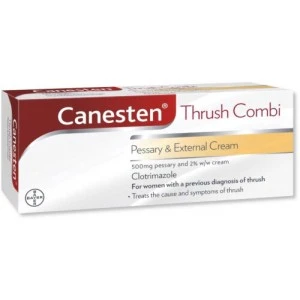
Clotrimazole cream is a common, over-the-counter cream used to treat infections caused by fungi and yeasts, such as vaginal thrush in women and candidal balanitis in men. Clotrimazole is also available under the brand name Canesten and belongs to a class of antifungals known as imidazoles.
Clotrimazole cream is available in 2 different strengths: 1% and 2%. What you will need depends on the type of infection you have and the severity of your symptoms. Clotrimazole cream is applied externally and directly to the affected area.
The main difference between Clotrimazole 1% and 2% cream is the concentration of the active ingredient, clotrimazole. They are often prescribed for various fungal infections, and the duration you need to apply them can also vary.
The table below shows the main differences between clotrimazole 1% and 2% cream:
| Clotrimazole 1% cream | Clotrimazole 2% cream | |
|---|---|---|
| Active ingredient | Clotrimazole | Clotrimazole |
| Use | Athlete’s foot, jock itch, nappy rash, and other fungal skin infections | External vaginal and penile thrush |
| Duration | 2 to 4 weeks | 3 days or 1 to 2 weeks |
| Availability | Over-the-counter | Over-the-counter |
Clotrimazole cream is used to treat skin infections caused by fungi and yeasts. It is commonly used to treat thrush in both men and women, including vaginal thrush and candidal balanitis. If your partner is receiving treatment for thrush, you may also receive treatment to prevent the infection from being passed back and forth.
Clotrimazole can also treat:
A clinician will suggest the lowest effective dose to treat your symptoms.
Clotrimazole works by killing the fungus that causes thrush, Candida. It stops the fungus from growing, so it can no longer cause infection by stopping it from producing ergosterol, a vital component that fungi need to build and maintain their cell walls. Without ergosterol, fungal cell membranes are damaged, causing cellular contents to leak out and killing the fungus.
Because clotrimazole is an external cream, it can only treat the external symptoms of thrush, such as itching, irritation, and redness. It will not treat internal thrush, such as vaginal thrush. For this reason, it is usually used with pessaries or an internal cream.
Most people find that Clotrimazole cream starts to relieve their symptoms within 1 to 3 days of starting treatment, but you will need to apply it consistently for 2 to 4 weeks to fully clear the infection. How long you will need to use clotrimazole cream depends on the type and location of the infection.
Clotrimazole cream is a highly effective treatment for external thrush. In men, 91% had no symptoms of candidal balanitis after 7 days, and 98% were symptom-free after 3 weeks. Because Clotrimazole external cream cannot treat the underlying causes of female thrush, it often works best when combined with an internal pessary or cream.
Research shows that when combined with a 500 mg vaginal clotrimazole tablet, clotrimazole 1% cream led to a cure in 85 to 90% of people with vaginal thrush. Clotrimazole 2% external cream combined with clotrimazole 10% internal cream led to a 2-week cure rate of 74%.
If you’ve been prescribed Clotrimazole antifungal cream by a clinician or doctor, follow the instructions they have given you. These will also be printed on the medicine label. Always use the treatment exactly as prescribed.
More information on how to use Clotrimazole vaginal cream is available below, including application steps, dosage, and treatment duration.
Clotrimazole antifungal cream is for external use only. Avoid applying it to healthy skin, and always wash your hands after using the medication to prevent the infection from spreading to other parts of the body. You should also use a separate towel so you don’t pass the infection to others.
Instructions about how to apply Clotrimazole cream are as follows:
Clotrimazole vaginal cream should be applied two or three times daily. Continue to use the medication until symptoms of the infection have cleared. If things don’t improve within 7 days of finishing treatment, speak to your doctor or clinician.
You must not put Clotrimazole cream in your mouth or swallow it. If you accidentally swallow the cream, tell your doctor straight away or go to your nearest Accident & Emergency department. Swallowing the medication can cause side effects such as nausea, vomiting, diarrhoea, and an unpleasant taste.
If you forget to apply clotrimazole cream, apply it as soon as you remember and continue your treatment regimen. If you keep forgetting to apply it, contact your clinician, as it needs to be applied consistently to be effective.
If you accidentally use too much Clotrimazole cream or you apply more than you need, it can cause red or irritated skin. If this happens, apply less cream next time and only apply it as many times as the clinician has advised.
Clotrimazole can cause side effects, so it is important to understand the potential effects so you know what to look out for and when you may need to seek medical advice.
Just like all medications, Clotrimazole cream can cause side effects. Not everyone will experience them, but it’s still a good idea to have a clear understanding of what to expect before you start treatment. Potential Clotrimazole cream side effects include:
You can find a full list of side effects in the Patient Information Leaflet that comes with clotrimazole cream, or you can view it online. If you experience any of the above adverse reactions, speak to your clinician or doctor immediately. You can also report Clotrimazole side effects using the MHRA Yellow Card Scheme.
Some people may be allergic to Clotrimazole cream. If you are allergic, you may experience the following shortly after applying the cream:
If you get any of these side effects, contact your doctor straight away, or if they get worse or in case of an emergency, go to your nearest A&E department. Make sure you take the cream and its original packaging with you so that the medical team can see what you have used and provide the correct treatment.
Clotrimazole cream contains cetostearyl alcohol, which can cause local skin reactions, such as contact dermatitis. It also contains 20 mg benzyl alcohol in each gram of cream, which can cause allergic reactions and mild local irritation.
Everyone’s circumstances are different, meaning not all medications will be suitable. There may also be some situations where you should seek medical advice before starting treatment to ensure it is safe for you to use.
Do not use Clotrimazole cream if you are allergic (hypersensitive) to clotrimazole or any of the other ingredients in the medication. This includes cetostearyl alcohol and benzyl alcohol.
Before using Clotrimazole cream, speak to your clinician or doctor if you:
You should also seek medical guidance if you have any of the following symptoms:
This is because the treatment may not be suitable for you.
Clotrimazole can reduce the effectiveness of rubber contraceptives, such as condoms and diaphragms. You should use alternative contraception for at least 5 days after using the treatment.
You can use Clotrimazole cream during pregnancy and breastfeeding. If you are pregnant, breastfeeding, or trying to get pregnant, you should speak to a doctor or midwife beforehand, and then follow their instructions carefully.
Clotrimazole cream is widely available without a prescription in local pharmacies and online. A clinician or pharmacist will need to ask you a few questions before prescribing the treatment to make sure it is safe for you to use.
Yes, Clotrimazole cream is widely available over the counter from most high street pharmacies. It can also be bought in some supermarkets.
Yes, Clotrimazole cream is available on the NHS and is widely prescribed to treat athlete’s foot, ringworm, and thrush. However, you do not necessarily need a GP’s prescription to get it, as it can be bought from your local pharmacy and online.
Yes, you can buy Clotrimazole cream online from reputable online pharmacies like Prescription Doctor. You will need to complete a short online health questionnaire for our clinician to review. Once approved, we will always send your treatment in plain, discreet packaging and, if approved before 3pm Monday to Friday, it will be dispatched via our next-day delivery service so you can start treatment promptly.
No, clotrimazole is not a steroid. It is an antifungal medication used to treat fungal and yeast infections, such as thrush, by killing the fungus and preventing its growth. Sometimes, clotrimazole may be sold as a combination product that includes a mild topical steroid, such as hydrocortisone, to help relieve redness, swelling, or itching, while clotrimazole treats the infection.
Yes, it may be possible to use Clotrimazole cream on your face to treat fungal infections such as ringworm, tinea faciei, or fungal acne. However, facial skin is sensitive, so avoid the eyes and mouth when applying, as it can cause irritation, redness, and swelling.
No, clotrimazole does not treat bacterial vaginosis (BV). Clotrimazole is an antifungal medicine that is used to treat infections caused by fungi and yeasts, such as thrush. However, BV is caused by a bacterial imbalance which requires treatment with antibiotics, such as metronidazole or clindamycin.
Yes, generic Clotrimazole cream and branded versions such as Canesten are safe for men to use. It is highly effective for treating male thrush, also known as candidal balanitis, jock itch, and ringworm. You should speak to a doctor or pharmacist about how much cream to apply and how long treatment should last based on your symptoms.
If your partner is being treated with Clotrimazole cream for thrush, you should apply the cream to the end of your penis 2 or 3 times a day for up to two weeks to stop the infection from being passed back and forth.
Yes, you can drink alcohol while using Clotrimazole cream, as there are no known interactions. There are no specific food or drink restrictions to follow while using clotrimazole. If you are unsure about how to use clotrimazole cream, you should speak to a doctor or pharmacist.
Clotrimazole cream should be stored in a cool, dry place below 25℃, preferably in its original packaging, and out of the sight and reach of children. You must not use Clotrimazole cream after the expiry date printed on the box and on the end of the tube.
If you no longer need the medication or it has expired, it must not be disposed of in wastewater or household waste. Instead, you should take it to a pharmacist for the correct disposal.
Product Name: Clotrimazole
Active Ingredient(s): Clotrimazole
Administration: Topical
Presentation: A smooth, white cream
Available Strength: 1% w/w Clotrimazole & 2% w/w Clotrimazole
Exemption: Pharmacy
Application: Men and women over 18
Dosage: Apply thinly 2 or 3 times daily, depending on your clinician’s advice
Description: Clotrimazole is a topical antifungal
Drug Class: Antifungal
Alcohol Consumption: No known interaction
When Pregnant: Tell your doctor if you are pregnant before using Clotrimazole.
When Breastfeeding: Tell your doctor if you are breastfeeding before using Clotrimazole
Prices From: 5.99 GBP
© 2013 - 2026 Al Muhsineen Limited. All Rights Reserved. Registered Pharmacy: 34 Halliwell Road, Bolton BL1 8RL. Registered Office: 254 First Floor, Shearbrow, Blackburn, England, BB1 8DS
Don't have an account?
Your account will be automatically created after placing your first order.