
How Long Does Canesoasis Take To Work?
Table of contents:
- How Common is Cystitis?
- Preventing Cystitis
- Do Cystitis Sachets Work?
- How Long Do Cystitis Sachets Take to Work?
- How Long Should I Take CanesOasis For?
- Can You Take Cystitis Sachets For More Than 2 Days?
- What is the Dose for CanesOasis Cranberry Cystitis Sachets?
- What if CanesOasis Doesn’t Work For Me?
- Frequently Asked Questions
- Reliable Guidance from Prescription Doctor
Cystitis can be incredibly uncomfortable, so rapid relief is essential. If you’re currently dealing with the infection or are prone to regular bouts of the condition, you will probably be wondering how the various treatments take to alleviate your symptoms.
CanesOasis cranberry cystitis sachets are one such option. Suitable only for women, these products contain sodium citrate, which may provide effective relief from UTI symptoms. The question is, how long does CanesOasis take to work?
Join us to learn the answer and address common questions about the treatment. Let’s begin.
How Common is Cystitis?
Anyone can develop a UTI (such as cystitis), and it can affect individuals of all ages. Women are at the highest risk because their urethra is shorter than a man’s. This makes it easier for bacteria to travel up the urethra, reach the bladder or kidneys, and cause the infection.
It's estimated that half of women in the UK will experience a UTI at some point in their lifetime. In contrast, around 13-14% of men will experience at least one UTI during their lifetime, with men accounting for approximately 20% of all UTI cases.
While cystitis is less common in men, it can still occur, particularly in older age groups.
Preventing Cystitis
If you get recurrent cystitis infections, there are certain things you can do to help prevent them. They include:
- Urinate as soon as you can after sex
- Wipe from front to back when you go to the toilet
- Drink plenty of water throughout the day, so you urinate often and prevent dehydration

- Take showers instead of baths
- Wash the skin outside the vagina with water before and after sex
- Keep your genitals clean and dry
- Avoid fizzy, caffeinated, or alcoholic drinks because these can encourage bacterial growth
- Change pads and tampons frequently
If you already have cystitis symptoms, read our ‘How to get rid of cystitis’ guide for further tips to help manage the infection.
Do Cystitis Sachets Work?
Yes, cystitis sachets containing sodium citrate do work to relieve symptoms. A clinical study involving 205 women with cystitis symptoms found that a 48-hour course of sodium citrate provided symptom relief in about 80% of cases where no bacterial infection was present.
The sachets work by reducing urine acidity, which reduces the burning and stinging sensation during urination. While sodium citrate doesn't cure a bacterial infection (you'd need antibiotics for that), it does effectively manage the uncomfortable symptoms many people experience with cystitis. This makes it a useful option for mild cases or while waiting to see if symptoms resolve on their own.
If your symptoms don't improve within 48 hours of taking cystitis sachets, contact your doctor, as you may need antibiotic treatment.
How Long Do Cystitis Sachets Take to Work?
Cystitis sachets, such as CanesOasis, can relieve uncomfortable symptoms in as little as 48 hours, allowing you to get on with your everyday life with minimal fuss. Since it’s ingested directly into the body, it can get to work quickly and effectively.
Does CanesOasis Provide Immediate Relief?
While CanesOasis cranberry cystitis sachets may not provide immediate relief, many users report feeling better after taking just one sachet. Even if you notice improvements, it’s essential to complete the full two-day treatment cycle to prevent cystitis symptoms from returning.

How Long Should I Take CanesOasis For?
CanesOasis should be taken for 2 days. It is provided in sachet form, with a recommended dose of 3 sachets per day for 2 days. Each sachet should be mixed with 200ml of cold water and consumed immediately. CanesOasis is available in cranberry flavour and is easily tolerated.
You must take CanesOasis exactly as instructed and not exceed the recommended dosing schedule.
Can You Take Cystitis Sachets For More Than 2 Days?
It is not recommended that you take CanesOasis for more than 2 days. If your cystitis symptoms persist for more than 48 hours, please notify your clinician. This may indicate a more severe underlying condition that could require antibiotics.
According to the NHS, some people take cystitis sachets, such as CanesOasis, every day to help prevent infection. However, there is no clinical evidence to suggest that this will affect symptoms of an infection that has already started.
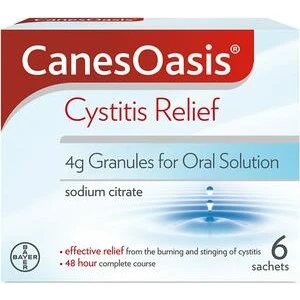
CanesOasis Cystitis Relief
- Rapid relief from burning and stinging during urination
- Restores normal urinary balance by reducing urine acidity
- Formulated for women only, not suitable for men

Price : £6.99
What is the Dose for CanesOasis Cranberry Cystitis Sachets?
The usual dose for CanesOasis is 3 sachets per day for 2 days. Each cranberry cystitis sachet contains 4g of sodium citrate (the salt of citric acid), which is derived from fruits like lemons.
When cystitis occurs, the bladder lining becomes inflamed. This makes the bladder and urethra sensitive, further exacerbating the condition due to the natural acids in urine. Sodium citrate helps with UTIs by acting as a mild alkali, therefore making the urine less acidic.
What if CanesOasis Doesn’t Work For Me?
If CanesOasis is not effectively managing your cystitis, or your symptoms worsen, speak to your clinician, as you may require further tests or antibiotics to treat the infection. Two common treatments for the condition are Trimethoprim and Nitrofurantoin.
Here are the two alternatives in more detail:
- Nitrofurantoin: An effective antibiotic treatment for UTI infections. Also known as Macrobid, women must take a 3-day course while men need a 7-day course to clear the infection.
- Trimethoprim: Works by blocking bacteria from producing essential proteins they need to survive. It's typically taken as 200mg twice daily for 3 days for women with uncomplicated UTIs, though men may need a 7-day course. Trimethoprim has a cure rate of approximately 77% at seven days and is particularly effective against E. coli infections, which account for most UTIs.
Frequently Asked Questions
If you're considering cystitis sachets or have questions about how they work, you're not alone. Below, we've answered the most common queries about CanesOasis and sodium citrate treatments to help you make informed decisions about your cystitis care.
Can I Use Canesten for UTIs?
No, Canesten is designed for fungal infections such as thrush, not bacterial infections such as cystitis. Using the wrong treatment can delay recovery and worsen symptoms.
Canesten products contain antifungal medications (such as clotrimazole) designed specifically to treat thrush caused by the Candida fungus. Cystitis, on the other hand, is typically caused by bacterial infection, most commonly E. coli.
While both thrush and cystitis can cause discomfort in the genital area, they require completely different treatments. Using Canesten for a UTI won't help your symptoms and may delay you getting the proper treatment you need. If you have cystitis symptoms, use sodium citrate sachets, such as CanesOasis, for symptom relief, or consult your doctor for antibiotics if symptoms persist.
How Do Cystitis Sachets Work?
Cystitis sachets reduce urine acidity with sodium citrate, which alleviates the burning sensation during urination by making your urine less irritating to inflamed bladder tissue.
When you have cystitis, the inflamed lining of your bladder becomes extremely sensitive. The natural acids in your urine irritate this sensitive tissue, causing the characteristic burning and stinging sensation when you urinate.
By reducing acidity, sodium citrate decreases this irritation and provides symptomatic relief. The sachets are absorbed quickly after you drink them, and many people notice improvements within a few hours. However, it's essential to complete the full two-day course to prevent symptoms from returning.

How Does Sodium Citrate Help UTIs?
Sodium citrate alkalises your urine, raising pH from around 5.8 to 6.3, reducing irritation and creating a less favourable environment for bacteria.
When you take sodium citrate, it's absorbed into your bloodstream and then filtered through your kidneys into your urine. This increase in pH makes it less acidic and less irritating to your inflamed bladder lining.
This reduction in acidity serves two purposes: first, it directly reduces the burning sensation you feel when urinating because your urine is less irritating to inflamed bladder tissue. Second, a less acidic environment may create conditions that are less favourable for bacterial growth, though sodium citrate alone won't kill bacteria – that's what antibiotics are for.
How Often Can You Take Cystitis Sachets?
Take one sachet three times daily for two days only – a complete 48-hour course of six sachets total. Don't exceed this without medical advice.
If you experience recurring cystitis, some people do take cystitis sachets regularly as a preventive measure, though there's no evidence that this will help treat an infection that's already started. For recurrent infections, speak to your doctor about preventive strategies or a different treatment approach, such as low-dose antibiotic prophylaxis.
How Many Hours Between Cystitis Sachets?
Space sachets approximately every 8 hours throughout the day for consistent symptom relief. For example, take them at mealtimes: morning, afternoon, and evening.
The key is to maintain consistent spacing so the sodium citrate level in your system remains steady, providing continuous symptom relief throughout the treatment period. Each sachet should be dissolved in 200ml of water and consumed immediately after mixing.
CanesOasis Cystitis Relief
- Rapid relief from burning and stinging during urination
- Restores normal urinary balance by reducing urine acidity
- Formulated for women only, not suitable for men
Price : £6.99
Reliable Guidance from Prescription Doctor
Cystitis can be difficult to prevent and treat. It’s therefore essential that you have swift access to the medication you need and specialist support whenever it’s required. This is where Prescription Doctor can help.
Our holistic consultation service enables you to order your required medication at any time from the comfort of your home, while our experienced clinicians are available to answer any queries you may have about your medication or treatment cycle.
To get started, simply answer a few medical questions on our online form, and our clinicians will review your information to determine if the product is suitable for you. We’ll then dispatch your treatment from our General Pharmaceutical Council-registered pharmacy in plain packaging to your designated address. It’s that straightforward.
You can even find a wealth of information about cystitis and available treatments on our website, so you can make a more informed decision about which medication is right for you. Take the first steps to a reliable service today by starting your consultation with Prescription Doctor.
Sources
NICE (2025): How Common is a UTI?
NHS: Cystitis.
NHS: Self-help information for women suffering recurrent attacks of cystitis.
British Journal of General Practice (2015): Incidence, severity, help seeking, and management of uncomplicated urinary tract infection.
PMC (2024): Acute cystitis and subsequent risk of urogenital cancer.
IDSA (2024): Complicated Urinary Tract Infections Clinical Guidelines.
Spooner JB (1984): Alkalinisation in the management of cystitis.
Patient.info (2024): Sodium citrate for cystitis.
PubMed (2013): Urine alkalization improves the problems of pain and sleep in hypersensitive bladder syndrome.
Authored By

Sam Jeans
Medical Content WriterPublished on: 25/09/2023 Re-Published on: 02/02/2026
Reviewed By

Mohamed Imran Lakhi
MPharm - Lead PharmacistReviewed on: 02/02/2026
How We Are Regulated
Payment Options


© 2013 - 2026 Al Muhsineen Limited. All Rights Reserved. Registered Pharmacy: 34 Halliwell Road, Bolton BL1 8RL. Registered Office: 254 First Floor, Shearbrow, Blackburn, England, BB1 8DS


Patient Login
Don't have an account?
Your account will be automatically created after placing your first order.