All inclusive service
No hidden fees

Prices from £59.99
Review More Prices
Your privacy is important, Prescription Doctor are committed to keeping your details completely confidential.
This is why we also take steps to conceal your prescription products under two layers of packaging.
We have a commitment to delivering a discreet service and understand your need for privacy. We ship all orders via a trackable courier using discreet, plain packaging.
Once your order is dispatched you will receive a tracking number via sms and email.
We deliver medications between Monday and Saturday. You can upgrade to Saturday delivery on Friday.
You should receive a tracking number with your order which you can use this number to track your parcel online. This should give you a clear indication of where your parcel is. If you haven’t received your parcel in the time frame given by our couriers, contact your local depot to find out where it is. You can also contact our support team who will do this for you.
On checkout you will be asked to leave your mobile number so our courier can text you about the delivery. This is also useful if the courier has problems finding your address. We will not use your mobile number for anything else.
You can pay for your order using credit, debit card or via bank transfer.
If you don’t have a credit or debit card you can pay via bank transfer. We will give you a unique reference number at checkout along with details of how to make the transfer. Once the money has cleared in our account, we will process your order.
We are a completely secure site and take many measures to ensure your details are kept safe. We understand that you have a right to extreme privacy when purchasing sensitive health medications. All information that you provide to us is stored on our secure servers. Any payment transactions will be encrypted using SSL technology.
You can pay for your order using credit, debit card and bank transfer.
Card Payment: Please notify us that you wish to cancel your order. Your refund will show available In 1 - 3 days.
Bank Transfer: A member of our team will contact you requesting for your bank details. These details are only used to transfer the funds back into your account.
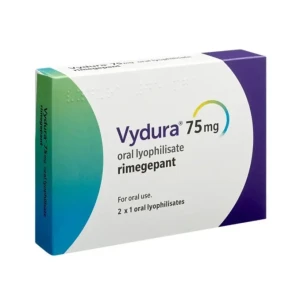
Vydura contains rimegepant, a medicine that targets a migraine pathway linked to pain signalling. It comes as a 75 mg orally disintegrating lyophilisate (freeze-dried wafer) that dissolves quickly in the mouth. Vydura is a reliable option for individuals who find basic pain relief (such as paracetamol and ibuprofen) ineffective at treating migraines. It may also be a suitable option for those unable to take alternative migraine treatments such as triptans (e.g., sumatriptan).
Vydura is a prescription treatment for migraine in adults. It can be used in two ways, depending on how your clinician prescribes it to you:
The medication can be used for migraine with or without aura. For prevention, the National Institute for Health and Care Excellence (NICE) recommends prescribing it for adults with at least 4 but fewer than 15 migraine attacks per month, after at least 3 other preventive medicines have not worked or have been unsuitable.
For treating acute attacks, NICE recommends rimegepant (the active ingredient in Vydura) as a suitable treatment option when either:
Your prescriber will use the best available evidence to determine whether Vydura may be an appropriate treatment option for you.
Migraine is a neurological condition that involves more than head pain alone. During an attack, the body releases chemicals that amplify pain and sensitivity. One of the key pain-signalling substances involved in migraine is CGRP (calcitonin gene-related peptide).
CGRP is involved in sending and strengthening pain signals and is thought to contribute to the inflammation-like changes that occur during migraine. Vydura works by blocking CGRP receptors, thereby interrupting this process and reducing the impact of CGRP during a migraine. This can help ease migraine pain and associated symptoms such as nausea and sensitivity to light and sound.
In practical terms, Vydura is designed to reduce a specific migraine-related pain signal, rather than narrowing blood vessels (which is how many other migraine medications work).
Much like when prescribed for the acute relief of migraine, rimegepant migraine prevention regimens target the same CGRP mechanism. This pathway is responsible for amplifying the pain experienced during a migraine (and increasing your sensitivity to them). By regularly blocking CGRP receptors over a period of time, rimegepant can prevent CGRP from triggering a migraine. As a result, you may experience fewer attacks in a month than you would have previously. You may also find that headaches are less likely to progress to debilitating migraines.
How quickly Vydura (rimegepant) works can vary from person to person and may also depend on the severity of your symptoms. One study reported that 1 in 5 people who took Vydura were pain-free within 2 hours of taking the medication. It also showed that 35% were free from their most bothersome symptom within the same timeframe. Ultimately, Vydura should be taken at the first sign of migraine to effectively treat symptoms.
Clinical trials have shown that rimegepant can be effective for both the treatment of migraine attacks and migraine prevention in adults.
In acute treatment, randomised controlled trials have shown that a single 75 mg dose of rimegepant provides pain relief within 2 hours in a significant proportion of patients. In one study, approximately 1 in 5 participants were pain-free at 2 hours, compared with approximately 1 in 10 participants taking a placebo. Relief from symptoms that often accompany migraine, such as nausea and sensitivity to light and sound, was also more common in those taking rimegepant.
When used as a preventative treatment, rimegepant has been shown to reduce the number of monthly migraine days. In one clinical study involving adults with frequent migraine, people taking rimegepant experienced an average reduction of around 4-5 migraine days per month. People taking a placebo also saw some improvement, with a reduction of around 3-4 migraine days per month. This means rimegepant reduced migraine frequency by approximately one additional day per month compared with placebo.
Response to treatment varies between individuals. Some people notice benefits early, whereas others may require ongoing use to fully assess effectiveness, particularly when the medication is prescribed for migraine prevention.
Vydura is taken as an orally disintegrating lyophilisate (freeze-dried wafer). Place it on or under the tongue and allow it to dissolve. It can be taken with or without food or water (but you must still allow the wafer to fully dissolve). Depending on your prescription, it may be taken at the start of a migraine attack or on a regular schedule for prevention.
Do not chew or crush the wafer. Allow it to dissolve completely before swallowing; this should only take a few seconds. If you are unsure about how to take Vydura, speak to your clinician or pharmacist for advice.
When removing Vydura from the blister pack, use dry hands to peel back the foil covering. Do not push the wafer through the foil. Place the medication on or under the tongue as soon as the blister is opened.
Vydura is supplied as a 75 mg lyophilisate. Your clinician will advise you on how to take it, depending on whether you’re using it for acute treatment, prevention, or a combination approach.
For migraine prevention, the usual dose is one 75mg lyophilisate every other day. When taking Vydura as needed for migraine relief, you can only take a maximum of one dose (75mg) in 24 hours. Never exceed the maximum recommended dose.
If you take Vydura for prevention and you miss a dose, take the next dose at the usual time. Do not take a double dose to make up for a forgotten one. Do not take more than one dose (75mg) a day.
If you forget to take Vydura during a migraine attack, and you have not taken Vydura in the previous 24 hours, take it as soon as you remember if you are still experiencing symptoms.
If you take more Vydura than you should (over 75mg in one day), speak to your doctor or attend your local emergency department straight away. You should take the medicine pack and Patient Information Leaflet with you when you attend the hospital.
Like all medications, Vydura (Rimegepant) has the potential to cause side effects, though not everyone will experience them. Adverse reactions were observed both when the medication was used to treat acute migraines and as a preventative measure (prophylaxis).
Certain immune system and gastrointestinal disorders have been observed. Nausea is the most commonly reported side effect, affecting up to 1 in 10 people who take Vydura.
Hypersensitivity and severe allergic reactions (anaphylaxis) are uncommon and may affect up to 1 in 100 people who take Vydura. Symptoms include shortness of breath and severe rash. These reactions can occur days after administration, and delayed serious hypersensitivity has also been reported.
A more detailed explanation can be found within the Patient Information Leaflet that accompanies the medication. If you do experience any adverse reactions to the treatment, you can also report them using the MHRA’s Yellow Card Scheme.
You should stop taking Vydura and contact your clinician or doctor immediately if you experience signs of an allergic reaction or a severe allergic reaction known as “anaphylaxis”.
Symptoms to look out for include:
These symptoms can occur several days after administration. More information regarding Vydura side effects can be found within the Patient Information Leaflet that comes with the medication.
You should not take Vydura if you are allergic to Rimegepant or any of the other ingredients in the medication (gelatin, mannitol, mint flavour, and sucralose). It’s also important to consult your clinician or doctor before starting treatment if you have:
If you experience any symptoms of an allergic reaction during treatment, stop taking Vydura and seek immediate medical attention.
You must tell your prescriber if you are taking or have recently taken any prescription medications, over-the-counter treatments, supplements, or herbal remedies. Some medicines may affect the way Vydura works, or Vydura may affect how other medicines work. Do not take Vydura if you are taking:
You should not take Vydura more than once every 48 hours if you take:
If you are pregnant, may be pregnant, or may become pregnant, speak to your doctor or pharmacist for advice before taking Vydura. The effects of Vydura during pregnancy are unknown, so it’s preferable to avoid using this product if possible. If you are breastfeeding or planning to breastfeed, speak to your doctor before using Vydura to ensure that it is right for you.
In some cases, you can use other migraine treatments with Vydura, though this depends on the treatment involved. Your clinician will review current migraine treatments, including triptans, preventive medications, and regular pain relievers, to ensure that combinations are appropriate. You should not start or stop other migraine medications without medical advice.
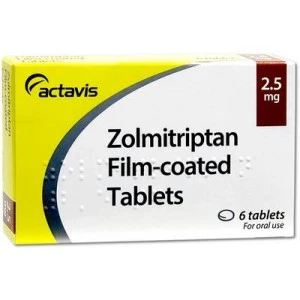
Triptans (such as sumatriptan) and Vydura work in different ways. Triptans act on serotonin receptors and cause constriction of certain blood vessels involved in migraine. Vydura works by blocking CGRP receptors, which are involved in migraine pain signalling.
Because Vydura does not rely on blood vessel constriction to the same extent, it may be suitable for individuals who cannot tolerate triptans due to side effects or medical considerations.
There is no single treatment that is right for everyone. Some people respond well to triptans, whereas others may find CGRP-targeting medicines, such as rimegepant, more suitable because of their effectiveness, tolerability, or other medical considerations.
The most appropriate option depends on your migraine pattern, overall health, and how you respond to treatment. Your clinician can help guide this decision based on your medical history and any relevant risk factors.
Medication-overuse (rebound) headaches are most commonly linked to frequent use of certain painkillers and triptans. Information from The Migraine Trust suggests that CGRP-targeting medicines such as rimegepant may be less likely to cause rebound headaches.
An increase in headache frequency is not always due to medication overuse, as migraine patterns can change over time. If you find that you need acute migraine treatment very frequently, this may indicate that your treatment plan needs review. Your clinician can help determine whether symptoms are related to medication use or whether preventive treatment may be appropriate.
Drowsiness and fatigue are not recognised side effects of Vydura use according to the patient information leaflet. Using Vydura is also not expected to affect your ability to drive or operate machinery. However, according to one NHS Specialist Headache Service Team, tiredness (fatigue) may occur. It is best to use caution when starting any medication and to seek advice from your doctor or pharmacist if you are unsure.
Store Vydura in the original blister pack to avoid exposure to moisture. Do not store above 30°C. Keep out of reach of children. Do not use Vydura past the expiry date shown on the carton and blister pack. Always dispose of medication responsibly, asking your pharmacist for advice.
Although it is commonly referred to as Vydura tablets online, this medication is actually administered as a freeze-dried wafer called a lyophilisate. This means instead of being swallowed, it is placed on or under the tongue and allowed to dissolve.
Vydura is a prescription-only medication in the UK. This means it cannot be purchased without a valid prescription from an appropriately trained clinician. When buying prescription medication, always use a reputable licensed pharmacy that you can trust.
The General Pharmaceutical Council keeps an up-to-date register of licensed pharmacies.
Yes, you can buy Vydura (Rimegepant) online from trusted pharmacies, such as Prescription Doctor, after a brief consultation to determine whether it is suitable for your circumstances. With us, there’s no need for an appointment, just a simple medical questionnaire that you can complete at any time from your own home.
Orders approved by our clinicians are then dispatched from our General Pharmaceutical Council-registered pharmacy in plain packaging for complete discretion to your chosen UK address. Anything approved before 3pm Monday to Friday is also eligible for next-day delivery, giving you swift access to your medication.
© 2013 - 2026 Al Muhsineen Limited. All Rights Reserved. Registered Pharmacy: 34 Halliwell Road, Bolton BL1 8RL. Registered Office: 254 First Floor, Shearbrow, Blackburn, England, BB1 8DS
Don't have an account?
Your account will be automatically created after placing your first order.