
Nevolat User Guide: A Comprehensive Look at Liraglutide
Table of contents:
- Nevolat: What is it?
- How Does the Nevolat Weight Loss Medication Work?
- How Quickly Does Nevolat Work?
- Who Can Use Nevolat?
- Who is Nevolat Not Suitable For?
- Where to Use Nevolat Injections
- Nevolat Dose Schedule Explained
- How to Improve Weight Loss with Nevolat
- Nevolat Injections Side Effects
- How Do Nevolat Injections Compare to Mounjaro?
- Beat the Fat with Nevolat
Nevolat originates from one of the earliest weight loss treatments of its kind to be approved for use in the UK. Today, this daily injection is widely regarded as a safe and effective, yet budget-friendly, option for overweight and obese individuals.
Like any medication, it has positives and negatives compared to others on the market, and these attributes will be covered in this Nevolat user guide to help answer whether the treatment is right for you. It will take you through the science behind the treatment, the side effects, the dosage instructions, and any other information you may need to make an informed decision.
Nevolat: What is it?
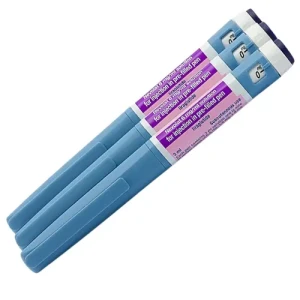
Nevolat is a daily subcutaneous injection (under the skin), prescribed for weight reduction and management. It contains the active ingredient liraglutide and is manufactured by Zentiva, after replacing Saxenda as the branded-generic version in 2025. Nevolat was approved as a weight loss treatment by the MHRA (Medicines and Healthcare products Regulatory Agency) in 2025, but liraglutide itself was approved in 2014.
Interestingly, Saxenda was manufactured by Novo Nordisk, the same company behind one of Nevolat’s competitors: Wegovy. The company allowed the Saxenda patent to expire to focus on Wegovy, which meant Zentiva could swoop in and claim a stake in the weight loss market.
Clinical trials have shown an average 8%-11% reduction in total body weight after 56 weeks, provided it is paired with a healthy diet and plenty of exercise. Remember that it is a treatment to support a weight loss journey, not the sole cause of it.
The treatment is administered using a pre-filled pen and can be taken at any time of day, regardless of food intake. This versatility makes it a preferable option for those looking to lower their BMI (Body Mass Index).
How Does the Nevolat Weight Loss Medication Work?
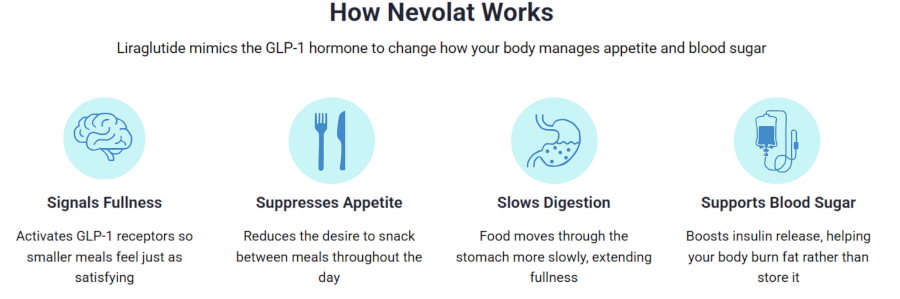
When injected, the liraglutide in Nevolat mimics the hormone GLP-1 (glucagon-like peptide-1), which is naturally released to signal to your brain that your stomach is full. By activating the hormone receptor early, smaller meals will make you feel equally as full as large ones usually do.
It will also suppress your appetite and slow the rate at which you digest food, therefore making you feel full for longer, reducing the desire to snack between meals and lowering your calorie intake. Taking the medication daily will ensure these effects become consistent changes to your body and mind, making your weight-loss journey more effective.
Nevolat also boosts insulin release into the blood, helping manage blood sugar levels and helping your body burn fat rather than store it.
How Quickly Does Nevolat Work?
Nevolat will take effect after the first dose, and you should notice a reduction in appetite within the week. As you continue with the treatment, your blood sugar levels will start to decrease as your body gets used to the change, though there will not be a visible weight loss until around 12 weeks in, at the highest dosage (3mg), when your BMI decreases by around 5%.
Nevolat uses a gradual dose escalation to give your body time to adjust to the medicine in your system. This also helps minimise side effects like nausea.
Who Can Use Nevolat?
Nevolat is for people who need support on their weight loss journeys. You may be eligible if your BMI (Body Mass Index) is ≥ 30, or ≥ 27 if you have at least one weight-related health issue, such as type 2 diabetes, high blood pressure or high cholesterol.
Nevolat
- Approved Weight Loss treatment
- Once-daily injection
- More affordable than branded treatments
Who is Nevolat Not Suitable For?
Nevolat should be taken only by the appropriate groups, and there are several reasons you may not qualify. The treatment should not be taken if you are pregnant, breastfeeding, or planning to conceive or breastfeed. It should generally be avoided by those with digestive issues (including gastroparesis), pancreatitis, macular oedema, or diabetic retinopathy.
Other prescribed medications may affect Nevolat, ranging from limiting its positive effects to causing serious health issues. A full list of who shouldn’t take the medication, along with when caution should be advised, can be found in the Patient Information Leaflet. Always consult a clinician before starting on a Nevolat treatment.
Where to Use Nevolat Injections
Nevolat is to be injected safely directly into the fatty tissue beneath the skin. From the diagram below, we can see that this may be your stomach, upper thighs or upper arms. If you are conducting the injection yourself, the arms are not recommended, as it may be difficult to accurately locate the injection site.

Rotating your chosen injection site weekly is also recommended. You may still choose the same location, but alternating between the right and left sides will reduce the risk of infection and inflammation. Regardless of the injection site, Nevolat will have the same effect.
Nevolat Dose Schedule Explained
The starting dose of Nevolat will be prescribed at 0.6mg, then it will increase by 0.6mg every week until reaching 3mg. From here, it will remain at 3mg for the duration of treatment. See the visual guide to the dosage schedule below.
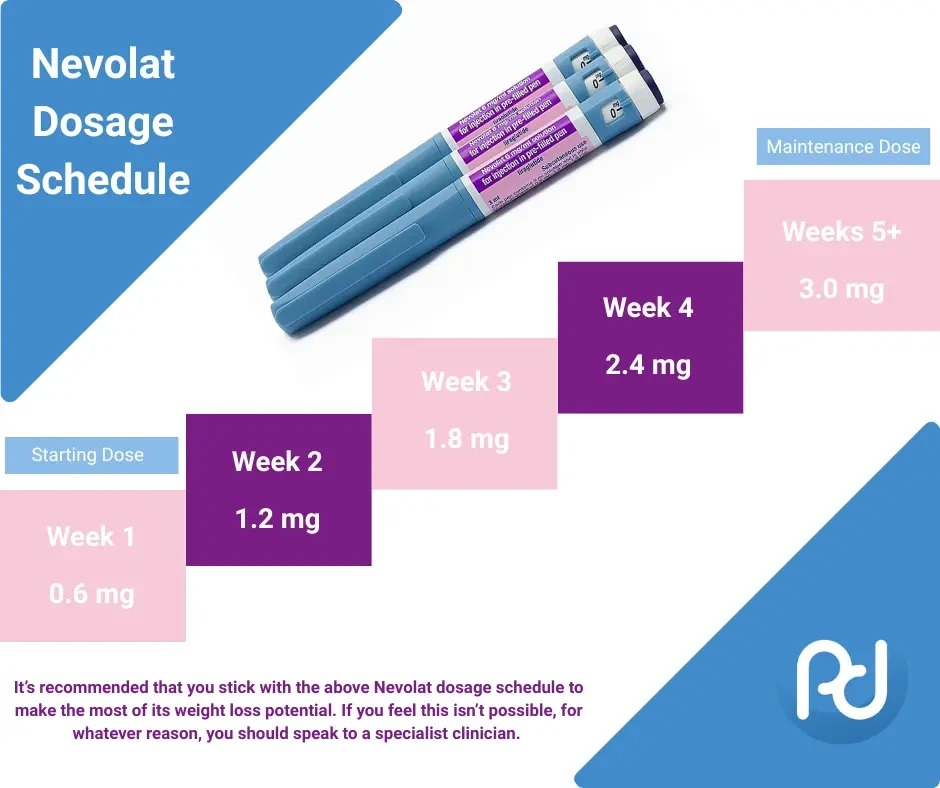
Each Nevolat pen comes pre-filled with 18mg. If you are starting at 0.6mg from the beginning, the injection schedule will be as follows:
Days | Dose (mg per day) | # Pen in Use | Solution Remaining (mg) |
|---|---|---|---|
1-7 | 0.6 | 1 | 13.8 |
8-14 | 1.2 | 1 | 5.4 |
15-17 | 1.8 | 1 | 0 |
18-21 | 1.8 | 2 | 10.8 |
22-25 | 2.4 | 2 | 1.2 (not enough for next dose) |
26-28 | 2.4 | 3 | 10.8 |
29-31 | 3 | 3 | 1.8 (not enough for next dose) |
32-25 | 3 | 4 | 6 |
36-37 | 3 | 4 | 0 |
Assuming the schedule is followed correctly, from day 38 onwards, each pen will last six days at 3mg per day. This equates to five pens every 30 months.
It is important that you do not take too much at once, as this can cause health issues. Microdosing is also not advised, as the effects of using the treatment in this way are still unknown and are still being studied in ongoing clinical trials.
If you miss a dosage, don’t panic. Your next steps are dependent on how much time has passed since you missed your last injection:
- Within 12 hours - take the dosage now
- More than 12 hours: skip this next dosage and continue with the next day’s, at the normal time
- More than two days: restart at the 0.6mg dose to avoid severe side effects. Contact your clinician, and they will advise you further
Never take two doses in one go to make up for the day prior.
How to Improve Weight Loss with Nevolat
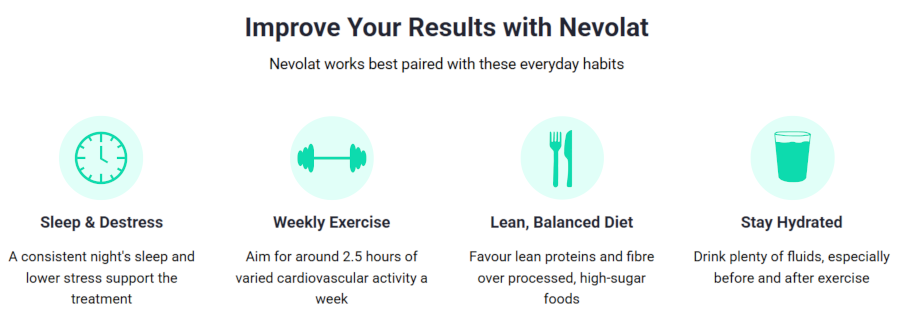
It is important to remember that Nevolat will not work on its own. If changes to your schedule and diet are not made, the treatment will be ineffective.
For your schedule, a consistent good night’s sleep and staying as stress-free as possible will benefit the treatment. Adding in weekly exercise is a positive change as well, with roughly 2.5 hours of varied activity being ideal. This could include walking, jogging, cycling or swimming. Any cardiovascular activity will serve you well.
Getting the most out of your diet will involve reducing calories by choosing less-processed, lower-fat, lower-sugar foods. Instead, lean proteins and fibre are advised. Fish, eggs, chicken and tofu are all excellent sources of protein, and when paired with vegetables and bread, they create a well-rounded diet.
Staying hydrated throughout the day is important, especially before and after physical exercise. Electrolyte-containing fluids will help, as will fluid-based foods like soup. There are some healthy foods that, surprisingly, should also be avoided. Fruits and vegetables that are high in sugar, like oranges, pears, carrots and sweetcorn, can cause a spike in your blood sugar and are best avoided or eaten in moderation.
Alcohol can also be taken in moderation, but is usually best avoided, as it can make side effects like nausea worse.
Nevolat Injections Side Effects
Speaking of side effects, Nevolat has some potential ones, like with any medication. They will vary from person to person, but it is important to be aware of what may come up during treatment and how best to deal with them. The most common symptoms are gastrointestinal in nature, and these include:
- Nausea
- Diarrhoea
- Vomiting
- Constipation
- Headaches
- Indigestion
These side effects are typically mild to moderate in severity, but can lead to more serious health conditions. In rarer cases, the treatment can also trigger underlying heart and kidney issues. Always seek the advice of a clinician if your side effects are severe or persistent.
Managing the side effects can be relatively straightforward if you know what to expect. In many cases, the effects are only temporary and will drop in severity over time. As many are gastrointestinal, you can combat them by avoiding alcohol, spicy or fatty foods, as well as eating smaller meal portions and drinking more fluids.
For a full list of side effects, you can visit the Patient Information Leaflet, and our clinicians can advise you on any that you may encounter.
How Do Nevolat Injections Compare to Mounjaro?
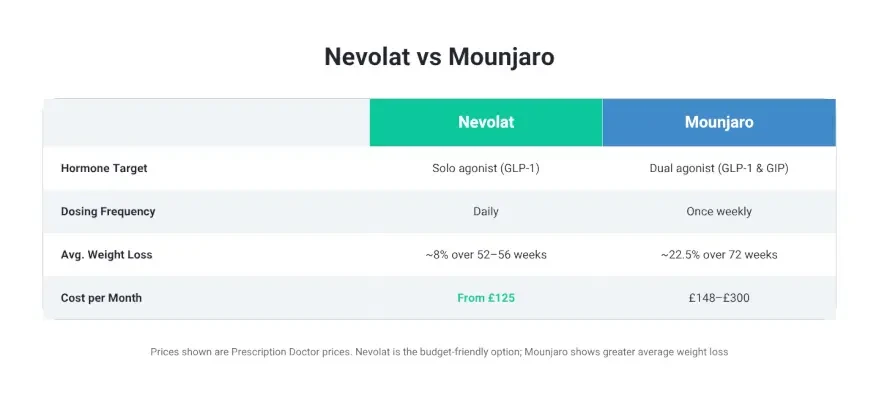
Nevolat and Mounjaro injections work fairly similarly. They both mimic hormones to regulate BMI. The primary differences, however, are that:
- Nevolat is a solo agonist, targeting one hormone in the body, while Mounjaro is a dual agonist, targeting two
- Nevolat is injected daily, while Mounjaro is once a week
- Mounjaro reduces total body weight by an average of 22.5% over 72 weeks, whereas Nevolat reduces it by an average of 8% over 52-56 weeks
Overall, Mounjaro is considered the more effective treatment for weight loss, but other factors may mean it isn’t the best option for you personally.
Different treatments contain different ingredients, and one may cause allergic reactions. These differences may also lead to one treatment giving more severe side effects than the other. Dosage frequency plays a role, too. Some may prefer the daily injections of Nevolat as they incorporate them into everyday life, while others may prefer to only inject once a week, particularly if they aren't too fond of needles.
There is also cost and availability to consider. The cost of Nevolat at Prescription Doctor is around £125 per month, while Mounjaro starts at £148 for the lower doses and increases to £300 per month for the maximum-strength packages. Nevolat is the clear budget-friendly option, but Mounjaro is the more effective. Once again, it comes down to personal preference.
Research is fundamental before starting either treatment, as it is not something to be rushed into. We offer a comprehensive breakdown of the differences in the two treatments, as well as comparisons to other contemporaries like Wegovy, so you can easily find which one would work best for you.
Beat the Fat with Nevolat
Prescription Doctor has been helping people through their weight loss journeys since 2013, so it’s safe to say we know our stuff. Whether you want to begin your treatment straight away or you’ve been trying to regulate your weight for a while, our clinicians are always here for you.
Beginning your treatment is as easy as filling out a short, online form - no need for a phone call or an in-person appointment. Once our team has received your request, it will be reviewed to ensure you have selected the best weight-loss option for you, and then passed on to our General Pharmaceutical Council-registered dispensing pharmacy for an added layer of security.
Once approved, your first dosage will be at your door in discreet packaging, even the very next day (if approved before 3pm on a weekday). We will monitor your progress throughout the treatment, ensuring everything is as it should be and that it runs smoothly. If you need any additional support or have further questions or doubts, we’re here for that too.
We will support you from start to finish, but your weight loss journey can only begin with you. Start your consultation with Prescription Doctor today, and let’s move forward together.

Sources
- MHRA (2025): NEVOLAT 6 MG/ML SOLUTION FOR INJECTION IN PRE-FILLED PEN.
- Expert Review of Cardiovascular Therapy (2014): Liraglutide for Type 2 diabetes and obesity: a 2015 update.
- NHS: (2026): Overweight and obesity in adults.
- Obesity Science & Practice (2016): Liraglutide for weight management: a critical review of the evidence.
- EMC (2025): Nevolat 6 mg/ml solution for injection in pre-filled pen.
- NEJM (2021): Once-Weekly Semaglutide in Adults with Overweight or Obesity.
- NEJM (2015): A Randomized, Controlled Trial of 3.0 mg of Liraglutide in Weight Management.
Authored & Reviewed By

Mohamed Imran Lakhi
MPharm - Lead PharmacistPublished on: 20/07/2026 Reviewed on: 20/07/2026
How We Are Regulated
Payment Options


© 2013 - 2026 Al Muhsineen Limited. All Rights Reserved. Registered Pharmacy: 34 Halliwell Road, Bolton BL1 8RL. Registered Office: 254 First Floor, Shearbrow, Blackburn, England, BB1 8DS


Patient Login
Don't have an account?
Your account will be automatically created after placing your first order.