
What is the Best Exercise for Weight Loss?
Table of contents:
- How Important is Exercise for Weight Loss?
- Can You Lose Weight Without Exercise?
- What is the Best Exercise to Lose Weight?
- How Much Exercise Should I Do Per Week to Lose Weight?
- Exercise for Weight Loss: 5 Top Tips
- Frequently Asked Questions About Exercise and Weight Loss
- A Holistic Service From Prescription Doctor
- Sources
If you’re looking to lose weight, you may have considered a medicated weight loss programme involving either injections (such as Mounjaro or Wegovy) or tablets (such as Mysimba or Xenical). These medications are clinically proven to help you lose weight when taken alongside healthy lifestyle choices. They are not magic solutions in their own right.
As a result, following a low-calorie diet and exercising regularly are crucial to achieving your weight loss goals. The question is, how do you go about it?
In this article, we’ll discuss some contenders for the best exercise for weight loss, provide tips and examples, and also outline why exercising is so important. Let’s get started.
How Important is Exercise for Weight Loss?
Regular exercise is a central aspect of both weight loss and long-term weight management. Sedentary behaviour (i.e., any activity in which you are lying or sitting down) can contribute to a lower metabolic rate and weight gain. Physical activity can reverse this effect by forcing your body to burn more calories, which, combined with a calorie-controlled diet, can drive fat loss.
Regular physical activity, particularly strength and resistance training, can increase muscle and bone mass, both of which are critical for healthy body composition. Reducing your body fat percentage while increasing lean mass can reduce your risk of serious medical conditions, including cardiovascular disease, various cancers, type 2 diabetes, and osteoporosis.
Physical activity is particularly important for people on a weight loss journey. Exercising your muscles helps to preserve lean mass while your body loses fat tissue, which is key to improving body composition. Working out is also important for long-term weight management, with research finding that regular exercise may improve appetite control, increase metabolic rate, and reduce the risk of stress-induced weight gain.
Can You Lose Weight Without Exercise?
Physical activity is a cornerstone of weight management, but it is possible to lose weight without it. Your basal metabolic rate (BMR) is the minimum number of calories your body requires to function at rest and perform basic survival tasks, like breathing. Eating fewer calories than your body uses overall creates an energy deficit, which can lead to weight loss, whether or not you exercise.
However, it is not always healthy to diet without exercise, especially if you hope to lose a significant amount of weight. Rapid weight loss often involves a reduction in both muscle and fat tissue, which can have negative consequences for your overall health. Having too little lean mass can slow your metabolism, leading to further fat gain and unfavourable changes in body composition. This can affect your mobility, ability to perform daily activities, and mental health, all while making it harder to keep weight off in the long term.
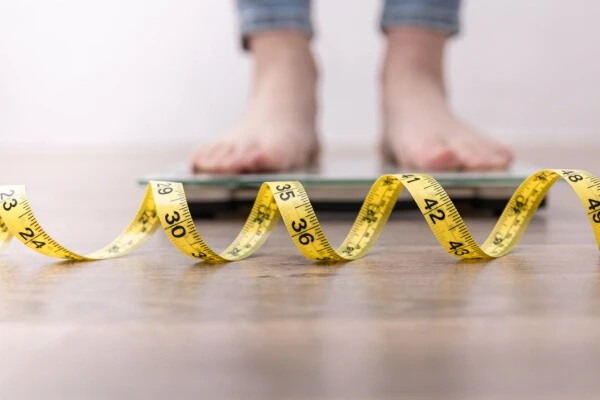
Therefore, maintaining muscle mass while losing fat is more important for your health than overall weight loss. One key way to achieve this is to incorporate regular physical activity into your weight-loss plan. All exercise can help to preserve muscle mass during weight loss, but which is best for burning calories?
What is the Best Exercise to Lose Weight?
Any exercise can burn calories and benefit your overall health, and there is no ‘best’ activity for weight loss. The key to effective exercise is sustainability, so the recommended approach is to find something you enjoy and can incorporate into your routine regularly. It is also important to choose activities that meet your current fitness level, as pushing your body too hard can lead to injury.
Here, we’ll explore the benefits of various endurance and resistance exercises, including cardio, strength training, high-intensity interval training (HIIT), cycling, swimming, and yoga. If you haven’t exercised for a while, are pregnant or recently gave birth, or have an existing medical condition or injury, consult a medical professional before attempting vigorous intensity exercise or HIIT.
Cardiovascular
Cardiovascular exercise, also called aerobic activity, is any movement that raises your heart and breathing rate. ‘Cardiovascular’ activity refers to the heart (cardio) and blood vessels (vascular), and regular cardio training can significantly reduce your risk of heart disease. This form of exercise is also effective for weight loss, and studies have concluded that the more cardio you do, the greater your potential reduction in body fat.
.webp)
More vigorous aerobic activity is associated with better weight loss outcomes. However, it’s important to work at a pace that your body is comfortable with. Pushing yourself too hard, too fast, can increase your risk of injury and make you less likely to enjoy (and continue) exercising. You can modify your activity to suit your fitness levels, for example:
- Walking, Jogging, and Running: Brisk walking or gentle jogging can be a great place to start for people new to cardiovascular exercise. If you feel ready for more vigorous-intensity cardio, running burns a lot of calories and can bring you closer to your weight loss goals.
- Cycling: Cycling is a low-impact exercise that puts less strain on your joints than jogging or running, making it a good choice for people with knee or hip pain. You can cycle on flat ground for a moderate-intensity workout, or take it up a gear by cycling fast or on hilly land.
- Water Aerobics and Swimming: Water aerobics is another low-impact way to burn calories and shed fat tissue, and twice-weekly sessions can improve strength, body composition, and overall fitness. Swimming laps burns slightly more calories than water aerobics, and can be a good choice for people trying to increase the intensity of their exercise sessions.
- Playing Sports: Playing sports like football, tennis, and basketball can promote weight loss, improve body composition, lower blood pressure and blood lipid levels, and boost fitness. These are moderate-to-vigorous intensity activities that can burn hundreds of calories, and if you find a sport you enjoy, the fun factor can motivate you to exercise consistently.
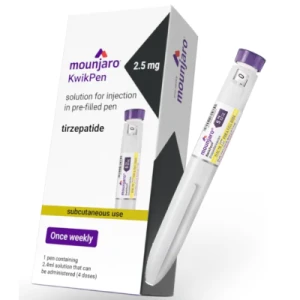
Mounjaro
- Approved Weight Loss Treatment
- Suitable for adults with a BMI of +30kg/m²
- Pre-filled injection pen
Strength Training
Strength training, also called resistance training, is any physical activity that focuses on strengthening the muscles. This can include a wide variety of exercises using free weights, weight machines, resistance bands, medicine balls, callisthenics, or ‘jump training.’
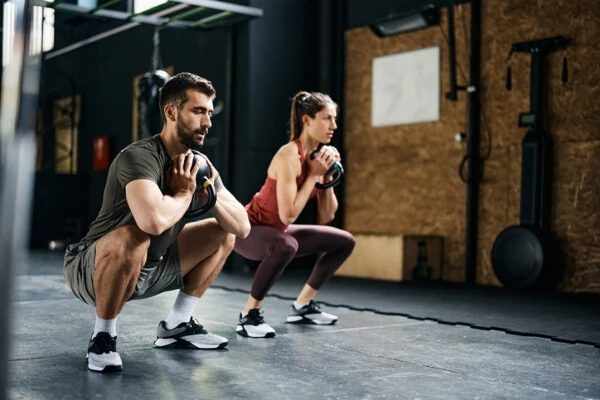
This form of exercise is highly effective for weight loss when combined with a low-calorie diet. Resistance training often burns fewer calories than sustained cardiovascular activity, but it is the most effective exercise for preserving lean mass during weight loss. Examples include:
- Lifting Weights: A popular resistance-training activity that can be tailored to your strength and fitness level. If you’re new to this type of exercise, weight machines can help you get used to the movements and reduce your risk of injury. When you’re ready to progress, free weights can activate more muscles and help to improve your balance.
- Resistance Bands and Medicine Balls: Tools like resistance bands and medicine balls are great for beginner strength training due to their versatility and safety. They can help you practise your form and movement before moving on to heavier weights and can promote strength gains similar to those from weight machines.
- Callisthenics: A type of strength training that uses your body weight to perform full-body exercises. You can do this without any equipment, so it’s a highly accessible workout you can easily try at home. Some examples of callisthenic exercises include push-ups, squats, and planks.
High-Intensity Interval Training (HIIT)
High-intensity interval training (HIIT) involves short bursts of intense exercise alternating with periods of low-intensity exercise. It is a highly efficient way to burn calories and can produce fat-burning and weight-loss outcomes similar to those of traditional cardio for some people. However, strength training remains the more targeted approach for preserving and building muscle mass.
Some studies suggest that outcomes of HIIT exercise may vary by age and fitness level. Older adults and those with existing health conditions may benefit more from moderate-intensity activity, and exercise plans should be tailored to account for individual ability levels.
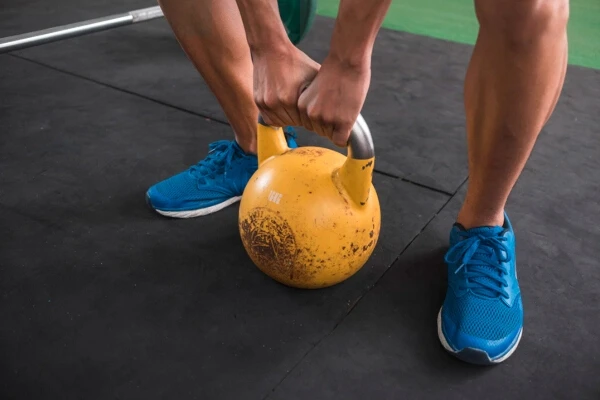
A traditional HIIT workout involves 30-90 seconds of high-intensity exercise, followed by an equal, or longer, period of low-intensity activity or rest. Some common examples of HIIT exercises include:
- Burpees: A high-intensity exercise that targets both the muscles and cardiovascular fitness by combining a squat, plank, push-up, and jump.
- High knees: An intense activity that strengthens the legs and raises your heart rate. It involves alternately raising each knee to hip or chest height while ‘running’ on the spot.
- Sprinting: If you’re a runner, sprinting is an easy way to incorporate HIIT into your normal workout routine. Spend 30-90 seconds running as fast as you can, or uphill, before returning to your usual pace.
- Push-ups: Performing push-ups can build muscle in your shoulders, chest, and triceps, improving both body composition and metabolic rate.
- Squats: Squats are a highly effective resistance exercise for developing the muscles in the thighs and buttocks. They may also enhance knee joint strength, so regular squats could also benefit your mobility.
- Mountain climbers: Mountain climbers are a full-body exercise that improves both muscle strength and cardiovascular fitness.
If you’re at the start of your fitness journey, try incorporating HIIT into your workouts. For example, if you take a walk, you could speed-walk or walk uphill for 30-90 seconds, then slow down to your usual pace for a few minutes.

Wegovy
- Approved Weight Loss treatment
- Weekly injection
- Reduces risk of heart attack & stroke
Cycling
Cycling is a top choice for cardiovascular exercise among many people on weight loss journeys, as this low-impact activity burns a lot of calories while putting minimal strain on the hips and knees. Whether you cycle on the road or indoors, this activity can promote weight loss while also improving blood pressure, body composition, and aerobic fitness.
Cycling also has long-term health benefits beyond reducing your waistline. Studies have found that regular cycling is associated with a lower risk of serious medical conditions such as cardiovascular disease, some cancers, respiratory disease, dementia, and type 2 diabetes. Cycling can also improve your mental health, sleep quality, and overall sense of well-being.

If you’re new to cycling, start slowly to build your fitness and confidence levels. Take short rides on flat ground and, if possible, try a few different bikes to find a model that best suits your needs. People who are apprehensive about riding outdoors might prefer a stationary bike, which offers adjustable resistance levels that let you easily vary your workout intensity.
Swimming
Swimming combines both cardiovascular and strength training in an activity that is gentle on the joints. As a low-impact exercise, swimming is an ideal workout for older adults, overweight and obese people, and those with joint complaints (e.g., arthritis).
Swimming is a calorie-burning activity that can support fat loss, improve body composition, and reduce blood pressure. Further studies have found that regular swimming may also alleviate insulin resistance and lower your risk of cardiovascular disease, non-alcoholic fatty liver disease (NAFLD), metabolic syndrome, and type 2 diabetes.
Slowly increase the number of consecutive laps or the time you spend in the pool to increase your fitness levels and build confidence. When you’re ready to increase the intensity of your workout, you can incorporate HIIT into your swimming sessions by alternating fast strokes (like freestyle) with more gentle ones (like breaststroke).
Yoga
Yoga is a mind-body exercise with numerous mental and physical health benefits, including weight loss. One meta-analysis of over 1,000 participants found that yoga can promote weight loss, improve fitness, and strengthen muscles. It may also reduce your risk of cardiovascular disease, alleviate chronic pain, and boost your mental health.

Yoga is generally considered a low- to moderate-intensity workout, so it can be a good place to start for people looking to build fitness. You can increase your chances of losing weight with yoga by:
- Practising regularly (aim for three times a week, if this is realistic and comfortable)
- Being consistent with your practise
- Combining yoga with a healthy, calorie-reduced diet
There are many types of yoga, including Hatha, Vinyasa, and Yin yoga. Hatha yoga is slow-paced and places a strong emphasis on posture and breathing, making it an ideal way for beginners to learn and gain confidence. People with a reasonable degree of fitness and yoga experience may prefer Vinyasa, which is more dynamic and therefore burns more calories.
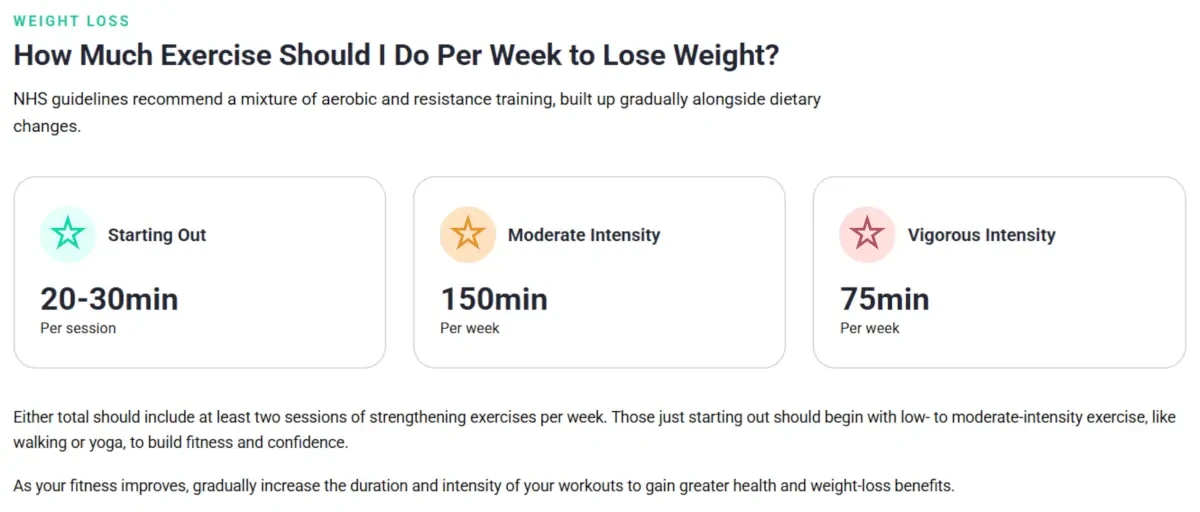
How Much Exercise Should I Do Per Week to Lose Weight?
NHS guidelines recommend that adults do at least 150 minutes of moderate-intensity or 75 minutes of vigorous exercise per week to remain physically and mentally healthy. This should be a mixture of aerobic and resistance training, with at least two sessions of strengthening exercises per week.
Individuals who are already physically active may need to increase their activity levels. However, these should be built up gradually alongside dietary changes.
However, this may not be a realistic goal for everyone. Those just starting their fitness journey need to begin slowly to build fitness and confidence and reduce their risk of injury and burnout. Aim for 20-30 minutes of exercise per session, and begin with low- to moderate-intensity exercises (such as walking or yoga). As your fitness improves, you can gradually increase the duration and intensity of your workouts to gain greater health and weight-loss benefits.
Exercise for Weight Loss: 5 Top Tips
Exercise promotes weight loss by burning calories, but it should be just one arm of an integrated weight loss plan that also includes diet and behavioural changes. You can optimise your chances of achieving your weight loss goals with the following diet, exercise, and lifestyle tips:
- Incorporate HIIT into your workout: HIIT yields weight-loss results similar to regular cardio but may improve your fitness levels more quickly than other forms of exercise. Therefore, mixing short bursts of high-intensity exercise into your workout routine can make your exercise more efficient.
- Swap out sugary drinks: Replacing high-sugar drinks with diet versions or plain water can save you a significant number of calories and support weight loss. One study found that people who replaced sugary drinks with calorie-free alternatives reduced their daily energy intake by 240 calories and experienced a long-term reduction in their BMI.
- Swap highly processed foods for healthier options: Highly processed foods often contain a lot of fat and sugar and can add many calories to your diet. One study found that people who swapped ready meals for healthier, homemade alternatives lost twice as much weight as those eating the heavily processed foods. Check food labels and avoid those with a calorie, sugar, or fat content that puts them in the ‘red’ zone.

- Seek social support: Having a strong support network around you can make it easier to maintain a new diet and exercise regimen. Therefore, letting your family, friends, and coworkers know about your lifestyle changes can help garner their support and increase your chances of reaching your weight loss goals.
- Break goals down into smaller chunks: For some, the beginning of a weight loss journey can feel like the first step up a mountain. However, it’s important to pace yourself. Slow, sustained weight loss leads to greater reductions in body fat percentage and may produce better long-term health outcomes than rapid weight loss. Setting small weekly goals (e.g., 1-2 lbs per week) can help you maintain a sustainable rate of weight loss while providing a series of smaller ‘wins’ to sustain your motivation.
Frequently Asked Questions About Exercise and Weight Loss
Here, we’ll address some common queries surrounding exercise bikes, home workouts, and what to do when you feel your weight loss efforts aren’t working.
Is an Exercise Bike Good for Weight Loss?
Stationary bikes are a great way to burn calories and promote weight loss, especially for inexperienced cyclists. These machines can boost your fitness and confidence while providing a low-impact workout that won’t put excess strain on your joints.
If you’re new to using an exercise bike, start slowly to build strength and stamina. Start with three 30-minute sessions of moderate-intensity cycling per week, then gradually increase the resistance and duration of sessions to improve fitness. You can also incorporate HIIT into your sessions (e.g., alternating between vigorous and moderate-intensity cycling) to enhance calorie burn and cardiovascular conditioning.
What is the Best Weight Loss Exercise at Home?
Many people are intimidated by the gym when they first start working out, but this doesn’t mean you can’t exercise. There are plenty of weight loss exercises that don’t require specialised equipment and can be performed from the comfort of home.
HIIT exercises like squats, burpees, push-ups, and high knees can burn lots of calories while improving cardiovascular fitness. People aiming to start with a gentle exercise modality may also want to try home yoga or pilates sessions. If you’re unsure where to start, there are a variety of apps and home workout videos for guidance and tips.
What is the Best Exercise to Lose Weight from the Stomach?
Experts widely consider spot reduction, the idea that you can lose fat from a specific body part, a myth. The energy our bodies use during exercise comes from fat stores all over the body, and we can’t choose which areas we lose weight from first.
However, you can accelerate calorie burn and weight loss by incorporating more high-intensity cardio (like running, HIIT, and vigorous cycling) into your exercise regimen. You can also selectively train body parts by focusing on exercises that target key muscle groups. For example, exercises to strengthen the abdominal muscles include planks, crunches, and leg raises.
No Weight Loss After 3 Weeks of Exercise: What’s Going Wrong?
If you’ve been working out consistently for three weeks and don’t see any change on the scales, the reason may be your diet. An hour of moderate-vigorous intensity exercise can use hundreds of calories, but it’s easy to eat back everything you burned - and more - if you don’t change your eating habits.
Many people eat larger portions post-exercise, possibly because they overestimate the number of calories they have expended, or because their appetite is larger than usual after a workout. Choosing foods that are high in fibre and protein and low in fat and sugar may help mitigate this effect and bring you closer to your weight loss goals. However, people who have had several unsuccessful diet attempts may want to consider the potential benefits of a medicated weight loss programme.
A Holistic Service From Prescription Doctor
Losing weight can seem challenging, with many factors to consider along the way. The good news is that you don’t need to go through this journey alone; specialist support is at hand.
Prescription Doctor has been helping people just like you achieve their weight loss goals since 2013, earning a strong reputation for excellence and quality of service. We provide a holistic service that combines medicated programmes with regular progress checks and a library of useful information on our website. You can also contact our clinicians if you have any queries about your treatment schedule.
With us, you can find essential insights about weight loss, including diet plans for vegans and non-vegans and comparison articles between injections and tablets. We also outline how weight loss injections work and discuss the different stages of noticing weight loss.
At Prescription Doctor, we’ve made it our mission to take the hassle out of healthcare. That’s why you can complete an online consultation at any time, from the comfort of your own home. Our experienced clinicians will then review your information to determine whether your chosen treatment is suitable for your circumstances, before passing your order to our General Pharmaceutical Council-registered pharmacy for dispensing. Everything is sent in plain packaging to ensure complete confidentiality, and orders approved before 3pm on a weekday are also eligible for next-day delivery.
Ready to start your journey with Prescription Doctor? Begin your consultation today.
Sources
- Clinical Medicine (2023): The role of physical activity in obesity: let's actively manage obesity.
- Diabetes Spectrum (2017): Role of Physical Activity for Weight Loss and Weight Maintenance.
- Journal of Clinical Medicine (2023): The Relationship between Body Composition and Physical Activity Level in Students of Medical Faculties.
- Nutrients (2021): The Utility of Body Composition Assessment in Nutrition and Clinical Practice: An Overview of Current Methodology.
- Journal of Obesity (2010): Physical Activity Plays an Important Role in Body Weight Regulation.
- West London NHS Trust: Understanding healthy body weight.
- Nutrients (2018): Body Composition Changes in Weight Loss: Strategies and Supplementation for Maintaining Lean Body Mass, a Brief Review.
- Advances in Nutrition (2017): Preserving Healthy Muscle during Weight Loss.
- CDC (2023): What Counts as Physical Activity for Adults.
- Frontiers in Cardiovascular Medicine (2018): Cardiovascular Effects and Benefits of Exercise.
- JAMA (2024): Aerobic Exercise and Weight Loss in Adults.
- Mayo Clinic: Exercise for weight loss: Calories burned in 1 hour.
- UK Parliament (2003): Memorandum by The English Regions Cycling Development Team.
- PLos One (2018): The effect of 12 weeks of water aerobics on health status and physical fitness: An ecological approach.
- Biology of Sport (2024): Effects of recreational team sports on the metabolic health, body composition and physical fitness parameters of overweight and obese populations: A systematic review.
- Harvard Health (2021): Calories burned in 30 minutes for people of three different weights.
- British Journal of Sports Medicine (2012): Resistance training among young athletes: safety, efficacy and injury prevention effects.
- Wiley (2024): Resistance training effectiveness on body composition and body weight outcomes in individuals with overweight and obesity across the lifespan: A systematic review and meta‐analysis.
- Wiley (2021): Effect of exercise training on weight loss, body composition changes, and weight maintenance in adults with overweight or obesity: An overview of 12 systematic reviews and 149 studies.
- Nike (2022): Are Free Weights Better Than Weight Machines?
- Sage Open Medicine (2019): Effects of training with elastic resistance versus conventional resistance on muscular strength: A systematic review and meta-analysis.
- British Medical Journal (2021): Effectiveness of high-intensity interval training for weight loss in adults with obesity: a randomised controlled non-inferiority trial.
- Journal of Clinical Medicine (2025): The Effectiveness of High-Intensity Interval Training vs. Cardio Training for Weight Loss in Patients with Obesity: A Systematic Review.
- Healthcare (2023): The Effects of Combining Aerobic and Heavy Resistance Training on Body Composition, Muscle Hypertrophy, and Exercise Satisfaction in Physically Active Adults.
- Scientific Reports (2023): Effects of progressive body-weight versus barbell back squat training on strength, hypertrophy and body fat among sedentary young women.
- Medicina (2019): Health Benefits of Indoor Cycling: A Systematic Review.
- Public Health England (2018): Cycling and walking for individual and population health benefits.
- Exercise Science (2024): The Effects of Combined Aquatic Exercise on Physical Performance and Metabolic Indices in Overweight Healthy Older Adults.
- Molecular Medicine (2023): Swimming exercise ameliorates insulin resistance and nonalcoholic fatty liver by negatively regulating PPARγ transcriptional network in mice fed a high-fat diet.
- Diseases (2020): Psychophysiological Adaptations to Yoga Practice in Overweight and Obese Individuals: A Topical Review.
- National Center for Complementary and Integrative Health (2023): Yoga: Effectiveness and Safety.
- Journal of Evidence-Based Medicine (2013): Effect of Hatha Yoga on Anxiety: A Meta-Analysis.
- Public Health England (2016): Health matters: getting every adult active every day.
- WHO: Recommendations.
- Wiley (2023): Substitution of sugar-sweetened beverages with non-caloric alternatives and weight change: A systematic review of randomised trials and meta-analysis.
- British Heart Foundation (2025): Does eating ultra-processed foods hinder weight loss?
- Obesity (2015): The influence of family, friend, and coworker social support and social undermining on weight gain prevention among adults.
- Cambridge University Press (2020): Effects of gradual weight loss v. rapid weight loss on body composition and RMR: a systematic review and meta-analysis.
- Weight Loss: Weight-Loss and Maintenance Strategies.
- NHS England (2024): Health Survey for England, 2022 Part 2.
- NHS Better Health: Home workout videos.
- University of Sydney (2023): Spot reduction: why targeting weight loss to a specific area is a myth.
- CDC (2026): Physical Activity and Your Weight and Health.
- PLos One (2023): Compensatory eating after exercise in everyday life: Insights from daily diary studies.
Authored By

Kate Latham
Medical Content WriterPublished on: 26/05/2026
Reviewed By

Mohamed Imran Lakhi
MPharm - Lead PharmacistReviewed on: 26/05/2026
How We Are Regulated
Payment Options


© 2013 - 2026 Al Muhsineen Limited. All Rights Reserved. Registered Pharmacy: 34 Halliwell Road, Bolton BL1 8RL. Registered Office: 254 First Floor, Shearbrow, Blackburn, England, BB1 8DS


Patient Login
Don't have an account?
Your account will be automatically created after placing your first order.