
Can You Stay on a Low Dose of Mounjaro?
Table of contents:
- How Do Mounjaro Doses Work?
- How Quickly Does Mounjaro Start to Work?
- Can I Stay on a Low Dose of Mounjaro?
- Reasons for Staying on a Low Dose of Mounjaro
- Drawbacks of Staying on a Low Mounjaro Dose
- Can I Increase My Mounjaro Dose Again?
- Can I Reduce My Mounjaro Dose?
- Frequently Asked Questions
- With You At Every Step
Weight loss medications such as Wegovy injections, Wegovy pills, and Nevolat typically follow recommended dosage schedules that titrate up in stages until you reach the maximum maintenance doses. This is done to give your body time to adapt to the medication and keep potential side effects to a minimum.
Mounjaro is no different. Containing the active ingredient tirzepatide, the treatment is administered as a subcutaneous (under the skin) injection and is recommended on a clinician-led schedule that lasts over several months. But can you stay on a low dose of Mounjaro, or do you have to move all the way up to the maximum strength?
Join us as we explore whether it’s possible to remain on a lower dose of tirzepatide, reasons why you may want to do this, and if you can restart the titration schedule further down the line. Let’s begin.
How Do Mounjaro Doses Work?
Mounjaro dosing follows a gradual escalation schedule starting with an initiation dose of 2.5 mg per week. Clinical guidelines recommend that after four weeks, users increase their dose to 5 mg. You can stay at 5 mg, or you can increase your dose by 2.5 mg every four weeks as needed, up to a maximum maintenance dose of 15 mg.
The appetite-suppressing effects of Mounjaro are dose-dependent, so some people choose a higher maintenance dose to optimise their weight loss results. However, many Mounjaro users decide to stay on a lower dose of the medication. We’ll explore the reasons for this and the potential benefits and drawbacks of doing so in more detail here.
How Quickly Does Mounjaro Start to Work?
Tirzepatide, the active ingredient in Mounjaro, reaches peak blood concentration levels within 8 to 72 hours of injection. Some people report feeling less hungry within days of starting treatment, but many don’t notice a change until they’ve been using the injections for a few weeks.
One study into the effects of Mounjaro on eating behaviours found that, by week 3, people using 5 mg tirzepatide had reduced their energy intake by an average of 532 calories. This result is due to how Mounjaro influences digestive function, with users reporting:
- Lower overall appetite
- Decreased hunger
- Reduced tendency to overeat
- Fewer food cravings
- Increased satiety and fullness after meals
- Reduced desire for sweet, salty, and fatty foods
Can I Stay on a Low Dose of Mounjaro?
You don’t have to reach the maximum Mounjaro dose to lose weight, and many people choose to remain on a lower dose. This is often because they are already happy with their appetite reduction and rate of weight loss and have no reason to take more tirzepatide.
The recommended maintenance doses for Mounjaro are 5 mg, 10 mg, and 15 mg. All three can promote weight loss, but higher doses usually produce the greatest changes in body weight. One study found that the average weight reduction on each of these maintenance doses after 52-72 weeks of treatment was:
- 5 mg: 11.90% body weight lost
- 10 mg: 15.29% body weight lost
- 15 mg: 18.19% body weight lost
Reasons for Staying on a Low Dose of Mounjaro
Many people choose to stay on a low dose of Mounjaro for a variety of reasons. For example, they may find that their appetite is sufficiently reduced to promote weight loss, and they are happy with their progress. They may also experience better energy levels and positive lifestyle changes that align with their treatment goals, without needing a higher dose.
1. You’re Happy with Progress
If you are consistently losing weight on a lower dose of Mounjaro and you are happy with your progress, there is little reason to increase the dose. NICE guidelines advise that tirzepatide users set realistic weight loss goals and consider 0.5-1 kg of weight loss per week to be safe and sustainable. However, weight loss goals are highly personal and should be tailored to your own healthcare needs. If you have further questions about what safe and sustainable weight loss looks like for you, contact a healthcare professional for further assessment and advice.
2. Your Appetite is Sufficiently Reduced
Lots of people use Mounjaro to cut out ‘food noise,’ or intrusive thoughts about food. This often involves obsessing over food and what to eat next, even when you aren’t physically hungry. One survey of UK GLP-1 patients found that 90% reported frequent or constant food-related thoughts before starting treatment. When on the medication, 96% experienced a reduction in food noise, with three-quarters reporting significant relief or complete elimination.
3. You’ve Formed Better Habits
Reduced food noise and hunger on Mounjaro can support better lifestyle choices, such as:
- Eating fewer sugary, salty, and fatty foods
- Prioritising protein and fibre in food choices
- Exercising more frequently
4. You Have More Energy than Before
Tirzepatide doesn’t directly enhance energy levels, but people who lose weight on the medication may feel less fatigued than before. Carrying excess weight can be physically taxing and put extra strain on the heart, which can make you feel more tired. Losing weight can therefore give you an energy boost and make physical activity more enjoyable. If you are happy with your weight loss rate and energy levels on a lower dose of Mounjaro, you may not need to increase the dose.
These positive changes can promote a more favourable body composition (i.e., one with more muscle tissue relative to fat). Healthy habits can also help prevent weight regain if you stop using Mounjaro, which is why clinicians recommend using weight loss injections as a complement to a reduced-calorie diet and increased physical activity. If you are happy with your lifestyle choices and rate of weight loss on a lower Mounjaro dose, there is no reason to take more.
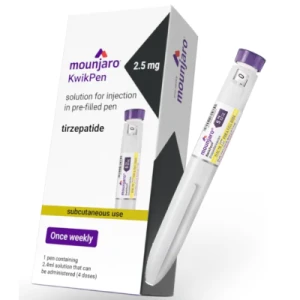
Mounjaro
- Approved Weight Loss Treatment
- Suitable for adults with a BMI of +30kg/m²
- Pre-filled injection pen
Drawbacks of Staying on a Low Mounjaro Dose
Lots of people find the effects of lower Mounjaro doses satisfactory, but there are drawbacks to not increasing your dose. Weight loss with tirzepatide is dose-dependent, with the greatest rates at higher doses. Therefore, people hoping to lose a larger proportion of their body weight may not get the results they desire if they stay on a low dose of the medication.
Another benefit of Mounjaro is that it regulates blood glucose levels in people with type 2 diabetes. Users typically achieve the greatest reductions in blood sugar levels on higher doses of Mounjaro, so some may need to escalate their dose for this reason.
Can I Increase My Mounjaro Dose Again?
You can stay on a lower maintenance dose of Mounjaro for as long as you want, provided the treatment works well for you. You can also increase your dose, though dose escalations should always be in 2.5 mg increments and at least 4 weeks following your last dose increase.
You may want to increase your Mounjaro dose if you’re unsatisfied with your weight-loss rate, hit a plateau, or experience increased food noise and cravings. Always consult a healthcare professional before making any adjustments to your current treatment schedule.
Here are a few reasons why you may want to increase your Mounjaro dose again:
- You’ve Hit a Plateau: The rate of weight loss on Mounjaro and other GLP-1 therapies generally declines over time and eventually reaches a plateau. This happens more quickly at lower doses, with one analysis finding that higher tirzepatide doses (10 mg and 15 mg) were associated with a longer time to reach a weight plateau than 5 mg. If you stop losing weight before reaching your goal, you may decide to increase your dose.
- Increased Cravings and Food Noise: A key benefit of Mounjaro is that it reduces ‘food noise’ and cravings, making it easier for users to reduce their calorie intake. If you experience increased hunger while on a lower dose, you may choose to titrate up to maintain your weight loss rate.
- Experiencing Minimal Weight Loss: Weight loss goals are highly personal and depend on several factors, including how much weight you want to lose and how quickly you want to lose it. Some people are happy with the appetite-suppressing effects of 5 mg per week, but others will find that it doesn’t sufficiently curb their hunger. Clinical guidelines recommend periodic reviews of Mounjaro treatment, and you should adjust the dose based on your goals and response to the medication.
Can I Reduce My Mounjaro Dose?
You can reduce your Mounjaro dose at any time, but your prescribing clinician must supervise all treatment adjustments. People often scale back their Mounjaro dose in 2.5 mg increments to manage side effects such as nausea and vomiting, dizziness or fatigue, or feelings of overwhelm. NICE also advises Mounjaro users to delay further dose increases until side effects abate.
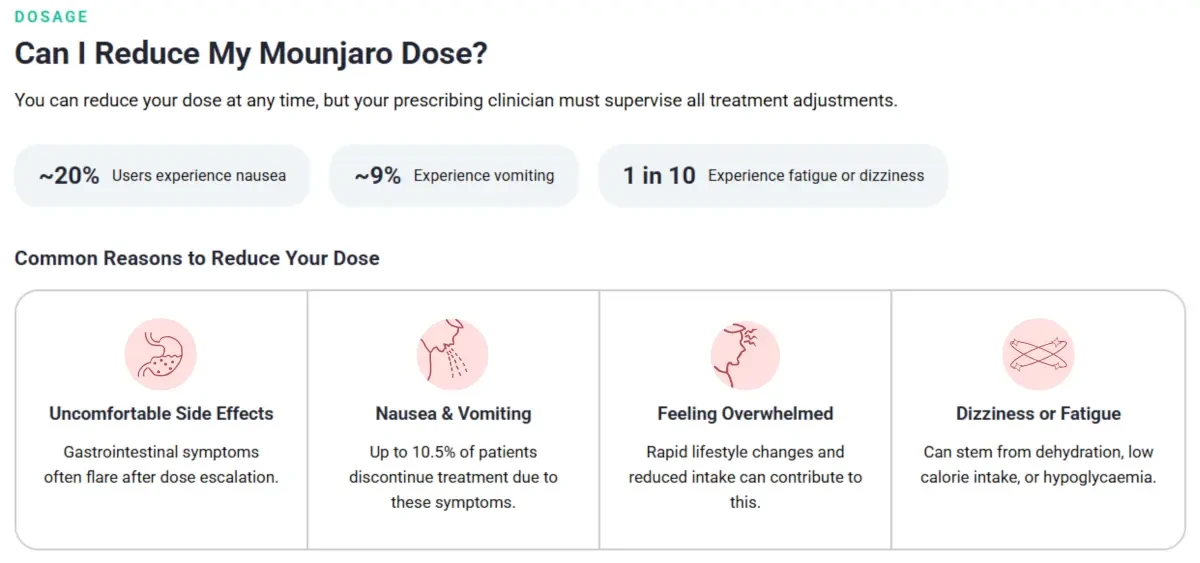
The most common reasons why someone may want to reduce their Mounjaro dose are:
- Uncomfortable Side Effects: Like all medications, Mounjaro may cause side effects. These largely affect the gastrointestinal system and can include stomach pain, diarrhoea, and constipation. Side effects typically flare up after dose escalation and often become more pronounced at higher doses. If the side effects of increasing your Mounjaro dose are particularly uncomfortable or interfere with your daily activities, your doctor may recommend going back to a lower dose.
- Nausea and Vomiting: Nausea and vomiting are two of the most common Mounjaro side effects, with nausea affecting around 20% of users and about 9% experiencing vomiting. Many people find these side effects problematic, with one analysis finding that up to 10.5% of patients discontinue treatment due to gastrointestinal symptoms. If you struggle with nausea and vomiting on Mounjaro, speak to your prescribing clinician about reducing your dosage.
Feeling Overwhelmed: Overwhelm is not an officially listed side effect of Mounjaro, but some users report feeling this way after upping their dose. Troublesome side effects, significantly reduced food intake, and rapid lifestyle adjustments can all contribute to feelings of overwhelm. If you find yourself struggling after a dose increase, speak to your prescribing clinician about potentially reducing your dose. - Dizziness or Fatigue: Fatigue and dizziness are common tirzepatide side effects, affecting up to 1 in 10 people on Mounjaro. This may happen for a few reasons, including:
- Dehydration caused by vomiting and diarrhoea
- Significant reduction in calorie intake
- Low blood sugar (hypoglycaemia)
If you experience persistent fatigue and dizziness on Mounjaro, contact a healthcare professional for advice. They may assess you to determine the cause of your symptoms and might suggest reducing your dose.
Frequently Asked Questions
Can You Stay on the Lowest Dose of Mounjaro?
Doctors don’t recommend staying on the lowest dose of Mounjaro, as it may not produce satisfactory weight loss results. This is because the smallest available Mounjaro dose, 2.5 mg, is not therapeutic. This is an initiation dose designed to help your body adjust to the medication and usually doesn’t produce meaningful weight loss or blood sugar control. Even if you are experiencing weight loss and appetite control at 2.5 mg, you should titrate up to 5 mg if this is the dosing plan agreed with your prescribing clinician.
Can I Take a Half Dose of Mounjaro?
Clinicians strongly recommend against taking a half dose of Mounjaro. The Mounjaro KwikPen is designed to deliver four full doses of medication, and splitting the dose would require tampering with the device. This may mean that you don’t receive a full and accurate dose of medication, or that you unwittingly introduce contaminants into it. If you want to reduce your Mounjaro dose, make an appointment with your prescribing clinician to discuss your treatment options.
What if the Low Mounjaro Dose Isn’t Working?
If your Mounjaro dosage isn’t sufficiently suppressing your appetite to promote weight loss, you may need to increase your dose. Tirzepatide's effects on the digestive system depend on dose, with higher doses typically achieving greater body weight reductions. However, weight loss goals are highly personal, so you should discuss your experiences and what you hope to get out of the treatment with your prescribing clinician.
With You At Every Step
Losing weight is a journey that is completely unique to you. However you navigate it, the good news is that you don’t have to go through it alone, as specialist support is available from Prescription Doctor.
We’ve been at the forefront of medicated weight loss programmes since 2013, and have cultivated a strong reputation for the quality of our service. Our team will be with you every step of the way, from ensuring that Mounjaro is suitable for your circumstances, to regularly checking in with you to monitor progress. You can even contact our clinicians if you have any questions about your medication or treatment schedule. We are here for you.
You can also find a library of useful information about Mounjaro on our website. This includes guides on Mounjaro and contraception, what medicines tirzepatide could interact with, and articles relating to dosage, such as microdosing and the supposed “golden dose”. We even have comparison articles between Mounjaro and Wegovy pills or Wegovy injections, so you can make a more informed decision about which option may be most suitable for you.
Start a consultation with Prescription Doctor today and let us help you along your journey.

Sources
- EMC (2026): Mounjaro KwikPen 2.5mg solution for injection in pre-filled pen.
- Cureus (2025): Dose-Dependent Efficacy and Safety of Tirzepatide for Weight Loss in Non-diabetic Adults With Obesity: A Systematic Review and Meta-analysis of Randomized Controlled Trials.
- StatPearls (2024): Tirzepatide.
- Nature Medicine (2025): Tirzepatide on ingestive behavior in adults with overweight or obesity: a randomized 6-week phase 1 trial.
- NICE (2026): Overweight and obesity management.
- Frontiers in Clinical Diabetes and Healthcare (2025): GLP-1 agonists and exercise: the future of lifestyle prioritization.
- NHS (2023): Self-help tips to fight tiredness.
- Cureus (2023): Comparing Efficacy and Safety of Different Doses of Tirzepatide for the Treatment of Type 2 Diabetes Mellitus: A Meta-Analysis of Randomized Controlled Trials.
- Clinical Obesity (2025): Time to weight plateau with tirzepatide treatment in the SURMOUNT‐1 and SURMOUNT‐4 clinical trials.
- JES (2023): Adverse Events Related to Tirzepatide.
- Cureus (2023): Tirzepatide-Induced Gastrointestinal Manifestations: A Systematic Review and Meta-Analysis.
- Diabetes, Obesity and Metabolism (2025): Gastrointestinal tolerability and weight reduction associated with tirzepatide in adults with obesity or overweight with and without type 2 diabetes in the SURMOUNT‐1 to ‐4 trials.
- MHRA (2024): GLP-1 receptor agonists: reminder of the potential side effects and to be aware of the potential for misuse.
Authored By

Kate Latham
Medical Content WriterPublished on: 13/08/2026
Reviewed By

Mohamed Imran Lakhi
MPharm - Lead PharmacistReviewed on: 13/08/2026
How We Are Regulated
Payment Options


© 2013 - 2026 Al Muhsineen Limited. All Rights Reserved. Registered Pharmacy: 34 Halliwell Road, Bolton BL1 8RL. Registered Office: 254 First Floor, Shearbrow, Blackburn, England, BB1 8DS


Patient Login
Don't have an account?
Your account will be automatically created after placing your first order.