
How Does Ozempic Work?
Table of contents:
Starting a medicated weight loss programme is an important decision that requires careful research and consideration. It’s essential to have a solid understanding of available treatments so you can make a more informed decision about which one may be right for your circumstances.
Ozempic is a brand name you’re likely to have come across in your research. Although it’s not licensed for obesity in the UK, it does have uses for other medical conditions. So, how does Ozempic work, what can you take it for, and is there a similar product available for weight loss? This article has all the answers.
START YOUR WEIGHT LOSS CONSULTATION TODAY
What’s Ozempic?
Ozempic is a brand name for the active ingredient, semaglutide, which belongs to a class of medications called glucagon-like peptide-1 (GLP-1) agonists, also known as incretin mimetics or GLP-1 receptor agonists. If you’ve been researching weight loss injections, you may have already heard of semaglutide, as it’s also the active ingredient in Wegovy.
Much like Wegovy, Ozempic is administered as a subcutaneous injection (under the skin) once per week and works in a similar way. Wegovy has a higher maintenance dose, making it more effective for its intended purpose of treating obesity.
Ozempic: What is it Used For?
Ozempic is licensed in the UK for the treatment of type 2 diabetes, which is characterised by insulin resistance and a relative insulin deficiency. It is not licensed for weight loss, although some private clinics used to prescribe it “off-label” for uses outside its approved indications.
Getting a medication for off-label use carries risks because it has not undergone the rigorous testing required for regulatory approval that it would have for its intended use. Although the practice is legal, choosing a medication for its licensed use is the safest and most effective option. Off-label prescribing can also lead to shortages of the medication who require it the most.
Several GLP-1 agonists are available in the UK for weight loss, including Wegovy, Mounjaro, and Nevolat. Each contains a different active ingredient, has a different mechanism of action, and follows a different dosage schedule.
How Does Ozempic (Semaglutide) Work?
Ozempic contains the active ingredient semaglutide, which works by mimicking the effects of GLP-1, a hormone that’s naturally produced by your stomach when you eat. It regulates blood sugar levels and controls your appetite. By mimicking this hormone, GLP-1 receptor agonists can treat type 2 diabetes and/or obesity by promoting insulin secretion, slowing digestion, and helping you feel full.
Ozempic is used to manage type 2 diabetes and works by helping your body produce more insulin when needed. It also lowers the amount of sugar (glucose) your liver produces, and slows the movement of food through your stomach. Together, these help to keep your blood sugar levels in a healthy range and can contribute to weight loss.
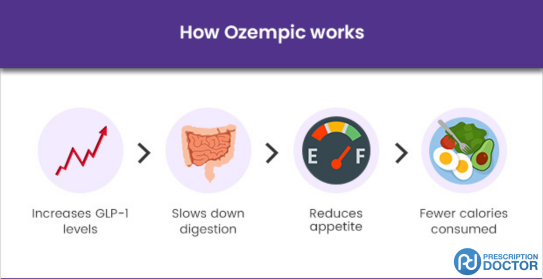
Although Ozempic can work for both weight loss and type 2 diabetes, it is only intended for controlling blood sugar levels in the UK. Here's how Ozempic works for both these purposes.
How Does Ozempic Work for Weight Loss?
Ozempic supports weight loss in three main ways: it reduces appetite, slows digestion, and stimulates insulin release. When combined, these can help individuals develop a healthier relationship with food and combat obesity when taken alongside a healthy diet and regular exercise.
Next, we’ll outline how Ozempic helps with weight loss in more detail:
1. Appetite Reduction
Semaglutide acts like GLP-1 by binding to the receptors in the brain that regulate appetite, particularly after you have eaten. When bound to these receptors, your brain gets the message that you are full, so you’ll stop eating. It can also activate nerve cells that reduce hunger and cravings while preventing the release of appetite-stimulating chemicals.
2. Slower Digestion
When food is digested, and your stomach is empty, hormones are released that signal to the brain that you feel hungry, topping up your energy levels. How long it takes for food to pass through your stomach depends on whether it is liquid or solid and its calorific value, but it can take anywhere from 3 to 6 hours for your stomach to fully empty after a meal. However, semaglutide can slow gastric emptying, helping you feel fuller for longer.

3. Insulin Release
When you eat, the body breaks down food into glucose, also known as sugar. To help your cells absorb the sugar from the blood and use it for energy, the pancreas releases insulin. When the body’s energy demands are met, insulin levels increase to deal with the rapid rise in blood sugar, signalling to the brain that we’re full. By stimulating insulin release from your pancreas, Ozempic helps improve insulin sensitivity and maintain healthy blood sugar levels, encouraging your body to burn fat for energy.
Ozempic Works for Weight Loss, But Isn’t Recommended
Ozempic is not recommended for weight loss because it is formulated to manage type 2 diabetes, not obesity. However, its active ingredient, semaglutide, is available as a weight loss injection under the brand name Wegovy and has been extensively studied and developed specifically for weight management.
Wegovy is available in 6 doses, including the maximum dose of 7.2mg per week. Clinical trials have shown that at the maximum dose, the average weight loss over 72 weeks was 21%, compared with 2.4% on placebo.
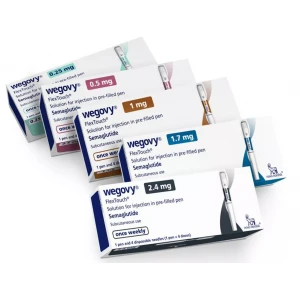
Wegovy
- Approved Weight Loss treatment
- Weekly injection
- Reduces risk of heart attack & stroke
How Does Ozempic Work for Diabetes?
Ozempic treats diabetes by mimicking the body’s natural glucagon-like peptide-1 hormone, improving how the body regulates blood sugar after meals and between meals. There are several key ways Ozempic lowers glucose levels and reduces the risk of diabetes-related complications.
1. Stimulates Insulin Release
Ozempic increases insulin secretion from the pancreas only when blood sugar is elevated, helping to lower glucose levels after meals. This glucose-dependent action means a lower risk of hypoglycaemia compared with some diabetes medications, such as insulin, which work regardless of your current blood sugar levels.
2. Reduces Glucagon Secretion
The active ingredient in Ozempic, semaglutide, also suppresses glucagon, a hormone that signals to the liver to release stored sugar. By reducing glucagon levels, Ozempic stops excess glucagon from entering the bloodstream between meals.
3. Slows Gastric Emptying
Ozempic slows the rate at which the stomach empties its contents into the gut, blunting spikes in post-meal blood sugar. This delayed digestion also contributes to a sense of fullness, which can support healthier eating habits and weight loss.
4. Improves Beta Cell Function
Clinical trials have shown that semaglutide improves pancreatic beta-cell function, enhances insulin secretion, and reduces insulin resistance in patients with type 2 diabetes. Recent animal studies have shown that semaglutide can combat beta-cell dysfunction and modulate the gut microbiome, with broader health benefits.
How Ozempic Works: Frequently Asked Questions
Choosing the right medication to manage your type 2 diabetes or to support your weight loss journey is imperative. However, understanding how Ozempic works and if it works with you will require some knowledge and understanding. That’s why we answer some of the most commonly asked questions about Ozempic.
How Long Does it Take for Ozempic to Work?
Ozempic typically begins to regulate blood sugar and reduce appetite within the first week of treatment, but it may take several weeks to notice the full benefits. Most people notice improvements in blood sugar or weight after 8 to 12 weeks of Ozempic use, but results can vary.

How Does the Ozempic Pen Work?
The Ozempic pen is a pre-filled, once-weekly injection device. After attaching a new needle, check the flow, select your dose, and inject it into your thigh, stomach, or upper arm. Once you have injected the medication, you’ll need to carefully remove the needle and dispose of it in your sharps bin.
Ozempic is not recommended for weight loss. Instead, our ‘how to use the Wegovy pen’ guide may be more useful if you are using semaglutide to help you lose weight.
Why Does Ozempic Not Work for Me?
For diabetes, suboptimal response may relate to insufficient dose titration, inconsistent use, advanced beta-cell dysfunction, or lifestyle factors such as high carbohydrate intake and low physical activity. Your clinician may adjust the dose or combine treatment with other glucose-lowering medicines.
Ozempic is not approved for weight loss in the UK. If weight reduction is your goal, licensed options such as Wegovy or Mounjaro are typically more effective when combined with dietary and behavioural support.
How to Make Ozempic Work Best?
For the best results in type 2 diabetes, inject Ozempic on the same day each week, follow the dose-escalation guidance, and combine treatment with a balanced diet, a weight-management plan, and regular physical activity. Monitoring HbA1c and reviewing progress with your clinician is essential.
If you’re looking to lose weight, speak with a clinician about switching to a licensed weight-loss medication, such as Wegovy, and use our resources, including ‘5 ways to improve weight loss with Wegovy’, for the most up-to-date, practical lifestyle strategies to enhance your results.
Is Ozempic Insulin?
No. Ozempic is not insulin. It is a GLP-1 receptor agonist that mimics the action of the digestive hormone GLP-1. It stimulates insulin release only when blood glucose is elevated and suppresses glucagon, helping to lower blood sugar and reduce the risk of hypoglycaemia compared with insulin alone.
Does Ozempic Affect Fertility?
There is not enough data to confirm whether semaglutide affects fertility in men or women. However, some research suggests that GLP-1 medications may have a positive effect on fertility. For example, its use in polycystic ovary syndrome (PCOS) has resulted in regular periods and balanced hormones, factors which can impact a woman’s chances of getting pregnant.

Continued Support Throughout Your Journey
If you’re eating a healthy diet and exercising regularly, but not noticing much weight loss, a medically supervised programme may be a solution. But which treatment should you choose, and who should you trust to guide you through the process? This is where Prescription Doctor can help.
Our weight loss consultation service is tailored to your unique circumstances. We assess your medical history and other treatments you’re taking to help you determine the most appropriate option for you, and are available to answer any queries you may have about your schedule. With us, there are no long waiting times for an appointment or potentially awkward face-to-face meetings, just a straightforward process you can rely upon.
All orders are processed by our General Pharmaceutical Council-registered pharmacy and dispatched in plain packaging for complete confidentiality, while those approved before 3pm on a weekday are eligible for next-day delivery. We also have a library of information regarding weight loss and the various treatments we offer on our website.
Take the first steps on your weight loss journey today and start a consultation with Prescription Doctor. We’ll be with you all the way.
Sources
- Cell Metabolism (2018): Mechanisms of Action and Therapeutic Application of Glucagon-like Peptide-1.
- Diabetologia (2017): Effects of semaglutide on beta cell function and glycaemic control in participants with type 2 diabetes: a randomised, double-blind, placebo-controlled trial.
- Diabetes Care (2025): High-Dose Semaglutide (Up to 16 mg) in People With Type 2 Diabetes and Overweight or Obesity: A Randomized, Placebo-Controlled, Phase 2 Trial.
- Diabetes, Obesity and Metabolism (2022): Semaglutide delays 4-hour gastric emptying in women with polycystic ovary syndrome and obesity.
- EMC (2026): Wegovy 0.25 mg, FlexTouch solution for injection in a pre-filled pen.
- EMC (2025): Ozempic 0.5 mg solution for injection in a pre-filled pen.
- Experimental & Molecular Medicine (2016): Pancreatic regulation of glucose homeostasis.
- Harvard Health Publishing (2025): How does Ozempic work? Understanding GLP-1s for diabetes, weight loss, and beyond.
- Life Sciences (2025): Semaglutide alleviates the pancreatic β cell function via the METTL14 signaling and modulating gut microbiota in type 2 diabetes mellitus mice.
- Medicines & Healthcare products Regulatory Agency (MHRA) (2026): GLP-1 medicines for weight loss and diabetes: what you need to know.
- Neurogastroenterology & Motility (2019): Advances in the physiology of gastric emptying.
- NICE: Semaglutide.
- NICE (2025): Type 2 Diabetes - What is It?
- UK Government 2024): Off-label or unlicensed use of medicines: prescribers’ responsibilities.
- British Medical Journal (2023): Appetite suppressant semaglutide is to be made available to treat obesity in England.
- Reproductive Biomedicine Online (2024): RELEVANCE of GLP-1 AGONISTS FOR INFERTILITY PRACTICE.
- Springer Nature (2021): Weight Loss and Maintenance Related to the Mechanism of Action of Glucagon-Like Peptide 1 Receptor Agonists.
- The Journal of Clinical Endocrinology and Metabolism (2019): Reductions in Insulin Resistance are Mediated Primarily via Weight Loss in Subjects With Type 2 Diabetes on Semaglutide.
- The Lancet (2025): Once-weekly semaglutide 7·2 mg in adults with obesity (STEP UP): a randomised, controlled, phase 3b trial.
- The Lancet (2017): Efficacy and safety of once-weekly semaglutide monotherapy versus placebo in patients with type 2 diabetes (SUSTAIN 1): a double-blind, randomised, placebo-controlled, parallel-group, multinational, multicentre phase 3a trial.
Authored By

Leanne Edermaniger
Medical Content WriterPublished on: 24/01/2025 Re-Published on: 05/02/2026
Reviewed By

Mohamed Imran Lakhi
MPharm - Lead PharmacistReviewed on: 05/02/2026
How We Are Regulated
Payment Options


© 2013 - 2026 Al Muhsineen Limited. All Rights Reserved. Registered Pharmacy: 34 Halliwell Road, Bolton BL1 8RL. Registered Office: 254 First Floor, Shearbrow, Blackburn, England, BB1 8DS


Patient Login
Don't have an account?
Your account will be automatically created after placing your first order.