All inclusive service
No hidden fees

Prices from £12.99
Review More Prices
Your privacy is important, Prescription Doctor are committed to keeping your details completely confidential.
This is why we also take steps to conceal your prescription products under two layers of packaging.
We have a commitment to delivering a discreet service and understand your need for privacy. We ship all orders via a trackable courier using discreet, plain packaging.
Once your order is dispatched you will receive a tracking number via sms and email.
We deliver medications between Monday and Saturday. You can upgrade to Saturday delivery on Friday.
You should receive a tracking number with your order which you can use this number to track your parcel online. This should give you a clear indication of where your parcel is. If you haven’t received your parcel in the time frame given by our couriers, contact your local depot to find out where it is. You can also contact our support team who will do this for you.
On checkout you will be asked to leave your mobile number so our courier can text you about the delivery. This is also useful if the courier has problems finding your address. We will not use your mobile number for anything else.
You can pay for your order using credit, debit card or via bank transfer.
If you don’t have a credit or debit card you can pay via bank transfer. We will give you a unique reference number at checkout along with details of how to make the transfer. Once the money has cleared in our account, we will process your order.
We are a completely secure site and take many measures to ensure your details are kept safe. We understand that you have a right to extreme privacy when purchasing sensitive health medications. All information that you provide to us is stored on our secure servers. Any payment transactions will be encrypted using SSL technology.
You can pay for your order using credit, debit card and bank transfer.
Card Payment: Please notify us that you wish to cancel your order. Your refund will show available In 1 - 3 days.
Bank Transfer: A member of our team will contact you requesting for your bank details. These details are only used to transfer the funds back into your account.
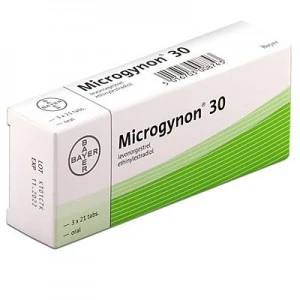
Microgynon is a combined oral hormonal contraceptive pill containing artificial versions of the progestogen, levonorgestrel and the oestrogen, ethinylestradiol. Each pill contains 150 micrograms (mcg) of levonorgestrel and 30 mcg of ethinylestradiol, which is usually taken every day for 21 days before having a 7-day pill-free break to stop you getting pregnant.
When taken correctly, Microgynon is one of the most reliable, reversible and safe oral contraceptives available. It is more than 99% effective at preventing pregnancy. However, as stated by the NHS, when typical use, such as illness (vomiting and diarrhoea), forgetting to take it, or missing a pill completely, is taken into account, it is closer to 91% effective. That means every year, 9 people who use Microgynon will get pregnant.
Microgynon also has the added benefit of making your periods lighter and less painful. However, it does not prevent sexually transmitted infections (STIs), such as Chlamydia or HIV, from being spread. The most reliable method of contraception for keeping yourself protected against STIs is condoms.
The two ingredients in the Microgynon contraceptive pill are designed to act like the naturally occurring hormones oestrogen and progesterone. They work together to prevent pregnancy in 3 ways:
Microgynon 30 pills start working immediately to prevent pregnancy if you start taking them on the first day of your period. For added precautions, you may want to use additional forms of contraception (such as condoms) for 7 days if you start treatment on days 2 to 5.
If you begin with Microgynon more than 5 days after the start of your period, you will not be protected from pregnancy straight away. You must therefore use another type of contraception until you've taken the pill for 7 days.
Microgynon 30 is taken once a day for 21 days, preferably at the same time each day. This is followed by a 7-day pill-free period. During the pill-free period, you will experience a lighter and less painful withdrawal bleed, similar to a period. A new 21-day tablet cycle is started after the 7-day pill-free period.
If you do not experience bleeding during the pill-free period, you must ensure you are not pregnant before starting the next tablet cycle.
If you're new to taking Microgynon pills, or are restarting after a break, it's recommended to take your first tablet on the first day of your next period. Doing so will mean you are protected from falling pregnant. You could also begin on days 2 to 5 of your period, but you may want to exercise caution and use condoms for 7 days as well.
If you have missed a Microgynon pill, what you'll need to do depends on when you should have taken the missed pill.
If you should have taken Microgynon less than 12 hours ago:
If you are more than 12 hours late taking Microgynon or you have missed more than one pill, you should:
Your next step is to check how many Microgynon tablets are left in the strip and follow the instructions below:
Should you have missed one or more pills on days 1 to 7 of the strip, and you had unprotected sex in that week, there is a chance you could be pregnant. Speak to your doctor, nurse, or pharmacist about emergency contraception.
If you have missed any pills in the strip and you do not have a bleed in the first pill-free break, you could be pregnant. Speak to your clinician or do an at-home pregnancy test.
If you start a new strip late or make your pill-free break longer than seven days, you may not be protected against pregnancy. If you had sex in the last week, speak to your clinician for advice, as you may need emergency contraception. You should also use an extra contraception method, like condoms, for the next seven days.
If you take more Microgynon pills than you should, it is unlikely to cause you any harm, but you may feel sick, vomit, or have some vaginal bleeding. Speak to your clinician if you get any of these symptoms and you have taken more Microgynon pills than you should.
If you are sick (vomiting) or have severe diarrhoea within 4 hours of taking the pill, your body may not have absorbed all of the active ingredients. If you are better within 12 hours of taking Microgynon, you should follow the lost pill instructions, which means you can either:
If you are still unwell more than 12 hours after taking Microgynon, follow the missed pill advice. If your upset stomach continues, speak to your clinician who may recommend another type of contraception.
If you want to switch to Microgynon from another pill, what you need to do will depend on the type of pill you are currently using.
| Switching from | How to switch |
|---|---|
| A 21-day combined pill | Start Microgynon 30 the day after your previous pill strip ends. You will not have a withdrawal bleed until after the first strip of Microgynon is finished, but your contraceptive protection will not be reduced. |
| A 28-day combined pill | Start taking Microgynon after your last active pill. You will not have a withdrawal bleed until after the first strip of Microgynon is finished, but your contraceptive protection will not be reduced. |
| A progesterone-only or mini pill | Start taking Microgynon on the first day of bleeding, even if you have already taken the mini pill that day. You will be protected against pregnancy straight away. |
Microgynon is generally considered safe and well-tolerated. However, it is important to be aware of the adverse effects. It is always better to be prepared, and we recommend familiarising yourself with Microgynon before use. Our clinicians are available to provide one-to-one expert advice if you suspect any unusual effects may be due to Microgynon.
Like all medications, there is potential to experience Microgynon 30 side effects. These are often mild, and some people may not notice any adverse effects at all.
Possible Microgynon side effects include:
| Common Microgynon 30 side effects (affects between 100 and 1,000 in every 10,000 users) | Uncommon Microgynon 30 side effects (affects between 10 and 100 in every 10,000 users) | Rare Microgynon 30 side effects (affects between 1 and 10 in every 10,000 users) |
|---|---|---|
| Feeling sick (nausea) Stomach ache Weight gain Headaches Depressive moods or mood swings Sore or painful breasts | Being sick (vomiting) Stomach upset Fluid retention Migraine Low libido Breast enlargement Itchy skin rash | Poor tolerance of contact lenses Weight loss Increased libido Vaginal or breast discharge |
This is not a complete list of potential Microgynon 30 side effects. For more information, you should read the patient information leaflet that comes with your pill or is available online.
If you get any of the above side effects or any that are not listed here, you should report them to your doctor or directly to the MHRA's Yellow Card Scheme.
Do not take Microgynon 30 if you are allergic to ethinylestradiol, levonorgestrel, or any other ingredients in the pill.
Signs of an allergic reaction include:
If you notice any signs of an allergic reaction, call 999 or have someone take you to A&E.
The combined pill slightly increases your risk of getting a blood clot compared to people who have never taken it. Although the risk is small, you should know that the risk of developing a blood clot in a year is as follows:
If you are concerned about the risk of blood clots, section 4.4 of the Summary of Product Characteristics (SmPC) provides more details. Alternatively, you can discuss your concerns with your clinician.
Signs of a blood clot include:
While still overall small, the risk of developing a blood clot with Microgynon 30 can be increased by factors such as smoking, obesity, and a family history of the condition. It is also highest during the first year of treatment or if you're restarting after a break of 4 weeks or more.
Microgynon may not be suitable if you're due to undergo elective surgery or are likely to be immobile for an extended period. In this case, your clinician may recommend alternatives, such as a progestogen-only (mini) pill.
If you have or have had breast cancer, you should not take the pill. The risk of developing the condition increases the longer you are on the pill, but returns to normal within 10 years of stopping it.
The risk of getting breast cancer increases if you:
Speak to your clinician about any concerns you have about breast cancer and the pill.
Microgynon 30 is not suitable for everyone. Some medical conditions may mean that you cannot take it. Your clinician will review your medical history to confirm that Microgynon is safe for you to take before issuing a prescription.
Do not take Microgynon if you:
You should let your clinician know if you have any other medical conditions that are not listed here. If you have been told you are intolerant to some sugars, such as lactose or sucrose, tell your clinician before taking Microgynon.
There are some medications that can be unsafe to take with Microgynon. It is essential to inform the doctor if you are taking any other medications, including prescribed, over-the-counter, or herbal medicines, to ensure they are safe to use with Microgynon.
Please inform our clinicians if you are on:
Do not take Microgynon 30 if you have hepatitis C and you are taking any medicines containing:
Most antibiotics are considered safe to take while on Microgynon, as they do not affect how the treatment works. This is not the case for medications that impact liver enzymes (for example, rifabutin and rifampicin), as these can lower Microgynon's effectiveness.
Do not take Microgynon if you are pregnant, think you might be pregnant, or want to get pregnant. If you think you are pregnant, take a pregnancy test.
You should tell your clinician or family planning nurse if you are breastfeeding before taking Microgynon. They may suggest an alternative contraceptive method.
Yes, Microgynon is a combined oral contraceptive (COC) pill. It contains two synthetic hormones (levonorgestrel and ethinylestradiol) that mimic the effects of the naturally occurring hormones progesterone and oestrogen, respectively. Working together, these ingredients prevent pregnancy about 91% of the time with typical use.
Yes, Microgynon may help to improve the appearance of acne, though it is not considered a first-line treatment for the condition. Research has shown that it can reduce the total number of acne lesions, given that it may reduce skin oil (sebum) production and male hormone (androgen) levels.
Although Microgynon 30 can be used to improve acne symptoms as well as prevent pregnancy, you may experience temporary flare-ups as your body adjusts to new hormone levels. It's recommended to continue taking the pill for at least 3 months to see how things go, as this is how long it can take to notice an improvement.
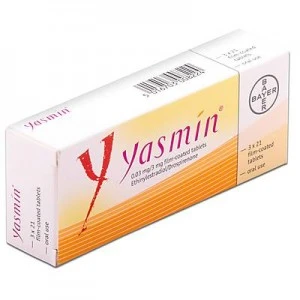
If symptoms persist, you should contact a clinician for advice. They may suggest an alternative combined pill with anti-androgenic properties, such as Yasmin.
Yes, you can take Microgynon 30 strips back-to-back to delay your period. You can also use the tricycling method, in which you take Microgynon for three consecutive cycles without a break, followed by a 4- or 7-day pill-free break. This is called a tailored regimen and may help to reduce period pain, headaches, migraines, and pre-menstrual tension.
Because more tailored regimens, such as tricycling and back-to-back use, are not explicitly mentioned in the product guidelines, you should speak to a clinician before commencing these types of routines. Other medications are available if you're considering stopping or delaying your period.
Some people report that they have gained weight after taking Microgynon, and it is listed as a common side effect, affecting between 100 and 1,000 users in every 10,000. However, there is no reliable evidence that the combined contraceptive pill causes weight gain.
Any fluctuations in weight are more likely to be due to increased appetite or temporary water retention. However, if you would like support with losing weight, consult your clinician for advice.
No, you cannot buy Microgynon 30 over the counter, as it's classified as a prescription-only medication. Instead, your circumstances will first have to be reviewed by a clinician or doctor to determine whether the treatment is safe and suitable for you.
For added convenience, you can buy Microgynon online from a reputable pharmacy, such as Prescription Doctor, after completing a brief medical questionnaire.
Cochrane (2012): Combined oral contraceptive pills for treatment of acne.
EMC (2023): Microgynon 30 tablets.
EMC (2023): Patient Information Leaflet.
NHS (2026): Tricycling the contraceptive pill.
NICE (2024): Scenario: Combined oral contraceptive.
PubMed (2014): Combination contraceptives: effects on weight.
© 2013 - 2026 Al Muhsineen Limited. All Rights Reserved. Registered Pharmacy: 34 Halliwell Road, Bolton BL1 8RL. Registered Office: 254 First Floor, Shearbrow, Blackburn, England, BB1 8DS
Don't have an account?
Your account will be automatically created after placing your first order.