All inclusive service
No hidden fees

Prices from £14.99
Review More Prices
Your privacy is important, Prescription Doctor are committed to keeping your details completely confidential.
This is why we also take steps to conceal your prescription products under two layers of packaging.
We have a commitment to delivering a discreet service and understand your need for privacy. We ship all orders via a trackable courier using discreet, plain packaging.
Once your order is dispatched you will receive a tracking number via sms and email.
We deliver medications between Monday and Saturday. You can upgrade to Saturday delivery on Friday.
You should receive a tracking number with your order which you can use this number to track your parcel online. This should give you a clear indication of where your parcel is. If you haven’t received your parcel in the time frame given by our couriers, contact your local depot to find out where it is. You can also contact our support team who will do this for you.
On checkout you will be asked to leave your mobile number so our courier can text you about the delivery. This is also useful if the courier has problems finding your address. We will not use your mobile number for anything else.
You can pay for your order using credit, debit card or via bank transfer.
If you don’t have a credit or debit card you can pay via bank transfer. We will give you a unique reference number at checkout along with details of how to make the transfer. Once the money has cleared in our account, we will process your order.
We are a completely secure site and take many measures to ensure your details are kept safe. We understand that you have a right to extreme privacy when purchasing sensitive health medications. All information that you provide to us is stored on our secure servers. Any payment transactions will be encrypted using SSL technology.
You can pay for your order using credit, debit card and bank transfer.
Card Payment: Please notify us that you wish to cancel your order. Your refund will show available In 1 - 3 days.
Bank Transfer: A member of our team will contact you requesting for your bank details. These details are only used to transfer the funds back into your account.
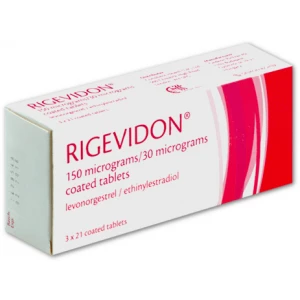
Rigevidon is a combined contraceptive pill which contains synthetic versions of the female sex hormones: oestrogen and progesterone. Each pill contains 30 micrograms (mcg) of ethinylestradiol (oestrogen) and 150 mcg of levonorgestrel, a synthetic progestogen that mimics the naturally occurring hormone progesterone.
Aside from being primarily used as a contraceptive, Rigevidon is also recommended for women who suffer from heavy, painful or irregular periods. It comes as film-coated tablets in calendar-marked packs of 21 tablets per strip. Each pack contains 3 or 6 strips of Rigevidon pills.
Please note: Rigevidon does not protect against STIs such as chlamydia. Condoms are the most reliable method of contraception for STI prevention. If you have had unprotected sex and are worried about STIs, speak to a clinician for advice.
Rigevidon is a hormonal combination pill containing two active ingredients, levonorgestrel and ethinylestradiol. Together, they work to prevent pregnancy by:
These combined effects greatly reduce your chance of becoming pregnant. Combined pills, including Rigevidon, are more than 99% effective at preventing pregnancy when they are taken perfectly. However, when typical use is considered, which includes factors like forgetting your pill, being sick, or having diarrhoea, they are closer to being 91% effective. That means 9 out of 100 Rigevidon users will get pregnant each year.
The active ingredients in Rigevidon contraceptive pills start working immediately to prevent pregnancy, provided you take the tablet on day 1 of your period. Otherwise, if you start treatment on days 2-5, you should use extra precautions such as condoms for the first 7 days.
Rigevidon tablets come in a blister pack, with each pill individually labelled with the day of the week it should be taken. Take note of the day you begin treatment and continue to take the pill at the same time for the next 21 days.
Once you’ve done this, it will be time for a 7-day break. During this timeframe, you should experience a withdrawal bleed similar to a period. On the 8th day, start a new tablet strip, even if you’re still bleeding. As long as you’re regularly taking Rigevidon pills without missing any, you will start a new strip on the same day of the week every time.
Consistency is key to ensuring you’re protected from pregnancy. If you feel that you may have trouble remembering to take the pill, consider setting an alarm on your phone or keeping the medication in a place where you’ll be reminded of it.
You should ideally start taking Rigevidon contraceptive pills on the first day of your cycle, which is the day your bleeding starts. Take the pill marked with the correct day of the week (so if your period begins on a Thursday, take the tablet marked Thursday). Follow the direction of the arrow and take one pill every day until the pack is empty.
If you start Rigevidon on day 2-5 of your period, use another method of contraception (such as condoms) for the first 7 days of treatment. After this, provided you keep taking the pill correctly, you should be protected from becoming pregnant.
If you miss a Rigevidon pill, the most appropriate course of action will depend on the length of time since you last took one.
What to do next if you miss a Rigevidon pill is dependent on the week in which the missed pill should have been taken:
If you have taken the pill correctly for the previous 7 days, you do not need to use additional contraception and can follow either of the following methods. If you have not taken Rigevidon correctly in the previous 7 days, you must follow the first method and use condoms for the next 7 days.
If you have missed any pills and do not get a withdrawal bleed during the first pill-free break, it’s a good idea to take a pregnancy test.
If you take more Rigevidon than you should, it is unlikely to cause any serious harm, but you may feel or be sick or have stomach pain, breast pain, numbness, drowsiness or fatigue, or vaginal bleeding. If you get any of these symptoms, speak to your clinician for advice.
If you are sick (vomiting) or have diarrhoea within 3 to 4 hours of taking Rigevidon, there is a chance that your body may not have absorbed all of the active ingredients.
After vomiting or having diarrhoea, take another tablet as soon as possible. If you can, take it within 12 hours of when you would normally take your pill. If this isn’t possible, or if at least 12 hours have passed, follow the missed-pill advice.
If you are switching from another combined hormonal contraceptive, start taking Rigevidon on the day after you have finished your previous hormonal pill. If you take a pill that has inactive or dummy pills, start Rigevidon on the day after you take the last active pill.
When switching from a progesterone-only or mini pill, start taking Rigevidon at any time. Take your first pill the next day at your usual time, but you will need to use condoms for the next 7 days.
It’s always advisable to consult a clinician or doctor before switching contraceptives. This is to ensure you’re receiving the right information for your circumstances and can make more informed decisions.
Before taking any medicine, it's essential to be aware of the associated risks and remain vigilant for any side effects or changes that may occur during your course of treatment.
All medicines carry the risk of side effects, though not everybody experiences them. These are usually mild and should clear up after a short time.
Potential Rigevidon side effects include:
Common Side Effects (may affect up to 1 in 10 people) | Uncommon Side Effects (may affect up to 1 in 100 people) | Rare Side Effects (may affect up to 1 in 1,000 people) |
|---|---|---|
Abdominal pain | Appetite changes | Severe allergic reaction |
Abnormality of the cervix | High blood pressure | Glucose intolerance |
Stomach cramps | Inability to wear contact lenses | |
Breast pain or enlargement | Bloating | Yellowing of the skin (jaundice) |
Change in sex drive | Skin rash | Erythema nodosum |
Dizziness | Chloasma (yellow-brown patches on the skin) | Blood clots in a vein or artery |
Fluid retention | Excessive hair growth |
|
Mood swings (including depression) |
| |
Changes in blood fat levels |
| |
Nervousness |
|
|
|
| |
Vaginal infections |
|
|
Vomiting |
|
|
Weight changes |
|
|
It’s important to note that the above list is not an exhaustive rundown of possible Rigevidon pill side effects. More information can be found within the Patient Information Leaflet for the treatment.
If you experience any side effects, whether they are listed above or in the patient information leaflet for Rigevidon, inform your clinician for advice. You can also report them directly to the MHRA’s Yellow Card Scheme.
Do not take Rigevidon if you are allergic to levonorgestrel, ethinylestradiol or any of the other ingredients of Rigevidon listed in the Patient Information Leaflet.
If you experience the signs of an allergic reaction, stop taking Rigevidon and seek immediate medical attention.
Signs of an allergic reaction include:
Combined contraceptive pills, such as Rigevidon, can slightly raise the risk of blood clots when compared to people who have never taken them. The potential risk is as follows:
Category | Risk of developing a blood clot in a year |
|---|---|
People who are not using the combined pill and are not pregnant | About 2 out of 10,000 people |
People who use a combined pill containing levonorgestrel | About 5 to 7 out of 10,000 people |
Rigevidon users | About 5 to 7 out of 10,000 people |
The risk of a blood clot is increased if you:
Your chances of developing blood clots while taking Rigevidon or other combined pills are at their highest during the first year of treatment, or if you’re restarting the pill after a gap of 4 weeks or more.
Some medical studies have reported an increased risk of cervical cancer in long-term users of the pill. However, it’s not clear whether this is caused by Rigevidon (or any other combined pill), as it could be the result of sexual behaviour and other factors.
Breast cancer has also been found in slightly more women who take the pill than in individuals of the same age who don’t take it. Again, it is not certain whether this is due to the pill itself, as it could be because women taking the pill are examined more often, so the cancer is noticed earlier.
Although this enhanced risk is minimal, certain factors, such as a family history of breast cancer or obesity, can make the likelihood even higher. If you stop taking the pill, your base risk of developing the condition returns to regular levels after around 10 years.
More details about Rigevidon and cancer are available in the Patient Information Leaflet.
Rigevidon may not be suitable for everyone. It is important to discuss your medical history with a clinician before starting the combined pill, so that they can ensure it is safe for you to take.
Do not take Rigevidon if you:
Before taking Rigevidon, tell your clinician if you are taking any prescribed, over-the-counter, or herbal medicines, as they may interact with Rigevidon and reduce its effectiveness and vice versa.
Do not take Rigevidon if you have hepatitis C and are taking any medicines that contain:
Tell your clinician if you take the herbal remedy St John’s Wort, ciclosporin, lamotrigine, or any medicines to treat the following conditions:
Most antibiotics are safe to use when taking Rigevidon birth control pills, as they will not interfere with how the medication works. However, treatments such as rifabutin and rifampicin (which affect liver enzymes) can reduce the effectiveness of Rigevidon.
If you are pregnant, think you might be pregnant, or are planning on becoming pregnant in the near future, speak to a clinician before taking Rigevidon. If you become pregnant while taking Rigevidon, stop taking the contraceptive pill and inform your doctor.
Rigevidon pills should not be taken if you are breastfeeding. If you’re currently breastfeeding and want to take the pill, discuss this with your clinician.
Yes, Rigevidon is a combined oral contraceptive (COC), as it contains two active ingredients that work together to prevent pregnancy. Levonorgestrel (a progestogen) and ethinylestradiol (oestrogen) are synthetic substances that mimic the effects of hormones that occur naturally in the body. In cases with typical use, the pill offers around 91% protection against getting pregnant.
Although weight changes are listed as possible Rigevidon pill side effects, clinical research has not conclusively proven that combined contraceptives can influence your weight. Any fluctuations are more likely to be due to temporary water retention or increased appetite rather than body fat.
If you would like advice about potential Rigevidon side effects or managing your weight, contact your clinician.
Yes, Rigevidon can cause spots (acne) and other skin changes. Acne is listed as a common side effect of Rigevidon that may affect up to 1 in 10 users. Skin issues usually flare up at the beginning of contraceptive treatment, or when restarting after a break of a few weeks, but will typically subside once your body adjusts to the pill.
Yes, the Rigevidon pill can stop or delay periods if taken back-to-back, without having the usual 7-day break. Monophasic pills like Rigevidon can be taken continuously for as long as desired, though the risk of breakthrough bleeding increases with prolonged use.
It is recommended to consult a clinician before starting a continuous regimen to ensure it is suitable for your circumstances. Alternative medications are available if you’d like to stop or delay your period.
Yes, Rigevidon contraceptive pills can cause hair loss. The condition is listed as an uncommon side effect of the treatment (potentially affecting up to 1 in 100 women) and is often temporary, usually clearing up after a few months. The risk may be enhanced in people sensitive to androgenic (male hormone) effects or those with a predisposition to shedding.
If you experience continuous hair loss while taking Rigevidon tablets, consult a clinician as alternative contraceptive treatments could be more suitable.
Yes, Rigevidon may help with the appearance of acne, despite not being a first-line treatment for the condition. Studies have shown that combined oral contraceptives can reduce the production of sebum (skin oil) and androgen (male hormone), thereby reducing the number of acne lesions.
Yes, Rigevidon can cause breast growth. It is listed as a common side effect of the medication, potentially affecting up to 1 in 10 women. This is due to the pill’s hormone content, which may cause temporary changes in fat distribution and fluid retention. If the enlargement is bothersome, you may want to discuss alternative treatments with a clinician.
Yes, you can take Rigevidon strips back-to-back, especially if you want to delay or avoid a bleed. You should start the next strip of Rigevidon as soon as your current strip finishes. If you stop taking the medication, you will have a withdrawal bleed and not be protected from pregnancy.
If you don’t have a period for 3 months after stopping treatment, speak to your clinician or doctor for advice.
Yes, there is no known interaction between Rigevidon and alcohol, but heavy drinking can increase the risk of vomiting. If this happens within 3 to 4 hours after you take a pill, it may reduce the pill's absorption and effectiveness. Always drink alcohol in moderation.
While it is unlikely that Rigevidon will affect your ability to drive or operate machinery, dizziness is a reported side effect. If you experience dizziness, fatigue, or any other side effect that may affect your ability to concentrate, avoid driving or operating machinery until you feel it is safe to do so.
Yes, you can buy Rigevidon online from registered online pharmacies, such as Prescription Doctor. The process begins with a brief medical questionnaire that acts as a consultation. Our experienced clinicians will then review your information to determine if Rigevidon is suitable for your circumstances or recommend an alternative treatment. Once approved, your order is dispatched from our General Pharmaceutical Council-registered pharmacy for swift, discreet delivery to your chosen address.
Yes, Rigevidon is available on the NHS for free, but you need to make an appointment with your GP or visit a sexual health clinic to find out if it is available in your area and a suitable pill for you to take.
Store Rigevidon contraceptive pills below 25°C, out of the sight and reach of children and animals. Be sure not to take the medication after the expiry date listed on the carton and blister pack. Do not throw away any medicines via household waste or wastewater. Instead, ask your pharmacist about how to dispose of treatments you no longer use.
© 2013 - 2026 Al Muhsineen Limited. All Rights Reserved. Registered Pharmacy: 34 Halliwell Road, Bolton BL1 8RL. Registered Office: 254 First Floor, Shearbrow, Blackburn, England, BB1 8DS
Don't have an account?
Your account will be automatically created after placing your first order.