Surgical Face Masks

In Stock
Dosage
Surgical
+
Package Type
x50 Face Masks
£24.99
+
Get Started
Order in the next 05 hours and 07 min to receive your order Thursday, June 18
All inclusive service
No hidden fees

Next day delivery
Discreetly packaged
Discreet delivery
Prescriber available
Prescriber assess you online
How to order
  1. Click on the green "Get Started" button, then click "Start Consultation" button on the next page.
  2. Fill in our short consultation form.
  3. Choose delivery method and mode of payment.
  4. Our team of expert prescribers will assess whether medication is suitable.
  5. If you get the green light and it is deemed suitable, your order will be processed quickly and efficiently.
Confidential Service

Your privacy is important, Prescription Doctor are committed to keeping your details completely confidential.

This is why we also take steps to conceal your prescription products under two layers of packaging.

Delivery and Packing
Discreet Delivery?

We have a commitment to delivering a discreet service and understand your need for privacy. We ship all orders via a trackable courier using discreet, plain packaging.

Do I Need to Wait in All Day for Delivery?

Once your order is dispatched you will receive a tracking number via sms and email.

Do You Deliver on Weekends?

We deliver medications between Monday and Saturday. You can upgrade to Saturday delivery on Friday.

My Order Hasn’t Arrived What Should I Do?

You should receive a tracking number with your order which you can use this number to track your parcel online. This should give you a clear indication of where your parcel is. If you haven’t received your parcel in the time frame given by our couriers, contact your local depot to find out where it is. You can also contact our support team who will do this for you.

Can I Be Notified by Text?

On checkout you will be asked to leave your mobile number so our courier can text you about the delivery. This is also useful if the courier has problems finding your address. We will not use your mobile number for anything else.

Payment Methods
How Can I Pay for My Order?

You can pay for your order using credit, debit card or via bank transfer.

I Don’t Have a Credit Card, How Can I Pay?

If you don’t have a credit or debit card you can pay via bank transfer. We will give you a unique reference number at checkout along with details of how to make the transfer. Once the money has cleared in our account, we will process your order.

How Do You Keep My Details Safe?

We are a completely secure site and take many measures to ensure your details are kept safe. We understand that you have a right to extreme privacy when purchasing sensitive health medications. All information that you provide to us is stored on our secure servers. Any payment transactions will be encrypted using SSL technology.

Payment and refunds?

You can pay for your order using credit, debit card and bank transfer.

Card Payment: Please notify us that you wish to cancel your order. Your refund will show available In 1 - 3 days.

Bank Transfer: A member of our team will contact you requesting for your bank details. These details are only used to transfer the funds back into your account.

Patient Reviews: How Surgical Face Masks Has Made a Difference

Treatment Information

Table of contents:

Buy Surgical Masks Online UK

Buy surgical masks online from our trusted UK pharmacy. We offer fast next-day delivery on orders placed before 3pm on weekdays.

Our surgical masks are available to buy in packs of 25 and packs of 50.

Surgical face masks are effective at protecting the respiratory tract from harmful substances in the air, such as dust, pollen, pollution, and water droplets that may contain harmful chemicals, bacteria, and viruses.

Typically, surgical masks are used in hospitals, clinics and other caregiving environments to protect staff and patients from diseases.


What do surgical masks look like?

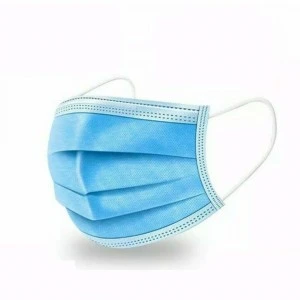
Surgical masks are pleated oblongs with elasticated hoops at each end.

The outside of the mask is light blue, while the inside of the mask is white. It is essential to wear the face mask with the blue side facing outward, not the other way around.

They are made from 3 layers of material which filter out particles in the air.

When you buy surgical masks online, they will be flat. When you put on a surgical mask, you will need to adjust it so that it covers both your nose and mouth.

Are surgical masks the same as N95 respirator masks?

Surgical masks are not the same as N95 or FFP2 respirator masks. Respirator masks are made from different materials and are compliant with FFP and NIOSH standards. While surgical masks are not compliant with these standards, they are still effective at preventing harmful particles in the air.

If you are looking to buy KN95 respirators online, Prescription Doctor offers packs of up to 10 masks.


How do I wear a surgical mask?

It is essential to take care when putting on and removing your surgical mask.

Wash your hands before you put on the mask.

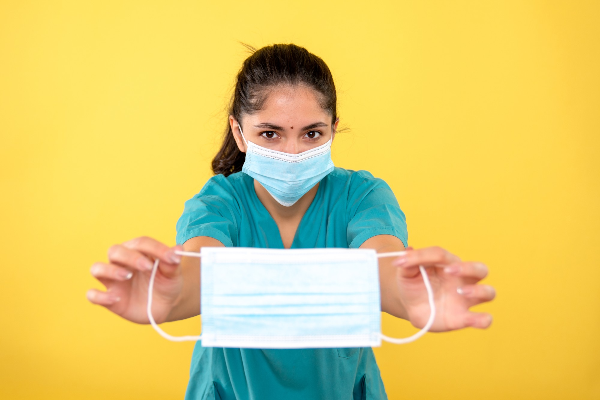
Place the mask on the palm of your hand with the blue side facing downwards.

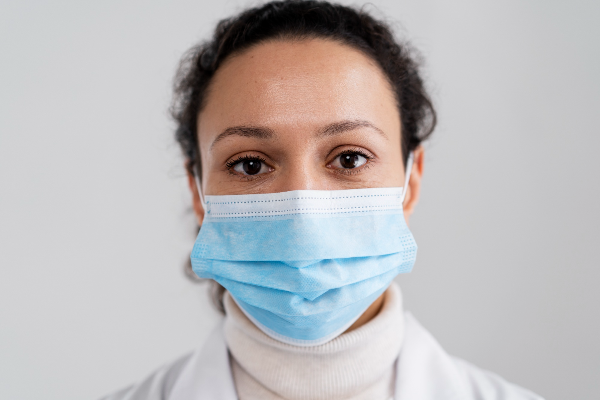
Cover your nose and mouth with the mask, as if you were covering your mouth while coughing.

Stretch the white loops over the back of your ears to hold the mask in place.

Adjust the front of the mask to ensure both your nose and mouth are covered. Pull down the bottom of the face mask so that it covers your chin.

When removing your face mask, avoid touching the front of the mask.

Unhook the ear loops from your ears.

Hold the surgical face mask by the loops when discarding it in the bin.

Always wash your hands after removing your face mask.

Do not discard your mask by throwing it onto the street. Keep the mask on your face until you are near a bin, where you can discard the used face mask.

Tips for wearing face masks

Wearing a surgical mask can affect your breathing. However, you should not lower the top of the mask below your nose, as this defeats the purpose of wearing a face mask in the first place. The mask must cover both your nose and mouth at all times.

One of the major complaints of wearing a surgical face mask for prolonged periods is irritation, chaffing, or rubbing against the back of the ears. Here are some ways to prevent your surgical mask from rubbing your ears raw:

Use a face mask clip (also known as an "ear saver"):

These are strips of plastic with teeth or catches that the elasticated loops catch onto. They move the tension from behind your ears to the back of your head. You can also achieve the same effect by using a paper clip to secure the loops around the back of your head.


Use buttons on headbands and baseball caps:

Take a headband or baseball cap and affix medium to large buttons on either side, just above your ears. Then, loop the elasticated ear loops around the buttons, not your ears.


Add padding around the ears and nose:

Add some tissue between your ears and the elastic loops to minimise friction from the mask. You can also use small pieces of sponge under the ear loops or across the part of the mask that sits on top of the bridge of your nose.

If you experience irritation around the back of your ears, creams such as Sudocrem are available, which can help reduce redness and pain caused by the material rubbing against your skin. Consult with your doctor or pharmacist to determine the most suitable cream for you.

Do not carry your surgical face mask on your arm, tucked under your chin, on your head or dangling from one ear. If you do not need to wear a surgical mask for the time being, remove it and discard it properly.

Do not touch the front of your face mask whilst you are wearing it. Wearing a surgical mask can be uncomfortable at first, but it is important not to touch the front of the face mask. As you inhale through the mask, tiny particles in the air are drawn towards you but are caught in the fibres of the mask. Touching the blue area of the mask transfers these potentially harmful particles to your hands, which can then be passed on to other surfaces.

Do not move the mask away from your mouth to talk to someone - talk through the mask instead.

If you need to eat, remove the mask completely and discard it safely. You may need to put on a new mask after eating.

Do not reuse the mask. Once you have used the surgical mask for as long as necessary, dispose of it properly. If your mask becomes visibly soiled, damaged, or its integrity is compromised, discard the mask.

Do not attempt to wash surgical masks as this can damage the materials, rendering the mask ineffective at protecting you and others.


Frequently asked questions

Will surgical face masks protect me from Coronavirus?

Surgical masks can block particles from coughs and sneezes that may carry the virus, thereby reducing your risk of catching or spreading the coronavirus. However, surgical masks alone are not enough to protect yourself and others against COVID-19. You should always maintain a distance of at least 2 meters from others and wash your hands regularly with soap and water for at least 20 seconds, even while wearing a mask.

Can surgical masks be reused?

Surgical masks cannot be reused. Once you have worn a face mask, dispose of it responsibly in a designated bin. Surgical face masks cannot be washed and reused.

Can surgical masks be sterilised?

Surgical masks cannot be sterilised. We are aware that guides exist online about "sterilising" face masks using an oven or microwave. However, placing your face mask in a kitchen appliance runs the serious and very dangerous risk of causing a fire and damaging the mask. Do not put surgical masks in the oven or microwave.

Can surgical face masks be worn on both sides?

Surgical face masks can only be worn with the blue side facing outwards. The masks are not reversible, and reversing the mask after it has been worn increases your risk of inhaling contaminants, including dust, pollen, and moist air particles that may contain viruses and other harmful bacteria.

Are surgical masks FFP2?

Surgical face masks are not FFP2, nor are they equivalent to FFP2, N95 or KN95 face masks. Regardless, surgical face masks do offer protection from dust, pollen and water droplets, which may carry germs in the air.

Where can I buy surgical face masks online?

You can buy surgical masks online from Prescription Doctor. All items are dispatched from our UK-based pharmacy via a next-day courier service.


Additional Resources

PAGE

Are face masks effective against Covid-19?

With new information coming out all the time as to what the ‘new normal’ is going to be like for the public once lockdown is over, it is perhaps the subject of face masks which garners the most attention, resulting in an influx of information – and disinformation – relating to their effectiveness for those with or without symptoms.Should we wear them when we leave the house? Are they actually effective at protecting us from developing coronavirus? Can they prevent the disease from spreading to others? This latter point is always the most crucial; the sooner the virus can be stopped, the sooner normalcy can be resumed.There is a major debate as to the effectiveness of face masks and surgical masks, including home-made ones that the Center for Disease Control and Prevention seems to be recommending, with some saying that the masks are ineffective and others suggesting that they can prevent someone who has the disease (perhaps without knowing about it) from infecting someone else. Thus, the virus will not be able to spread from person to person as easily, and the infection rate will decrease.The transport secretary, Rt Hon Grant Shapps, announced that face coverings will be compulsory on public transport from the 15th of June. Face masks have also been recommended for enclosed spaces where social distancing measures may be harder to adhere to, such as small shops.What are face masks and what are they used for?Surgical masks are more prominent in hospitals and other caregiving environments. People who work in nail salons may also wear face masks to prevent them from breathing in vapours emitted by the glues and varnishes they use.Of course, there are other applications for face masks, such as:Using aerosol adhesives, varnishes or paintCleaning with strong chemicals (bleach)Cutting or sanding wood and metalHandling fibrous materials (fibreglass)Preventing hay fever symptoms when gardeningThese uses don't necessarily require a professional setting. For example, if you are working on a restoration project - whether it be restoring a car or a piece of antique furniture - you could benefit from wearing a face mask to protect yourself against dust particles, shavings, chemical vapours and other harmful substances.In mainland China and Hong Kong, face masks are a common sight due to the high levels of pollution. In fact, China contributes to almost 30% of global CO2 emissions, almost double the rate of carbon emissions from the United States. These high levels of pollution have had a detrimental impact on their air quality. To combat this, many citizens cover their faces with scarves or face masks to protect themselves. So for people living in and around China, face masks are just another facet of their daily lives.Recently, face masks have become an increasingly common sight due to the COVID-19 pandemic. People all over the world have been donning surgical masks or respirators to protect themselves from contracting or spreading the infection. In the UK, many people have resorted to wearing face masks when out shopping, exercising or travelling to and from work. Unlike people living in China, British citizens are not accustomed to wearing face masks, and this new requirement may seem a little confusing or daunting, due to the different types of face masks available and the ever-changing information which keeps emerging regarding their efficacy against the virus.What is the best face mask?Essentially, the best mask for you entirely depends on your specific use case.It is also vital that you purchase the correct mask for you. Some, such as standard surgical masks or home-made fabric versions, may not be as effective against viruses or chemical vapours. They are too loose, which means there is potential for ‘leakage’ around the edges. Although surgical face masks can protect against larger airborne droplets, smaller particles, just like the ones that can infect an individual with COVID-19, can pass through the fabric and enter the airways. N95 face masksThe best mask to use is an N95 or similar mask. These masks fit much more snugly against the face, producing a less permeable seal. Although they may not be as comfortable as homemade masks or the looser-fitting ones, they do cover the face more effectively and offer significantly more protection. Not only this, but they are able to withstand both large and small particles and droplets. These masks filter out approximately 95% of airborne particles, hence their N95 rating.Surgical masksWhile surgical masks may not offer as much protection, they still offer more protection than not wearing a face mask at all. When combined with social distancing, a surgical face mask can drastically reduce the risk of passing or catching an infection when either person coughs or sneezes.Homemade face maskThe CDC and UK government have not ruled out the use of home-made face masks. While they may not provide the same level of protection as an N95 face mask, they are still better than nothing and can be more comfortable and more affordable. Of course, there are caveats to making your own face mask. Making your own face mask, while cost-effective, can be time-consuming without the right tools. A key benefit of a home-made face mask, however, is that they can be washed and used again, provided that you use a washable fabric. There are many guides online on how to make a face covering from an old t-shirt, a cloth handkerchief or any miscellaneous fabric. A final important point about home-made face masks is that there is no testing in place to ensure that the masks made at home are effective at blocking out certain particles, such as viruses and bacteria. However, they are generally adequate at blocking out dust, pollen and other larger particles.Will a scarf be effective as a face mask?Wearing a scarf over the nose and mouth during winter can benefit those with respiratory issues, which are triggered by the brisk winter air, such as asthma. Depending on the material the scarf is made from willBuy face masks onlineYou can buy face masks online from Prescription Doctor. We offer high-quality KN95 face masks, which block out 95% of particulate matter in the air, as well as surgical masks. All orders approved before 3pm, Monday to Friday, are dispatched via a next-day delivery service to ensure you receive them as soon as possible.Wearing a face mask of some type does take some getting used to, and it may not be comfortable initially. This is why it is essential to ensure you only wear your mask when necessary, allowing you to wear it for long enough when you do need to go outside or come into contact with others.What To RememberThe true efficacy of surgical masks in preventing the spread of coronavirus is still being determined. Although some masks are clearly more effective than others, there are still some rules to remember when wearing them to get the most out of them. The rules include:Only leave your home when necessary, whether for work, to gather shopping supplies, or for exercise. As life starts to get back to normal – or as close to normal as possible – there will be more opportunities to leave home. Offices will reopen, and there will be more chances to exercise, for example. It is then that masks may become even more important to prevent a second wave of the virus and any additional lockdown time.Staying two metres away from others. If you can stay two metres away from other people when you are out (except those living with you), this will also help slow and even prevent the spread of the disease. This, combined with the mask, is good advice. Wearing a mask will not automatically make you immune to the coronavirus, and care must still be taken – avoid putting yourself in a dangerous situation that can be avoided.The WHO, for example, suggests that a mask only needs to be worn if you are taking care of someone with COVID-19 or if you have symptoms. Masks need to be used in conjunction with other measures, such as frequent hand washing. The British government’s advice broadly aligns with this.There is a lot of conflicting advice regarding face masks, with some suggesting they should be worn and others questioning their effectiveness. The UK government is advising against the public buying FFP3 face masks, as they are required by hospital staff on the frontline. Instead, the public is advised to wear N95/FFP2 masks or make their own face coverings to prevent using up precious stocks of PPE for healthcare workers.
Read more →
Are face masks effective against Covid-19?
BLOG

How to put on and remove face masks?

Face masks are a protective tool used to cover your nose and mouth, which are the two key entry points for dust, pollen, chemical vapours, viruses and other harmful substances. Their use has increased due to the COVID-19 pandemic.Face masks reduce the spread of germs through coughing, sneezing or talking by covering the wearer's nose and mouth. There are various types.Surgical face masks are three-layered masks that protect against the transmission of large microorganisms and also reduce the chances of hand-to-face contact. The surgical face mask layers function as follows.The outermost layer protects against droplets like blood, water, and body fluids.The middle layer repels pathogens by filtering them.The innermost layer absorbs moisture and other particles in expelled air.However, the edges of surgical masks are not tightly sealed; therefore, they do not give protection against small particles and microorganisms.Another type is the N95 respirator, which provides a facial fit and is efficient against all types of airborne particles and microorganisms. N95 masks are generally recommended for front-line healthcare providers.But wearing a mask is not enough to protect you against harmful materials. Understanding how to put on and take off a mask properly can help you to be better protected and prevent you from accidentally contaminating yourself or others while wearing a mask.Most face masks are disposable, which should be used once and then discarded in the rubbish after use. There are proper guidelines for wearing, removing and discarding a face mask, which must be followed every time to prevent the spread of diseases.In an industrial setting, your employer will inform you on how to use face masks and other personal protective equipment (PPE) safely. It is important to follow your employer's guidelines on wearing, removing and discarding your PPE.How do I put on a face mask?The following steps are to be followed when putting on a face mask.First and foremost, wash your hands properly with soap for at least 20 seconds or clean them with an alcohol-based sanitiser.Check the mask for any broken loops, holes or other breakages.From both sides, the coloured side of the mask should be facing outwards, away from your mouth.In some masks a metallic strip is present, make sure it's on the upper side positioned on the nose.Masks come in various designs and should be worn accordingly.Ear loops: Wear this mask by holding both ear loops and placing them over each ear.Ties: Tie the upper strings near the crown of your head and tie the lower strings near the nape of the neck. Tie the strings in the form of a secure bow.Elastic bands: Pull the upper band over your head, positioning it against the crown of your head. The lower band should be set against the nape of your neck.Adjust the metallic strip on your nose and press it firmly against your skin. Properly cover the chin and mouth with the bottom of the mask. Make sure the mask fits properly.Do not touch the mask once it is on.Replace the moist, soiled, and damp mask with a new one.{add_product_block(223)}How do I remove the face mask?It is equally important to remove the mask safely to prevent the transfer of germs through your hands or mouth.Instructions on how to remove your mask may be different for those whose job requires the use of a face mask. There may be additional guidelines, such as only removing your face mask in a designated area. Check with your employer if you are unsure.Wash your hands properly with soap or use a hand sanitiser.Do not touch the mask directly as it contains germs, instead hold it from loops, ties or bands.Carefully remove the mask from your face according to its type.Ear Loops: Unhook the ear loops from around the back of your ear. Use both hands simultaneously to prevent the mask from falling to the floor or touching your clothes.Ties: Untie the strings, starting with the bottom knot, which sits at the nape of your neck, before untying the knot on the top of your head.Elastic bands: Remove the lower band by lifting it over your head, followed by the upper bandAfter removing, discard the mask in accordance with your local guidelines and rewash your hand with soap or use hand sanitiser.How do I discard the mask?It is essential to discard the mask properly to avoid any spread.Remove the mask gently. Do not shake or disturb the liquid or solid droplets on the mask, as doing so could spread harmful materials to other surfaces.Place the used mask in a plastic bag or a zip-lock bag, if possible.Secure the bag tightly with a knot.Place the bag properly in the rubbish bin or disposal unit. Preferably, you should discard the bagged mask in a lidded bin.Wash hands appropriately after disposing of the mask.Always wash your hands with soap and water, or use a hand sanitiser before putting on a new mask.Cleaning your face maskDisposable face masks, such as those you can buy online from us, cannot be cleaned. Attempting to clean a disposable face mask can damage the material and render the mask ineffective at protecting you from harmful substances. If your disposable face mask becomes wet or soiled while you are wearing it, discard the used mask and put on a new one.If your mask is reusable, there are two key ways to clean it. Both methods disinfect the mask by exposing viruses and bacteria to temperatures well above their tolerances, thus killing the germs.The first method is to put your mask in the washing machine. Your washing machine should be set to 60 °C. Use regular washing powder to clean your face mask.The second method is to clean your mask in a pan of boiling water with a small amount of washing powder.Freezing your face mask to kill viruses and bacteria is ineffective and can damage the mask's fabric.Storing masksAlways store your masks in a dry, dust-free area. Ideally, you should have dedicated storage space for your PPE to prevent cross-contamination. The storage should be away from any potential contaminants.If your face masks are individually wrapped, do not remove the face mask from the wrapper until you are ready to wear one.We hope this guide helps those who are unfamiliar with donning and doffing face masks. It is essential to be cautious when putting on and removing face masks to prevent contamination.
Read more →
How to put on and remove face masks?
PAGE

'Maskne' - How to avoid acne caused by face masks?

Due to the ongoing Coronavirus (COVID-19) outbreak, many people have been wearing protective face masks to help prevent the spread of the virus. As the UK reviews steps to ease lockdown, it has become mandatory to wear a face mask on public transport and when visiting the hospital.However, for people with sensitive skin, wearing a face mask can cause or exacerbate acne, rosacea, eczema, and other skin conditions.The moist, humid environment caused by wearing a face mask traps sweat, natural oils, and dead skin, leading to an outbreak of acne.Friction against the face, particularly around the chin, cheeks and bridge of the nose, can cause an itchy rash or exacerbate acne symptoms.The acne that develops has been nicknamed 'maskne' – a contraction of 'mask' and 'acne'. Acne is an unpleasant and often embarrassing condition which usually afflicts the face, causing itchy red blemishes.While wearing a face mask can hide your physical appearance, which can boost your confidence when you're out and about, it doesn't treat the underlying condition and can actually worsen the irritation.There are ways to prevent and even treat maskne, and, as with most skin conditions, it's a case of trying different things to find the one that works best for you.Here are some things to consider to prevent and treat maskne.Choosing the right type of face maskDoctors, nurses, and other healthcare professionals wear a specific type of medical-grade mask, referred to as an FFP3 face mask. However, for the public, many people are opting for more affordable options, such as surgical masks, paper masks, washable fabric masks, or homemade masks made from scarves, t-shirts, or bandannas.The different materials used to make face masks can impact people's skin in different ways. For example, paper masks can cause constant friction against your face, combined with the trapped warm air and moisture, which can create or worsen existing skin problems.On the other hand, reusable face masks can cause dryness, which leads to irritation, since many fabrics used for them absorb the natural oils on our skin.Additionally, the residue from laundry detergents and fabric softeners can also lead to clogged pores and irritation from contact. Also, if you are already prone to acne, avoid cloth masks made of rough fabrics and opt for ones made with cotton fibres instead.While it’s important to ensure a tight seal around the edge of your face mask, this can put pressure on your skin and cause discomfort, particularly on the nose.For many people, it will be a matter of trying out different face masks and finding the one that suits their skin type best.Aside from having the most appropriate mask for you, it's equally important to ensure you are wearing it properly. You should be careful when putting on and taking off your face mask to mitigate the risk of accidentally contaminating yourself and other surfaces. Check out our guide for putting on and taking off face masks for more information,Always wear a clean face maskSome people are using disposable masks that can be thrown away after each use, however the UK government has encouraged people to make their own masks.The danger with such fabric masks is that they can end up harbouring germs and dirt. This is why cleaning your mask is so important.If your face mask is reusable, you should wash it as soon as you take it off.For non-reusable masks, dispose of them after use.By doing this, you are reducing the risk of spreading germs and helping your skin from breaking out further. It is a good idea to have at least two face masks. This way, you will always have a fresh face mask on hand, even if one is in the wash.If your mask is washable, your choice of detergent matters. Consider washing your face mask in non-bio detergent if you have sensitive skin.Make sure to let your mask dry completely after every wear and then wash it to remove any sweat and dirt that may have been trapped inside.Please also be mindful that when wearing a face mask, avoid touching it throughout the day, as germs on the mask could be passed onto your hands.Apply moisturiser before wearing your face maskMoisturiser keeps your skin hydrated and acts as a barrier to friction from your face mask.Apply the moisturiser around your mouth and nose area, as well as anywhere the face mask is likely to rub against your skin, to help form a barrier.For the best results, choose a moisturiser which is fragrance and oil-free.Remove any make-up as soon as you take off your face maskIdeally, if you are wearing a face mask, it is best to avoid wearing make-up, or at least minimise the amount to avoid clogging the pores around the area where the mask sits.If you are wearing make-up, make sure you remove it as soon as you take your face mask off. As the mask has been on your skin for however long, it may clog your pores.Wash your face thoroughly once you remove the face mask to remove unwanted bacteria, dirt, and dust particles, which can all cause irritation and sensitivity.Opt for a gentle moisturising soap, such as Dove, to wash your face. You can also use an emollient designed for sensitive skin, such as Hydromol or Aveeno.It is also important to pat your face dry with a towel rather than rubbing your skin. This prevents unnecessary friction, which can irritate the skin and exacerbate symptoms further.Stick to a gentle skincare routineMake sure your skincare routine is gentle. Avoid fragrant products, as they can aggravate your skin further.Avoid washing your face more than once a day, as frequent washing of the skin can remove natural oils that keep your skin hydrated and can exacerbate your symptoms.For acne sufferers, products containing benzoyl peroxide usually help.Ask a pharmacist about over-the-counter treatments which can reduce your symptoms. They will be able to help you choose the most suitable treatment for you and your skin type.If your maskne is getting worse no matter what you try, make an appointment with your doctor, who will be able to advise you further on treatments which might be more suitable for you.For persistent acne, your GP may be able to prescribe an acne treatment such as Epiduo. You can buy acne treatments such as Epiduo online from Prescription Doctor.We offer a range of acne treatments which you can order online and have delivered to your door the next day.ReferencesNHS, 2019. Acne.British Association of Dermatologists, 2020. Acne.
Read more →
'Maskne' - How to avoid acne caused by face masks?
PAGE

Why should you wear a face mask?

Studies have shown that many people who have contracted Coronavirus (COVID-19) may not exhibit any symptoms immediately, while others may experience mild or no symptoms at all.This means you could carry the virus unknowingly and pass it on to other people.COVID-19 is spread via water droplets. So, when infected people talk, cough, or sneeze, these droplets can then fall onto surfaces that other people may come into contact with.New evidence has arisen from the World Health Organization, which may suggest aerosols (small particles in the air) as a potential vector of COVID-19 transmission.If this is the case, it would mean that an infected individual does not need to cough directly on a person or surface for another person to pick up the virus. Instead, the virus could linger in the air of enclosed spaces, such as pubs and shops.This is why wearing a face covering is so important. By wearing something over your nose and mouth, you create a barrier against these droplets and limit the risk of spreading any further germs. This ultimately helps prevent you from spreading COVID-19 to other people.How effective are face masks?A new study claims that wearing a face mask can reduce your risk of contracting COVID-19 by 65%. It is especially important to wear a face mask in places where you will be in close proximity to other people, such as when shopping or using public transportation.While some masks offer better protection than others, the UK government advises using a face covering, allowing the use of readily available items such as a scarf or bandanna.The government say:“Evidence suggests that wearing a face covering does not protect you. However, if you are infected but have not yet developed symptoms, it may provide some protection for others you come into close contact with.”Aside from wearing a mask, it's also important to know how to safely put on and take off face masks. Knowing this can prevent you from accidentally infecting yourself or other people.Do I need to wear a mask?Face coverings are compulsory on all forms of public transport in England and should also be worn by staff, outpatients and visitors in hospitals. People going to the shops are also advised to wear a face mask if social distancing is not possible.From the 24th of July, face coverings will also be compulsory in shops. Failure to comply with these new measures can result in a fine of up to £100. You may be denied entry into an establishment if you are not donning a face covering, too, so it's important to be prepared for this.In Scotland, face masks are already mandatory on all public transport and shops.In Wales, people are being advised to wear non-medical face coverings where social distancing is not possible, but it is not compulsory.In Northern Ireland, plans to make wearing face masks on public transport compulsory have been put on hold for now pending legal clarification.What Type of Face Mask/Face Covering is Best to Use?While healthcare professionals, such as doctors and nurses, are advised to wear medical-grade FFP3 face masks, the public is advised to wear simpler face coverings, such as surgical masks.{add_product_block(223)}You can also make your own face coverings from an old t-shirt, scarves, bandannas or other fabric. The government published detailed instructions on how to make a homemade face mask online.However, wearing a face mask can be more difficult if you have sensitive skin, as it may cause or aggravate skin conditions such as acne, rosacea, and eczema.Do Face Masks Cause Acne?Due to the moist, humid environment caused by wearing a face mask, it traps sweat, natural oils, and dead skin, which can lead to an acne breakout.This type of acne has been given the nickname 'maskne' – a contraction of 'mask' and 'acne'. If you have been experiencing maskne, please read our recent blog post, 'How to Avoid Acne from Wearing Face Masks,' for advice.We also offer a range of acne treatments that are available for online ordering and can be delivered to you the next day.You can also ask a pharmacist about over-the-counter treatments which can help to reduce your acne symptoms. They will be able to advise you on the most suitable treatment for your skin type.If nothing is helping ease your maskne, or it is getting worse, then make an appointment to see your doctor. They will be able to advise you further on treatments which might be more suitable for your skin.Who Is Exempt From Wearing Face Mask/Face Covering?It is important to be aware that there are certain people who may not be able to wear any type of face mask or covering due to health and environmental reasons such as:If they have a physical or mental illness or impairment, or a disability, that means they cannot put on, wear or remove a face mask.If putting on, wearing or removing a face mask causes them severe distress.If they are travelling with or providing assistance to someone who relies on lip-reading to communicate.If they are travelling to avoid injury or to escape the risk of harm and do not have a face mask with them.If they need to remove it during their journey to avoid harm or injury or the risk of harm or injury to themselves or others.If they need to eat, drink or take medication, then they can remove their face mask.If they are asked to remove their face mask by a police officer or any other official, for example, to check their railcard.For people with breathing difficulties, such as asthma, Asthma UK recommends trying a different fabric, such as a scarf or bandanna, or a homemade face mask, rather than a medical-type face mask.However, if it makes them feel more breathless or suffocated, the Government has advised that they don’t have to wear one.You can find Government guidance online, which includes a full list of people exempt from wearing a face mask.If you are still unsure about the use of face masks, The World Health Organization (WHO) have detailed advice for the public on when and how to use face masks.For those looking to buy a face mask, you can buy them online from our website. We offer next-day delivery on all orders from our UK-based pharmacy. All our masks are high quality.
Read more →
Why should you wear a face mask?
Customer Service