
Can I Use Evorel Conti If I’m Still Having Periods?
Table of contents:
Menopause can be a challenging time where many changes take place in the body. Hormone replacement therapy (HRT) can be highly effective in dealing with the various menopausal symptoms, but with so many options available, it can seem difficult to choose the right one for your circumstances. This makes doing diligent research essential.
Evorel Conti is one such medication. It contains two hormones and comes in a patch that is applied to the skin. As previously mentioned, it’s important to delve deep into the treatment to discover when and how it should be used.
A common question on this subject is: “Can I use Evorel Conti if I’m still having periods?” In this article, we’ll answer this query and outline when the medication might be suitable for you.
What is Evorel Conti?
Evorel Conti is a type of HRT used to relieve menopausal symptoms. It comes as a patch that you stick on your skin, which then releases two hormones:
- Estradiol (a form of oestrogen)
- Norethisterone (a type of progestogen)
The patches offer a steady supply of hormones to help manage menopausal symptoms. They are very easy to use, since you just need to apply a new patch twice a week. There’s no need for daily pills or creams.
Plus, Evorel Conti is absorbed through your skin; it bypasses your digestive system. This is especially helpful if you have stomach issues or trouble swallowing tablets.
How Does Evorel Conti Work?
During menopause, your ovaries start to produce less oestrogen. This is the driving force behind most menopausal symptoms. Evorel Conti is a type of continuous combined hormone replacement therapy (HRT) that works by supplementing low hormone levels after menopause.
Continuous combined HRT medications contain both estradiol (a type of oestrogen) and progestogen, and are taken daily with no breaks. Evorel Conti is a patch that releases both hormones all the time. This differs from sequential combined HRT, where users take oestrogen daily and progestogen for the latter 12-14 days of their menstrual cycle.
Evorel Conti relieves menopause symptoms by supplementing low oestrogen levels. However, oestrogen can cause the womb lining to thicken abnormally if there isn’t enough progesterone to balance it out. Adding progestogen to the equation helps to prevent thickening of the womb lining and reduce the risk of complications, like endometrial cancer, from developing.
Therefore, the combined effects of estradiol and progesterone protect the womb lining more effectively than oestrogen-only HRT. The combined regimen, in which users take both hormones daily, is also more beneficial for womb health than the sequential regimen, where progestogen is taken on only 12-14 days of the month.

Can I Use Evorel Conti if I’m Still Having Periods?
Evorel Conti is typically prescribed for post-menopausal women who still have a womb and haven't had a period for at least 12 months. If you're still menstruating, even if it's irregular, Evorel Conti likely won’t be the first choice for HRT – nor will any form of continuous HRT treatment.
There are a number of reasons why you should not use Evorel Conti if you’re still having periods, such as:
Evorel Conti Patches and Bleeding
Doctors prescribe Evorel Conti to postmenopausal women; i.e., those who have not had a menstrual period for at least 12 months. However, irregular bleeding or spotting is a common side effect of this medication that affects up to 41% of users in the first few months.
In most cases, unexpected bleeding and spotting stop within the first 6 months of use with Evorel Conti. You should see a doctor as soon as possible if the bleeding continues for longer than six months, starts after you have been on Evorel Conti for six months, or continues after you stop using the patches.
Difficult to Monitor
If you still have menstrual periods, it can be hard to tell if any bleeding is from your natural cycle or a side effect of the HRT. This can make it tricky to know how your body is responding to the treatment, and when to seek medical attention.
Evorel Conti often causes irregular bleeding or spotting in postmenopausal women. This side effect is usually present in the first few months of treatment and stops by month six. Bleeding that starts or continues after six months may indicate other health problems, such as STIs, vaginal atrophy (thinning, drying, or inflammation of the vaginal walls), or endometrial cancer.
Masking Menopause
Continuous HRT like Evorel Conti can cause unexpected bleeding, even in women who have not had a period for over 12 months. If you are pre-menopausal (i.e., you are still menstruating), this side effect may mask the end of your periods, making it harder to determine when you've hit menopause.
Doctors typically recommend that women who still have their periods use sequential HRT, like Evorel Sequi, instead. Sequential HRT has a different dosing regimen that mimics natural hormone cycles and often causes a monthly ‘withdrawal bleed’ at the end of each progestogen course.
Potential Pregnancy Complications
Pregnancy is still possible in women who have had a period within the last 12 months, as ovulation can occur unpredictably in the latter stages of perimenopause. Evorel Conti is not a contraceptive, and its effects on unborn babies are unknown.
Therefore, doctors don’t recommend this medication for women who are pregnant, planning to become pregnant, or breastfeeding. Evorel Conti is only considered appropriate for post-menopausal women, or those who are using effective contraception until menopause can be established.
Can I Use Evorel Conti if I’m Post-Menopausal?
If it's been a year or more since your last period, Evorel Conti could be a good fit. It's what's called a 'continuous combined' HRT, which delivers two hormones (oestrogen and progestogen) all the time. This compensates for the drop in hormone production by the ovaries and can address a variety of menopause symptoms, including hot flashes, vaginal dryness, and mood swings.
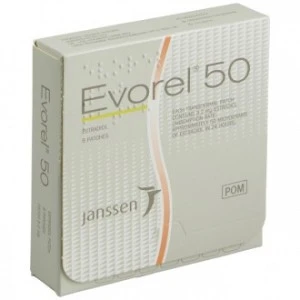
Evorel
- Easy to apply transdermal patch
- Available to reorder
- Prescribed by a registered doctor
Continuous combined HRT medications, like Evorel Conti, can also reduce the risk of osteoporosis in post-menopausal women. This is because the medication restores oestrogen levels, which are critical for maintaining bone strength. If you are pre-menopausal, your doctor may advise that you take a sequential combined HRT, like Evorel Sequi, instead.
Can I Use Evorel Conti if I Don’t Have a Womb?
In the absence of progesterone, oestrogen can cause the womb lining to become abnormally thick and increase the risk of endometrial cancer. Continuous combined HRT, such as Evorel Conti, mitigates this risk by delivering both oestrogen and progestogen in a single daily dose.
Women without a womb (for example, those who have undergone a hysterectomy) and who have no remaining womb lining can usually take oestrogen-only HRT. This is because progestogen is only required to prevent the lining of the womb from thickening and to prevent the development of abnormal (i.e., cancerous) cells.
If you have had a hysterectomy, oestrogen-only medications like Estradot or Oestrogel may help to improve menopause symptoms. If you have any questions about the most appropriate HRT for your needs, consult a licensed clinician for advice.
What to Expect if You Start Evorel Conti
If you and your clinician decide to give Evorel Conti a go, here's what you might experience and how long it might take to work:
- Adjustment Period: Your body may need a few weeks to adjust to the hormones. Some spotting or breakthrough bleeding is normal during this time. Don't be alarmed if things seem a bit unpredictable at first - it's just your body figuring things out.
- Gradual Improvement: Most women notice their symptoms easing within a few weeks, but it can take up to 3 months to feel the full effect. It’s a gradual process. You might find your hot flushes becoming less frequent or intense, your sleep improving, or your mood becoming more stable.
- Regular Check-Ups: Your GP will likely want to see you after three months, and then yearly, to make sure Evorel Conti is still working well for you. These check-ups are a chance to discuss any concerns, side effects, or changes you've noticed.
Evorel
- Easy to apply transdermal patch
- Available to reorder
- Prescribed by a registered doctor
Frequently Asked Questions
HRT medications like Evorel Conti can significantly improve menopause symptoms, including hot flashes, night sweats, mood changes, and more. However, many women have questions about its effects on their bleeding patterns, such as whether they will still have periods on Evorel Conti, and what to do if they experience heavy bleeding. We’ll discuss the answers to these queries and others here.
Do You Still Have Periods on HRT Patches?
You can still have periods on HRT patches if you’re perimenopausal (i.e., you still have periods), or if you use sequential combined HRT, which often causes regular ‘withdrawal bleeds.’ However, women taking Evorel Conti don’t typically have regular monthly periods.
This is because combined continuous HRT medications (like Evorel Conti) deliver a daily dose of both oestrogen and progestogen, which prevents the womb lining from thickening and shedding. Spotting and breakthrough bleeding are common in the first few months, though these symptoms usually abate as your body adjusts to the medication.
What If I Experience Heavy Bleeding on Evorel Conti?
Many women experience bleeding in the first few months of using a combined continuous HRT. However, unusually heavy bleeding may require medical attention. You should also speak to your doctor if:
- You still experience bleeding after 6 months on the medication.
- You start bleeding after more than 6 months on Evorel Conti.
- You experience vaginal bleeding after sex.
Unexpected or unusually heavy bleeding can be caused by the hormones in HRT, or by changes in your dose or type of HRT. More rarely, it can be a symptom of endometrial cancer. If you have any concerns about the side effects of your medication, seek the advice of a licensed clinician as soon as possible.
I’m Taking Evorel Conti Patches and Bleeding After 6 Months. What Do I Do?
If you experience bleeding after 6 months on Evorel Conti, schedule an appointment with your doctor immediately. They will want to assess your bleeding patterns, HRT dosage, and medical history, and may recommend investigative tests to determine the root cause.
Bleeding after 6 months on combined continuous HRT doesn’t necessarily indicate a serious medical problem. However, in rare cases, it can be a sign of endometrial cancer (cancer of the womb lining).
Does Evorel Conti Stop Periods?
Evorel Conti is designed to prevent the uterine lining from thickening and shedding. Therefore, women who still have periods may find they eventually stop, though spotting and breakthrough bleeding are common in the first few months when taking this medication.
However, doctors typically prescribe Evorel Conti to post-menopausal women (i.e., those who have not had a menstrual period for at least 12 months).

Support Throughout Your Journey
If you’re going through menopause, we understand that this can be a stressful time. This is why we strive to make the process of obtaining treatment as hassle-free as possible.
With us, there’s no need to wait for a face-to-face appointment. Just complete our brief online questionnaire, and our clinicians will review your information to determine whether Evorel Conti is suitable for your circumstances. If not, an alternative treatment may be suggested. Orders approved before 3pm on a weekday are eligible for next-day delivery, giving you swift access to the medication you need.
Our service doesn’t stop there, as our team will regularly check in with you to monitor progress and ensure everything is working as it should. We’re here to support you at every step.
Ready to get started? Begin your consultation with Prescription Doctor today.
Sources
- NHS (2023): How and when to take continuous combined HRT.
- NHS (2023): About sequential combined hormone replacement therapy (HRT).
- EMC (2025): Evorel Conti package leaflet.
- NICE (2025): Hormone replacement therapy (HRT).
- NHS (2023): Who can and cannot take continuous combined HRT.
- NHS Scotland (2024): Unscheduled bleeding on HRT (Guidelines).
- Bupa (2024): How do you manage unscheduled bleeding on HRT?
- NHS (2023): Side effects of hormone replacement therapy (HRT).
- Mayo Clinic (2025): Perimenopause.
- NHS (2023): About continuous combined HRT.
- Royal Osteoporosis Society (2025): Hormone Replacement Therapy (HRT).
- British Menopause Society (2021): Progestogens and endometrial protection.
- NHS (2024): Hormone replacement therapy for menopausal women.
- NHS (2023): Side effects of continuous combined HRT.
- NHS (2025): Hormone Replacement Treatment (HRT) and Unscheduled Vaginal Bleeding.
- British Menopause Society (2024): Management of unscheduled bleeding on hormone replacement therapy (HRT).
Authored By

Kate Latham
Medical Content WriterPublished on: 12/09/2024 Re-Published on: 26/01/2026
Reviewed By

Mohamed Imran Lakhi
MPharm - Lead PharmacistReviewed on: 26/01/2026
How We Are Regulated
Payment Options


© 2013 - 2026 Al Muhsineen Limited. All Rights Reserved. Registered Pharmacy: 34 Halliwell Road, Bolton BL1 8RL. Registered Office: 254 First Floor, Shearbrow, Blackburn, England, BB1 8DS


Patient Login
Don't have an account?
Your account will be automatically created after placing your first order.