All inclusive service
No hidden fees

Your privacy is important, Prescription Doctor are committed to keeping your details completely confidential.
This is why we also take steps to conceal your prescription products under two layers of packaging.
We have a commitment to delivering a discreet service and understand your need for privacy. We ship all orders via a trackable courier using discreet, plain packaging.
Once your order is dispatched you will receive a tracking number via sms and email.
We deliver medications between Monday and Saturday. You can upgrade to Saturday delivery on Friday.
You should receive a tracking number with your order which you can use this number to track your parcel online. This should give you a clear indication of where your parcel is. If you haven’t received your parcel in the time frame given by our couriers, contact your local depot to find out where it is. You can also contact our support team who will do this for you.
On checkout you will be asked to leave your mobile number so our courier can text you about the delivery. This is also useful if the courier has problems finding your address. We will not use your mobile number for anything else.
You can pay for your order using credit, debit card or via bank transfer.
If you don’t have a credit or debit card you can pay via bank transfer. We will give you a unique reference number at checkout along with details of how to make the transfer. Once the money has cleared in our account, we will process your order.
We are a completely secure site and take many measures to ensure your details are kept safe. We understand that you have a right to extreme privacy when purchasing sensitive health medications. All information that you provide to us is stored on our secure servers. Any payment transactions will be encrypted using SSL technology.
You can pay for your order using credit, debit card and bank transfer.
Card Payment: Please notify us that you wish to cancel your order. Your refund will show available In 1 - 3 days.
Bank Transfer: A member of our team will contact you requesting for your bank details. These details are only used to transfer the funds back into your account.
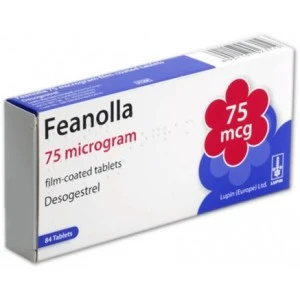
Feanolla is a type of progestogen-only pill (POP), a type of hormonal contraceptive pill commonly known as the mini pill. Unlike combined contraceptive pills, which contain two active ingredients, synthetic versions of the hormones oestrogen and progesterone, Feanolla contains only one synthetic hormone, a progestogen called desogestrel. This hormone mimics the female sex hormone progesterone.
Feanolla is a type of oral contraceptive pill which is taken daily to stop you getting pregnant. Because Feanolla does not contain oestrogen, it is a suitable birth control option for anyone who cannot or chooses not to take oestrogen, such as anyone who is over 35 and smokes or breastfeeding.
Like some other mini pills, Feanolla may also impact your bleeding pattern. Some people may experience lighter periods, or find that they stop completely. Others may encounter irregular or more frequent bleeding. It’s important to note that despite this possibility, Feanolla is not licensed to treat heavy or painful periods, and more suitable treatments are available.
Feanolla will not protect you against sexually transmitted infections (STIs), such as gonorrhoea or chlamydia. The most reliable contraception method to protect you and your partner from STIs is condoms.
Feanolla contains a synthetic progestogen called desogestrel, which mimics the natural female sex hormone progesterone. Unlike other mini pills, the main way that Feanolla works is by preventing ovulation. One study investigating the effectiveness of a 75 mcg desogestrel pill, the same active ingredient and dosage as Feanolla, found that ovulation occurred in 1% of people taking the mini pill, meaning it is 99% effective at stopping a mature egg from being released from the ovaries.
Feanolla also thickens cervical mucus, making it difficult for sperm to enter the womb.
If you start taking Feanolla on the first day of your period, you will be protected against pregnancy straight away, and will not need to use any additional contraception.
However, if you start taking Feanolla on days 2 to 5 of your period, you will not have immediate protection against pregnancy, and you will need to use an additional barrier method of contraception, such as condoms, for the first 7 days of taking Feanolla.
If you start Feanolla at any other time in your cycle, you should follow the advice of your clinician and/or the Patient Information Leaflet. It is also important that you make sure you are not pregnant before starting treatment.
The progestogen-only pill, including Feanolla, is more than 99% effective at preventing pregnancy when it is used correctly. However, the NHS states that when typical use is considered, which includes things like missing a pill, being sick, or having diarrhoea, the mini pill is closer to being 91% effective. This means that 9 out of 100 Feanolla users will become pregnant in a year.
A clinical trial comparing the effectiveness of a 75 mcg desogestrel mini pill and a 30 mcg levonorgestrel pill found that pregnancy occurred in 1 in 727 people using the desogestrel pill compared to 3 in 257 in the levonorgestrel group. This demonstrates that the desogestrel pill is highly effective at preventing pregnancy.
Each pack of Feanolla contains 28 tablets, with the days of the week printed on the blister and arrows indicating the direction to follow when taking your pills. You should swallow your pill whole with a glass of water at the same time every day. Feanolla is taken once every day with no breaks between packs.
To take your pill, you should:
If you are unsure about how to take Feanolla, contact your clinician for advice or check the Patient Information Leaflet that comes with your pill.
The best time to start Feanolla is on day one of your period. If you start taking it on this day, you will be protected from pregnancy straight away. If you start taking Feanolla on days 2 to 5 of your period, you’ll need to use additional contraception, such as condoms, for the first 7 days of taking the pill.
If you start taking Feanolla at any other time during your cycle, you should make sure you are not pregnant by taking a pregnancy test, and speak to your clinician about the best way to start Feanolla.
It is possible to change from another type of contraceptive to Feanolla, but there are some specific instructions you must follow depending on which type of hormonal contraception you are switching from.
You can stop taking your current mini pill on any day and start taking Feanolla straight away. There is no need to use an additional method of contraception.
You can start taking Feanolla on the day after you take the last tablet from your current pill pack, or on the day your vaginal ring or contraceptive patch is removed. This means you will not have a pill-free, patch-free, or ring-free break.
If your current pill contains inactive pills, start taking Feanolla the day after your last active tablet, and throw away the inactive pills. If you’re not sure which is your last active pill, speak to a clinician or pharmacist. If you follow these instructions, you will be protected against pregnancy straight away and will not need to use an additional contraception method.
If you start the day after your ring, patch, or pill-free break ends, you will need to use an additional barrier method of contraception, such as condoms, for the first 7 days of taking Feanolla.
If you forget to take Feanolla, what you will need to do will depend on how late you are taking the pill. The more consecutive pills you miss, the higher the chance that Feanolla will not work and you could become pregnant. If you have difficulty remembering to take your pill, it can be useful to set an alarm on your phone or get a pill reminder app to remind you that it is time to take your pill.
If you are less than 12 hours late taking Feanolla, take the missed pill as soon as you remember, and continue taking your next pills as usual. Your protection against pregnancy will not be reduced.
If you are more than 12 hours late taking Feanolla, take the latest missed pill as soon as you remember and take your next pills at the usual times. You will need to use an additional method of contraception, such as condoms, for the next 7 days.
If you missed one or more pills in the very first week of your pills and had sex in the week before that, there is a chance you could become pregnant. You should speak to your clinician for advice as you may need emergency contraception.
If you take more Feanolla pills than you should, it is unlikely to cause you serious harm, and there have been no reported serious harmful effects from taking more than one Feanolla tablet at once. However, you may experience symptoms such as nausea, vomiting, or vaginal bleeding. If you are concerned or you have any of these symptoms, contact your doctor for advice.
If you are sick within 3 to 4 hours of taking Feanolla, or develop severe diarrhoea, there is a chance the active ingredient may not have been absorbed properly. If this happens, you should follow the missed pill guidance in the Patient Information Leaflet or speak to a doctor or pharmacist for advice.
Before you start taking Feanolla, you should familiarise yourself with its potential side effects and cautions, so that you know what to expect. This will enable you to make a more informed decision about whether the medication is suitable for your circumstances.
Like all medicines, Feanolla can cause side effects, although not everyone will get them. For many people, these side effects are mild and temporary, improving once their bodies get used to the active ingredient.
Common (may affect up to 1 in 10 people) | Uncommon (may affect up to 1 in 100 people) | Rare (may affect up to 1 in 1,000 people) |
|---|---|---|
| Acne Breast pain Changes in mood Decreased sex drive (libido) Depressed mood Headache Irregular or no periods Nausea Weight increase | Difficulties in wearing contact lenses Hair loss Ovarian cysts Painful periods Tiredness Vaginal infection Vomiting | Rash Hives Painful blue-red skin lumps (erythema nodosum) |
This isn’t an exhaustive list of Feanolla side effects. You can find a full list of potential adverse reactions in the Patient Information Leaflet that comes with your pill, or you can view it online.
If you experience any side effects while taking Feanolla, you should tell a doctor or report them to the Yellow Card Scheme. By reporting side effects, you will help provide more information about this medication's safety.
There are some risks when taking a progestogen-only pill like Feanolla. You should contact a doctor as soon as possible if you have taken Feanolla and any of the following apply to you:
Breast cancer is slightly more common in people who take the pill compared to those of the same age who have never taken it. However, the risk returns to the same level as people who have never taken the pill, 10 years after you stop taking it.
Although the risk of breast cancer is only slightly increased in pill users, it is important to understand it. The risk of getting breast cancer isn’t influenced by how long you take Feanolla for, but by the age at which you stop using it because breast cancer risk increases with age.
Scenario | Number of extra cases found up to 10 years after stopping | The usual incidence of breast cancer in this age group (out of 10,000 people) |
|---|---|---|
| Every 10,000 people who take the pill for up to 5 years, but stop by the age of 20. | Less than 1 | 4 |
| Every 10,000 people who take the pill for up to 5 years, but stop by the age of 30. | 5 | 44 |
Every 10,000 people who take the pill for up to 5 years, but stop by the age of 40. | 20 | 160 |
If you are concerned about the risk of breast cancer while taking Feanolla or you have a family history of breast cancer, speak to your clinician.
The risk of developing a blood clot (thrombosis) while taking Feanolla is believed to be lower than taking a combined pill. However, the risk of a thrombosis is higher in pill users compared to non-pill users, although there is a risk of getting a blood clot even if you are not taking the pill, and if you are pregnant.
If you have a history of blood clots, you must let the clinician know during your consultation, so they can determine if Feanolla is suitable for you. Because Feanolla does not contain oestrogen and the risk of blood clots is slightly lower in mini pills, if you are over 35 and smoke, Feanolla may be a more suitable contraceptive option for you. However, smoking should be avoided because of the wider health risks. Our quit smoking service can help you give up for good.
Feanolla may not be suitable for everyone, even though it is an effective and reliable method of contraception. It’s important that you discuss any current health conditions you have or any medications you are taking with a clinician before starting Feanolla, so they can ensure it is safe for you.
Do not take Feanolla if you:
FSRH/CoSRH guidance advises that desogestrel should not be used by people with a current or previous meningioma. Speak to a clinician about alternatives if this applies to you.
Before starting Feanolla, tell the clinician if you have:
Your doctor may need to closely monitor you while you are taking Feanolla if any of the following apply to your circumstances. They will explain what you will need to do.
Some medications can interact with Feanolla, affecting its effectiveness and potentially making it unsafe. During your consultation, it is important that you tell the clinician about any prescribed, over-the-counter, or herbal medications you are taking, so they can see if Feanolla is safe for you.
Tell the clinician before taking Feanolla if you are taking medications for the following:
If you are taking any medicines or herbal products that could make Feanolla less effective, you should also use a barrier method of contraception, like condoms. You may need to do this for up to 28 days, though your clinician can advise on the exact duration.
Do not take Feanolla if you are, think you might be, or are trying to get pregnant. Feanolla may be used while breastfeeding. It does not appear to affect breast milk production or quality, although infrequent decreases in milk production have been reported. Small amounts of the active substance can pass into breast milk; speak to your doctor or pharmacist if you are breastfeeding and want to use Feanolla.
Although weight gain is listed as a common potential side effect of Feanolla, there is no strong scientific proof that the progestogen-only pill causes weight gain. Some people experience weight changes when taking the pill, but this can be caused by a range of factors including fluid retention, appetite changes, and reduced physical activity levels.
If you are concerned about weight gain while taking Feanolla, contact your clinician for weight management advice.
Yes, in some people Feanolla can stop your periods completely, but it can affect everyone differently. Up to 1 in 10 people may stop getting their period when taking Feanolla, but others may get lighter periods. These changes are normal and are not usually a cause for concern.
Yes, Feanolla can cause acne or make existing acne worse because of its active ingredient. Feanolla contains a synthetic progestogen called desogestrel, which can increase sebum (oil) production in the skin, leading to clogged pores and acne. If you are concerned about acne, you should speak to your clinician.
If suitable, they may recommend the combined oral contraceptive pill because some types can improve the appearance of acne-prone skin.
Yes, you can drive while taking Feanolla, as there are no indications that it affects your alertness or concentration. However, if you feel tired or less alert than usual when taking Feanolla, do not drive or operate machinery, and contact your clinician for advice.
Cerelle and Feanolla contain the same active ingredient in the same strength. They are branded versions of the generic progestogen-only pill called desogestrel. The main difference is that Feanolla is no longer available. So, your clinician may advise you to switch to Cerelle instead.
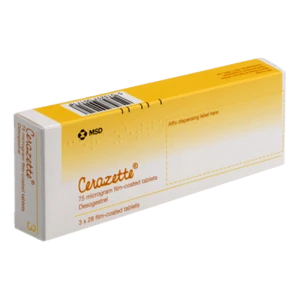
There is no medical difference between Cerazette and Feanolla, as they both contain 75 mcg of desogestrel and work in exactly the same way to prevent pregnancy. Because Feanolla has been discontinued in the UK, a clinician may advise you to use Cerazette instead.
Although Feanolla does not require any special storage instructions, it should be stored out of the sight and reach of children. You should check the expiry date on the box to make sure that it is still within date before you take it.
If the medication has expired or you are no longer taking it, do not throw any leftover pills in the household rubbish. Instead, take them to your nearest pharmacy for the correct disposal.
No, Feanolla is no longer available in the UK, which means it cannot be bought online and it is not available on the NHS. It was discontinued by its manufacturer in January 2025. Suitable alternatives to Feanolla include Cerazette and Cerelle. Our clinician can help you switch to one of these mini pills seamlessly following a short online consultation.
If our clinician prescribes a mini pill to you, we will send your medication via our next-day delivery service in discreet packaging if your order is approved before 3pm on Monday to Friday. All medications are licensed in the UK and dispensed by our General Pharmaceutical Council-registered pharmacy.
Product Name: Feanolla
Manufacturer: Laboratorios Leon Farma
Active Ingredient(s): Desogestrel
Administration: Oral
Presentation: Film-coated tablet
Available Strength: 75 mcg
Exemption: Prescription only
Dosage: 1 tablet daily
Description: Feanolla is a hormonal contraceptive pill which stops ovulation and thickens cervical mucus to prevent pregnancy.
Drug Class: Progestogen
Alcohol Consumption: No influence
When Pregnant: Do not take Feanolla if you are pregnant or think you might be pregnant. Speak to your doctor for further advice.
When Breastfeeding: Yes, but speak to a doctor for further advice.
© 2013 - 2026 Al Muhsineen Limited. All Rights Reserved. Registered Pharmacy: 34 Halliwell Road, Bolton BL1 8RL. Registered Office: 254 First Floor, Shearbrow, Blackburn, England, BB1 8DS
Don't have an account?
Your account will be automatically created after placing your first order.