All inclusive service
No hidden fees

Your privacy is important, Prescription Doctor are committed to keeping your details completely confidential.
This is why we also take steps to conceal your prescription products under two layers of packaging.
We have a commitment to delivering a discreet service and understand your need for privacy. We ship all orders via a trackable courier using discreet, plain packaging.
Once your order is dispatched you will receive a tracking number via sms and email.
We deliver medications between Monday and Saturday. You can upgrade to Saturday delivery on Friday.
You should receive a tracking number with your order which you can use this number to track your parcel online. This should give you a clear indication of where your parcel is. If you haven’t received your parcel in the time frame given by our couriers, contact your local depot to find out where it is. You can also contact our support team who will do this for you.
On checkout you will be asked to leave your mobile number so our courier can text you about the delivery. This is also useful if the courier has problems finding your address. We will not use your mobile number for anything else.
You can pay for your order using credit, debit card or via bank transfer.
If you don’t have a credit or debit card you can pay via bank transfer. We will give you a unique reference number at checkout along with details of how to make the transfer. Once the money has cleared in our account, we will process your order.
We are a completely secure site and take many measures to ensure your details are kept safe. We understand that you have a right to extreme privacy when purchasing sensitive health medications. All information that you provide to us is stored on our secure servers. Any payment transactions will be encrypted using SSL technology.
You can pay for your order using credit, debit card and bank transfer.
Card Payment: Please notify us that you wish to cancel your order. Your refund will show available In 1 - 3 days.
Bank Transfer: A member of our team will contact you requesting for your bank details. These details are only used to transfer the funds back into your account.
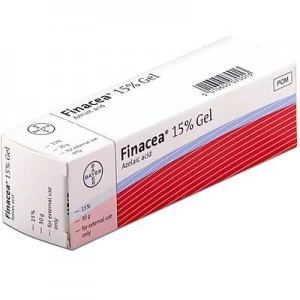
Finacea 15% gel is a topical agent that can calm inflammation caused by papulopustular rosacea. Rosacea is an inflammatory condition that causes symptoms including facial rash, spots, flushing, and visible blood vessels. It contains azelaic acid, which reduces inflammation, inhibits keratinocyte (skin cell) growth and kills bacteria on the skin's surface. Finacea is a long-term treatment and should be taken regularly. Your clinician will advise you on how long you should take the medication.
The active ingredient in Finacea Gel, azelaic acid, is also available as an acne treatment known as Skinoren.
Azelaic acid, the active ingredient of Finacea, works for rosacea by blocking the natural production and growth of keratin cells on the skin surface. These cells often block pores and contribute to papules and pustules (spots) on the skin's surface. By reducing keratin production, Finacea gel unblocks pores and the small glands in the skin that release oil, called sebaceous glands. This makes papules and pustules less likely to develop and reduces facial swelling and redness.
Azelaic acid also functions as an antibiotic, killing bacteria known as Propionibacterium acnes. This bacterium feeds on sebum in the skin's pores and releases chemicals that cause inflammation, reddening of surrounding tissue, and spots and bumps.
Although Finacea gel can start working as soon as you use it, it can take several months to see the full benefits, and most people report a noticeable difference within 4 weeks. If you haven't noticed improvement after 2 months, or if your rosacea has gotten worse, stop using Finacea and consult your clinician or doctor.
In a study looking at the effectiveness of Finacea 15% gel for acne, after 4 weeks of treatment, total acne lesions were reduced by 48%, while for post-inflammatory hyperpigmentation, 67% of people achieved at least a one-point improvement in Investigator's Global Assessment (IGA) of acne, total, inflammatory, and non-inflammatory lesions.
Finacea gel has been shown to be an effective treatment for rosacea. In two double-blind studies investigating the effectiveness of 15% azelaic acid gel for moderate, papulopustular rosacea, azelaic acid reduced the average inflammatory lesion count by 58% compared to 40% in people given a vehicle gel. Meanwhile, 44% of participants noticed a reduction in redness. Overall, 61%-62% of people treated with azelaic acid 15% gel achieved therapeutic success.
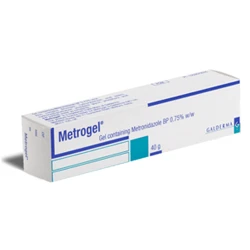
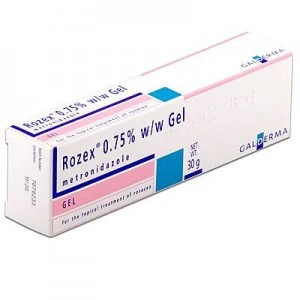
A further study comparing Finacea gel with metronidazole 0.75% gel found that Finacea gel reduced rosacea lesion counts by 72.7% compared to 55.8% with metronidazole, demonstrating that Finacea gel is superior in treating rosacea. A systematic review published in 2023 also found that azelaic acid significantly improved redness and inflammatory lesion counts in people with rosacea after 12 weeks compared to a vehicle.
Finacea gel is intended for external use only. Always use it exactly as prescribed and check with your clinician if you're unsure about what to do. The medication works best when used continuously throughout the treatment period.
Before application, ensure your skin is thoroughly cleaned with water and dried. You may use a mild skin-cleansing agent if you wish. Do not use airtight (occlusive) dressings or wrappings.
Apply Finacea 15% gel twice a day to the affected skin areas (morning and evening) and rub it gently into the skin. Use about 2.5cm (0.5 g/1 inch) of gel each time, enough to cover the entire face.
If you experience skin irritation, reduce the amount of gel you use or the frequency of application until the problem goes away. You may need to interrupt treatment for a few days to do so.
If you forget to use Finacea gel, just use it the next time you're supposed to. Do not use twice the amount to try and catch up for a forgotten treatment. Continue as prescribed by your clinician.
Even if you use more Finacea than you should, you're unlikely to experience a harmful effect. That said, applying more than you should will not make your condition improve any faster.
Finacea gel can cause side effects in some people, so familiarise yourself with the Patient Information Leaflet that comes with the medication to fully understand them. Understanding the potential side effects of Finacea gel will help you manage them and know when you may need medical advice.
Although Finacea gel can cause side effects, not everyone will experience them. They are often mild and temporary and can usually be managed at home, with the most common side effects occurring at the application site.
Very Common (may affect more than 1 in 10 people) | Common (may affect up to 1 in 10 people) | Uncommon (may affect up to 1 in 100 people) |
|---|---|---|
|
|
|
Please note that the table above does not contain a full list of possible Finacea side effects. More details, including rare adverse reactions and those associated with acne treatment, can be found within the Patient Information Leaflet that comes with the medication.
If you experience any side effects when using Finacea (azelaic acid), you can report them to your clinician or via the MHRA's Yellow Card scheme. Doing this could help provide more information about the treatment's safety profile.
Rarely, Finacea gel can cause serious side effects. These can affect up to 1 in 1,000 people and may be a sign of an allergic reaction. If you experience any of the following side effects while using Finacea gel, get urgent medical help:
Although Finacea 15% gel is an effective treatment for rosacea, it is not suitable for everyone. For example, do not use it if you are allergic to azelaic acid or any other ingredients in the medication. On rare occasions, it has also been reported that using azelaic acid could worsen asthma symptoms, so it's a good idea to speak to your clinician before starting treatment.
Finacea gel is intended for external use only. If you accidentally contact your eyes, mouth, or other mucous membranes (the thin skin around body openings), wash the affected area with large amounts of water. Consult a doctor if you experience persistent eye irritation.
Studies have not shown whether Finacea gel affects or is affected by other medicines. However, you should still inform your clinician of any other medications you are taking, including over-the-counter treatments or herbal remedies. Do not apply other treatments to your face at the same time as Finacea.
Finacea gel is only available with a valid prescription from a clinician, either from the NHS or via a private service, such as an online pharmacy or skin clinic. You must receive approval for Finacea gel from a healthcare professional before you can get it, so they can check that it is safe for you.
No, you cannot buy Finacea gel over the counter because it is a prescription-only topical medication. A clinician must assess whether Finacea gel is suitable for you before you can get it.
Yes, Finacea gel may be available on the NHS for rosacea, but you will need to visit your GP to find out. If it is and you pay for your prescriptions, you will need to pay the current prescription charge before you can get it.
Yes, you can buy Finacea gel online from trusted online pharmacies, like Prescription Doctor. Before our clinician can authorise Finacea gel, you will need to complete a short online health questionnaire for them to review. This will enable them to determine if Finacea is safe for you to use based on your symptoms and medical history.
If it is, our General Pharmaceutical Council-registered pharmacy will send your medication to your address in plain, discreet packaging to maintain patient confidentiality, and if your order is approved before 3pm on Monday to Friday, you can receive it as quickly as the next day.
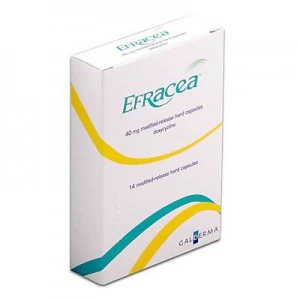
Doxycycline is an oral antibiotic used at anti-inflammatory doses to treat moderate-to-severe papulopustular rosacea. Finacea is a topical gel containing 15% azelaic acid, applied directly to affected facial skin. Finacea may suit mild-to-moderate symptoms, while doxycycline may be prescribed when topical treatment alone has not provided enough improvement.
Depending on your symptoms, a clinician may recommend using Finacea and doxycycline together. Doxycycline is generally not recommended during pregnancy or breastfeeding.
Finacea may be prescribed to treat the spots and inflammation caused by papulopustular rosacea. Dianette is a combined hormonal medicine that can be used for severe androgen-sensitive acne and is not a rosacea treatment. If you have rosacea, Finacea is therefore likely to be the relevant option, subject to assessment by a clinician.
Finacea does not normally cause "purging", a term generally associated with acne treatments that increase skin-cell turnover. However, Finacea can initially cause burning, itching, dryness or irritation that may resemble a rosacea flare. These effects often improve as treatment continues, but you should review persistent or severe symptoms.
No, Finacea is not a steroid. It contains azelaic acid, which has anti-inflammatory effects and helps reduce the inflammatory spots associated with papulopustular rosacea. Unlike topical corticosteroids, it does not broadly suppress the skin's immune response or cause steroid-related skin thinning when used as directed.
Topical steroids are generally unsuitable for treating rosacea unless specifically recommended for another condition, as they can sometimes trigger or worsen rosacea-like symptoms.
Finacea is licensed in the UK to treat papulopustular rosacea, rather than hyperpigmentation. However, azelaic acid can reduce excess melanin production and may help fade some areas of uneven pigmentation. This would be an off-label use, and Finacea will not necessarily improve the persistent redness or visible blood vessels associated with rosacea.
Finacea may sometimes be prescribed during pregnancy or breastfeeding, but you should consult your doctor, midwife or pharmacist before using it. Evidence in pregnancy is limited, so UK prescribing information recommends caution.
If breastfeeding, do not apply Finacea to the breast or allow your baby to touch treated skin. Wash your hands after application and follow your healthcare professional's advice.
Finacea is unlikely to be affected by the consumption of alcohol. However, if your rosacea is triggered or exacerbated by consuming alcohol, you should avoid or limit alcohol consumption while using the treatment.
Yes, you can use makeup while using Finacea gel. Apply the medication first, then let the area dry before applying makeup. If you have rosacea, you may want to use cosmetic products which do not exacerbate your symptoms. Look for products intended for sensitive skin.
There are no reports that using Finacea affects shaving. For men, shaving can pose a significant threat to their rosacea, potentially worsening their symptoms. Men may be better off using electric razors instead of traditional razors to reduce skin irritation.
You should also avoid shaving creams, lotions and aftershave products which may irritate your skin. Instead, use shaving products suitable for sensitive skin types and apply a moisturiser or balm after shaving to soothe the skin.
Finacea Gel does not require any special storage conditions. Keep the tube securely closed and out of the sight and reach of children. Do not use it after the expiry date printed on the packaging. Return unwanted or expired gel to a pharmacy for safe disposal rather than putting it in household wastewater.
© 2013 - 2026 Al Muhsineen Limited. All Rights Reserved. Registered Pharmacy: 34 Halliwell Road, Bolton BL1 8RL. Registered Office: 254 First Floor, Shearbrow, Blackburn, England, BB1 8DS
Don't have an account?
Your account will be automatically created after placing your first order.