All inclusive service
No hidden fees

Prices from £19.99
Review More Prices
Your privacy is important, Prescription Doctor are committed to keeping your details completely confidential.
This is why we also take steps to conceal your prescription products under two layers of packaging.
We have a commitment to delivering a discreet service and understand your need for privacy. We ship all orders via a trackable courier using discreet, plain packaging.
Once your order is dispatched you will receive a tracking number via sms and email.
We deliver medications between Monday and Saturday. You can upgrade to Saturday delivery on Friday.
You should receive a tracking number with your order which you can use this number to track your parcel online. This should give you a clear indication of where your parcel is. If you haven’t received your parcel in the time frame given by our couriers, contact your local depot to find out where it is. You can also contact our support team who will do this for you.
On checkout you will be asked to leave your mobile number so our courier can text you about the delivery. This is also useful if the courier has problems finding your address. We will not use your mobile number for anything else.
You can pay for your order using credit, debit card or via bank transfer.
If you don’t have a credit or debit card you can pay via bank transfer. We will give you a unique reference number at checkout along with details of how to make the transfer. Once the money has cleared in our account, we will process your order.
We are a completely secure site and take many measures to ensure your details are kept safe. We understand that you have a right to extreme privacy when purchasing sensitive health medications. All information that you provide to us is stored on our secure servers. Any payment transactions will be encrypted using SSL technology.
You can pay for your order using credit, debit card and bank transfer.
Card Payment: Please notify us that you wish to cancel your order. Your refund will show available In 1 - 3 days.
Bank Transfer: A member of our team will contact you requesting for your bank details. These details are only used to transfer the funds back into your account.
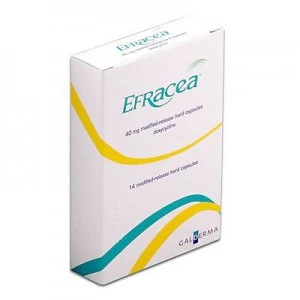
Efracea is a prescription-only medication that contains the antibiotic doxycycline. It is a low-dose antibiotic that treats inflammatory rosacea in adults by reducing swelling, redness, and acne-like spots on the face and improving skin appearance. Efracea is a branded medication and is made by Patheon France.
Although Efracea contains the antibiotic doxycycline, it works by targeting the specific inflammatory pathways that cause rosacea-related bumps, pimples, and redness rather than killing the bacteria on the skin's surface. This helps to gently relieve symptoms, such as redness, swelling, visible blood vessels, and spots.
Efracea is a slow-release medication, meaning it releases the active ingredient over a prolonged period to provide steady, effective results. Because Efracea is a low-dose antibiotic, it is safe for long-term use and has a low risk of creating antibiotic-resistant strains.
Many people find that Efracea noticeably improves their rosacea symptoms within 4 weeks, but a typical course can last for up to 16 weeks, depending on how severe your symptoms are. Your clinician or doctor will typically review how well you have progressed after 6 weeks.
Efracea is a safe and effective treatment for moderate-to-severe rosacea. In two clinical trials, treatment with 40 mg of Efracea significantly reduced the average total inflammatory lesions compared with placebo.
One study found that the anti-inflammatory 40 mg daily dose of doxycycline was associated with a rapid onset of action, resulting in a significantly greater decrease in total inflammatory lesions than a placebo after 3 weeks.
Efracea is available as a 40mg modified-release capsule, and the recommended dose is one capsule per day. Swallow it whole, preferably in the morning on an empty stomach, at least 1 hour before or 2 hours after a meal. Swallow the capsule with a full glass of water while sitting or standing to avoid throat irritation. Do not chew the capsule; take it exactly as your clinician told you to. They will advise you on how long you need to take Efracea.
You must not take Efracea with milk or dairy products because these contain calcium, which may reduce the effectiveness of the medication. Leave 2 to 3 hours after taking your daily dose before drinking or eating dairy products. If you are unsure about how to take Efracea, speak to your doctor or pharmacist for advice.
If you forget to take Efracea, skip the missed dose and take the next one at the usual time. Do not take a double dose to make up for a missed dose.
If you take more Efracea capsules than you have been prescribed, there's a risk of damage to your liver, kidneys, or pancreas. If you have taken too much Efracea, speak to a doctor immediately about what you should do. You may experience side effects such as an upset stomach, nausea, vomiting, or dizziness.
Efracea can cause side effects in some people, so read the Patient Information Leaflet that comes with the medication before you start taking it, and discuss any concerns with the clinician. By understanding the potential side effects of Efracea, you will feel more confident about managing them at home and when you may need to seek medical advice.
Efracea can cause side effects, but not everyone will experience them. Clinical trials have shown that Efracea side effects are usually mild to moderate and can often be managed at home.
Common (affects 1 to 10 users in 100) | Rare (affects 1 to 10 users in 10,000) | Very Rare (affects less than 1 user in 10,000) |
|---|---|---|
|
|
|
The above list is not a comprehensive rundown of potential Efracea side effects. More details can be found within the Patient Information Leaflet that accompanies the medication. You can also report any adverse reactions you experience to your clinician or the MHRA's Yellow Card Scheme.
In some people, Efracea can cause serious side effects. If you get any of the following, you should stop taking Efracea and contact your doctor as soon as possible or, in an emergency, call 999 or get someone to take you to A&E:
Efracea may not be suitable for everyone. That's why you should tell the clinician about any current medical conditions or medications you are taking, so they can check whether Efracea is safe and suitable for you.
Do not take Efracea if you:
Before taking Efracea, tell the clinician if you:
Before taking Efracea, tell the clinician if you are taking any prescribed, over-the-counter, or herbal medications. Do not take Efracea:
You should also not take any other treatments for ulcers or heartburn until at least 2 hours after using Efracea, as they could affect the medication's effectiveness.
Tell the clinician, before starting Efracea, if you are taking:
If you are due to have surgery, let your doctor or surgeon know because taking Efracea at the same time as the general anaesthetic methoxyfluorane can cause serious kidney damage.
Always take Efracea with enough water to wash down the capsule, as this helps reduce the risk of irritation or ulcers in your throat or food pipe. You should also avoid eating or drinking milk or dairy products at the same time as Efracea because the calcium within them can reduce the medication's effectiveness. Ideally, you should leave 2 to 3 hours between taking Efracea and consuming dairy products.
Efracea must not be taken during pregnancy because it can cause permanent tooth discolouration in unborn children. It is also not suitable for long-term use if you are breastfeeding because it can cause permanent tooth discolouration and reduced bone growth in breastfed children.
If you are pregnant, think you might be pregnant, trying to get pregnant, or are breastfeeding, speak to your doctor, clinician, or pharmacist for advice before taking Efracea.
Efracea contains the active ingredient doxycycline, which belongs to the tetracycline family of antibiotics. However, it is prescribed at a low dose of 40 mg to work as an anti-inflammatory rather than an antibiotic that kills bacteria.
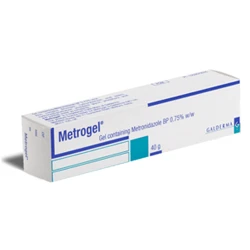
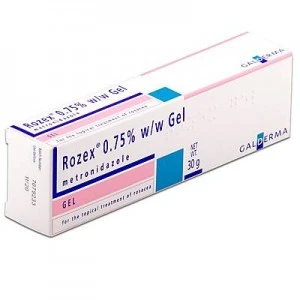
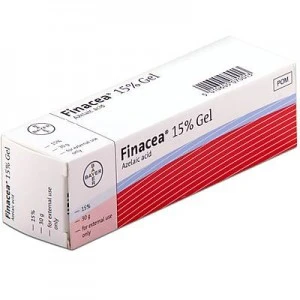
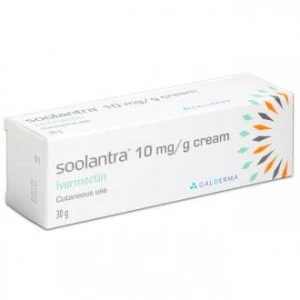
Yes, it may be possible to take Efracea with other topical rosacea treatments, such as Soolantra, Finacea gel, or Rozex, but you must check with a clinician first. However, do not take Efracea at the same time as oral retinoids, such as isotretinoin, or other tetracycline antibiotics. Research shows that a daily 40 mg dose of doxycycline for 52 weeks, combined with 1% metronidazole gel for 12 weeks, reduced inflammatory lesions and relapse rates in rosacea patients compared with placebo.
No, Efracea is not approved to treat acne. It is specifically prescribed to treat inflammatory lesions caused by rosacea, including pimples, spots, and redness. Doxycycline is prescribed in higher doses to treat acne, but it works by killing acne-causing bacteria on the skin rather than acting as an anti-inflammatory.
It is advisable to avoid or limit your alcohol intake while taking Efracea because it can make the medication less effective. Alcohol is also a common trigger for rosacea flare-ups, resulting in facial flushing and redness, so it is best avoided. If you are concerned about your alcohol intake while taking Efracea, speak to your doctor for advice.
Yes, you can wear makeup while taking Efracea, but choose gentle, fragrance-free products suitable for sensitive skin to avoid a rosacea flare-up. Where possible, pick oil-free, non-comedogenic makeup, which is less likely to block your pores and cause spots. Also wash your face every night with a mild cleanser to ensure all makeup is removed.
Yes, you can safely shave while taking Efracea. However, you should avoid standard aftershaves, heavily scented lotions, and harsh shaving creams that contain perfume or alcohol, which may irritate your skin. Some people also prefer to use an electric razor, which can cause less skin irritation.
No, Efracea does not impact the effectiveness of hormonal contraception, such as the combined pill, mini pill, contraceptive patch, or vaginal ring. However, if you get sick within 2 to 4 hours of taking the pill, your body may not have absorbed the active ingredients, so follow the missed-pill guidance in the patient information leaflet that comes with your pill.
Yes, Efracea can cause thrush, a yeast infection that can affect the genitals, mouth, and anus. However, it is a very rare side effect of Efracea, affecting fewer than 1 in 10,000 users, and it is less common with low-dose Efracea than with standard, higher-dose antibiotics.
No, you cannot buy Efracea over the counter because it is a prescription-only medication, which means you must have a valid prescription from a registered clinician to get it. You must consult a clinician so they can ensure Efracea is safe and suitable for you. If it isn't, we offer a range of rosacea treatments, and our clinician can help you choose the most appropriate option.
Yes, you can buy Efracea online from registered online pharmacies, like Prescription Doctor. You'll need to complete a short online health questionnaire for our clinician to review so they can ensure it is safe for you.
If it is, our General Pharmaceutical Council-registered pharmacy will dispatch your medication in plain, discreet packaging to maintain your confidentiality, and you can receive it as early as the next day in some cases.
Store Efracea capsules in their original packaging to protect them from light, and keep them out of the sight and reach of children. Before taking Efracea, check the expiry date printed on the outer package and the blister. The expiry date refers to the last day of the month. Do not take any Efracea pills if it has passed the expiry date.
© 2013 - 2026 Al Muhsineen Limited. All Rights Reserved. Registered Pharmacy: 34 Halliwell Road, Bolton BL1 8RL. Registered Office: 254 First Floor, Shearbrow, Blackburn, England, BB1 8DS
Don't have an account?
Your account will be automatically created after placing your first order.