HIV testing kit

In Stock
Dosage
HIV Test
+
Package Type
Blood Sample Finger Prick
£29.99
+
Get Started
Order now to receive your order Thursday, May 21
All inclusive service
No hidden fees

Next day delivery
Discreetly packaged
Discreet delivery
Prescriber available
Prescriber assess you online
How to order
  1. Click on the green "Get Started" button, then click "Start Consultation" button on the next page.
  2. Fill in our short consultation form.
  3. Choose delivery method and mode of payment.
  4. Our team of expert prescribers will assess whether medication is suitable.
  5. If you get the green light and it is deemed suitable, your order will be processed quickly and efficiently.
Confidential Service

Your privacy is important, Prescription Doctor are committed to keeping your details completely confidential.

This is why we also take steps to conceal your prescription products under two layers of packaging.

Delivery and Packing
Discreet Delivery?

We have a commitment to delivering a discreet service and understand your need for privacy. We ship all orders via a trackable courier using discreet, plain packaging.

Do I Need to Wait in All Day for Delivery?

Once your order is dispatched you will receive a tracking number via sms and email.

Do You Deliver on Weekends?

We deliver medications between Monday and Saturday. You can upgrade to Saturday delivery on Friday.

My Order Hasn’t Arrived What Should I Do?

You should receive a tracking number with your order which you can use this number to track your parcel online. This should give you a clear indication of where your parcel is. If you haven’t received your parcel in the time frame given by our couriers, contact your local depot to find out where it is. You can also contact our support team who will do this for you.

Can I Be Notified by Text?

On checkout you will be asked to leave your mobile number so our courier can text you about the delivery. This is also useful if the courier has problems finding your address. We will not use your mobile number for anything else.

Payment Methods
How Can I Pay for My Order?

You can pay for your order using credit, debit card or via bank transfer.

I Don’t Have a Credit Card, How Can I Pay?

If you don’t have a credit or debit card you can pay via bank transfer. We will give you a unique reference number at checkout along with details of how to make the transfer. Once the money has cleared in our account, we will process your order.

How Do You Keep My Details Safe?

We are a completely secure site and take many measures to ensure your details are kept safe. We understand that you have a right to extreme privacy when purchasing sensitive health medications. All information that you provide to us is stored on our secure servers. Any payment transactions will be encrypted using SSL technology.

Payment and refunds?

You can pay for your order using credit, debit card and bank transfer.

Card Payment: Please notify us that you wish to cancel your order. Your refund will show available In 1 - 3 days.

Bank Transfer: A member of our team will contact you requesting for your bank details. These details are only used to transfer the funds back into your account.

Treatment Information

Table of contents:

Testing for HIV

Statistics from 2017 show that there are over 100,000 people in the UK living with HIV.

You may be at an increased risk of contracting HIV if you:

  • inject drugs and share needles and syringes
  • are a man who has sex with men (MSM)
  • are a woman who has sex with MSM
  • have previously been diagnosed or treated for other STIs
  • have had sex with someone who fits the above criteria

For the first time in 2016, death rates of people diagnosed with HIV and taking antiretroviral drugs were similar to the rest of the population.

Knowing your HIV status is important for a healthy sex life. If left untreated, HIV can progress to AIDS, which causes irreversible damage to the immune system.

While HIV can cause symptoms, they aren't always present. So the only way of knowing whether you have HIV is to get tested.

While the two conditions are linked, there are differences between HIV and AIDS.

HIV refers to the virus (Human Immunodeficiency Virus) which can be passed on through unprotected sex.

AIDS is the condition caused by HIV, which weakens the immune system. AIDS is not transmissible; however, people with AIDS can still carry and pass on HIV.

If you are at risk of contracting HIV, you may want to consider talking to your GP about PrEP.

PrEP is a type of prophylaxis medicine taken by HIV-negative people which, when taken daily, has been shown to reduce the risk of contracting the virus.

When should I get tested for HIV?

You should get tested for HIV if you believe you are at risk of exposure.

The window period of the test (the time in which the test is most accurate) is between 3 and 4 weeks after exposure. Do note that it can take up to 3 months for HIV to show up in blood tests.

If you take a test too early, you may receive a false negative result. You should take a second test at least six weeks after initial exposure to determine the presence of HIV in your blood.


HIV Testing Kits

The HIV testing kit is a simple blood test you can do privately, from the comfort of your own home.

Once you've collected the sample, use the enclosed prepaid envelope to mail your sample to our partner laboratory for testing.

Upon receipt of your sample, professional laboratory technicians will analyse your blood.

Your results will be made available online through your Prescription Doctor account.

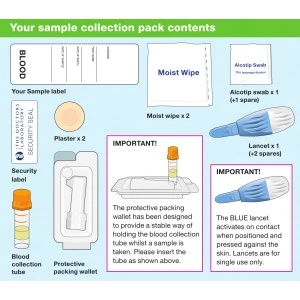
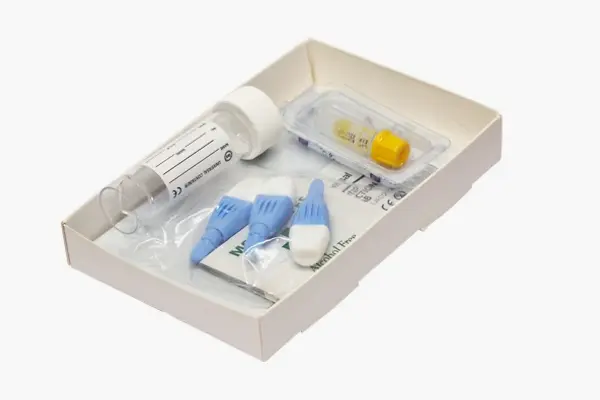
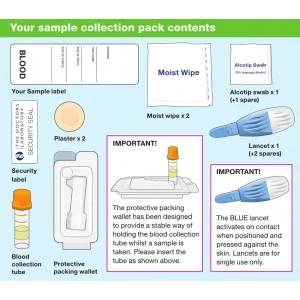
The HIV testing kit contains:

  • 2 moist wipes
  • 2 plasters
  • 2 swabs
  • 3 lancets
  • A marked vial
  • A name label
  • A plastic wallet
  • A prepaid envelope
  • A sample label
  • A security label

How Accurate Are the HIV Testing Kits?

So long as you have collected the blood sample correctly, the results are analysed to the same degree of accuracy as tests taken on the NHS (which are about 99.8% accurate).

How does the HIV test work?

Our HIV test is a 5th-generation testing kit that identifies p24 pathogens and antibodies in your blood belonging to both HIV-1 and HIV-2, the former belonging to 95% of confirmed cases.

The home test is 99.8% effective at detecting HIV at least 6 weeks after exposure to the virus. However, this doesn't mean you should wait 6 weeks to seek help. If you suspect you have been exposed to the virus, consult your doctor promptly. If it has been less than 72 hours since your exposure to the virus, your doctor may suggest taking PrEP.


How to Take the HIV Test

Follow the instructions that come with your HIV testing kit carefully.

Before taking the test, warm your hands by washing them in warm water and drying them thoroughly. Ensure you are standing up to increase blood flow.

  1. Use one of the provided swabs to clean the area of the finger from which you will be drawing blood, and then wipe it dry with a clean tissue.
  2. Twist off the cap of the lancet. Press the lancet firmly against the area on the finger you wish to draw blood from. This will puncture your skin.
  3. Wipe away the first drop of blood with a tissue.
  4. Gently press the puncture site to extract the blood. Avoid squeezing the blood out, as this can damage red blood cells and render the test inconclusive or unclear.
  5. Position your finger over the vial. Fill the vial to the marked line.
  6. Once you have collected the required amount, twist the cap onto the vial until you hear a click. Mix the blood in the vial by gently inverting it 5 to 10 times.
  7. Label the vial. Add the vial of blood, the used lancets and the request form into the box and post them straight away.

When Should I Post the Sample?

You should post your sample as soon as you can after collecting it.

Your local post box should display a time when the post is collected from it. You should post your sample around this time.

You can find your nearest post box online using this map.

If you leave your blood sample for too long, the sample may become haemolysed. This is when the blood cells break down and become unsuitable for testing.


How Will I Receive My HIV Test Results?

Once our partner laboratory receives your sample, it should take approximately 2 days for your results to be ready. Your results will be made available through your online Prescription Doctor account. To protect your privacy, we will not send your results directly to you.

How Will I Know When My Results Are Available?

When your test results are ready, you will be informed via text and email. You can access the results by logging into your Prescription Doctor account.

What Do I Do If The Test Result Is Positive?

You will need to arrange a follow-up test to confirm your HIV status using an alternative testing method.

If your test results come back positive, our compassionate doctors can offer support and guidance on current treatment options.


Staying Safe with Prescription Doctor

All of our home testing kits are certified for use within the UK and are dispatched from our UK-registered pharmacy.

As long as the test sample is taken correctly, our home testing kits are as reliable as those you would receive at a sexual health clinic or hospital.

Always read the instructions carefully before taking the test, and refer back to them while conducting the test to ensure you are collecting the sample correctly.


Additional Resources

PAGE

FAQs About Our Home Testing Kits

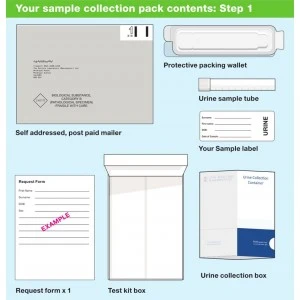
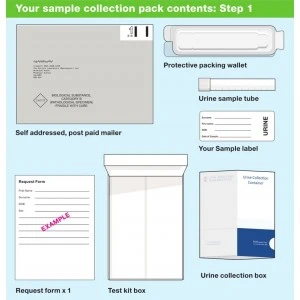
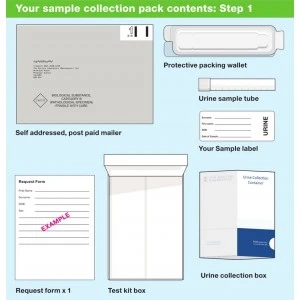
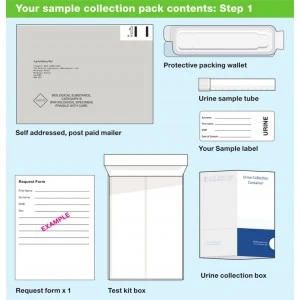
About our serviceHow will I receive my order?Your order will be delivered to you via Royal Mail next-day tracked delivery in discreet packaging.What is discreet packaging?All orders are secured inside plain packaging, which provides no indication of what it contains or its origin.The test kit is sealed in a plain box, fastened together with a sticker. The box is then put in a plain, opaque, grey bag. The only information on the bag is your name and address, which you provide us.Are the home tests accurate?Our STI tests are the same ones used by clinics and doctors, and are very accurate.Are my results sent to my GP?We will not send your results to your GP without your consent.Who supplies our tests? (Laboratory)Our tests are supplied by TDL Pathology.Will I need a prescription?No, you do not need a prescription or referral to order a testing kit from our website.How does the service work?You order a testing kit from our website, and we deliver it to you in the mail.You provide the necessary samples and post them to our partner lab, using the included free postage envelope.The laboratory receives the samples and tests them.Your results are made available through your online Prescription Doctor account. Only you have access to this information.Collecting your sampleWhat should I do if I use up all the lancets?If you use up all the lancets while attempting to draw blood from your fingers, please call the number at the bottom of the instructions to get in touch with the laboratory.They will be able to assist you with what you should do next.What should I do with the used lancets?Place the used lancets back in the box and mail them back to the laboratory. They will be able to dispose of them safely on your behalf.Do not dispose of lancets in your household waste.What should I do with any remaining lancets?Place the unused lancets back in the box and mail them back to the laboratory.Do not throw away any lancets in your household waste.Does alcohol consumption affect the test?Yes, alcohol can cause dehydration, which can make collecting samples of blood and urine difficult.You should avoid drinking alcohol before taking the test.How do I collect my urine sample?Make the urine collection box by squeezing the indicated sides.Begin peeing into the box. Once the box is halfway full, continue urinating into the toilet.Pour the urine from the sample box into the provided vial until it is three-quarters full. Discard any remaining urine down the toilet and throw away the sample collection box.Affix the cap to the vial and seal it inside the provided plastic wallet.Place the plastic wallet back into the box and seal the entire contents inside the prepaid envelope. Post it at your earliest convenience.How much urine is required?You only need to fill the tube 3/4 of the way to provide an adequate sample.What is the best time to collect a urine sample?For the most accurate results, you should take your urine test first thing in the morning.How do I collect my blood sample?Clean the finger with one of the provided alcotip swabs.Remove the cap from one of the lancets and press the end firmly against the side of your fingertip. Apply pressure to the needle to prick your finger.Wipe away the first drop of blood from your finger.Holding your finger above the collection vial, gently milk the blood out of your finger. Do not squeeze the area around the site of the incision.Fill the vial up to the marked line and affix the plastic cap.Gently invert the vial 5 to 10 times to mix the blood.What should I do if I am struggling to collect my blood sample?If you have trouble drawing enough blood to provide an adequate sample, there are several steps you can take:Run your hand under warm waterWarm water can promote blood flow and soften hardened skin on your fingertips, making it easier to collect the sample.
Stand up straightStanding up with your arms by your side can encourage blood flow to your fingertips before taking your sample.
Point your finger downPosition your hand above the vial and point your finger down, allowing the blood to drip from your finger directly into the vial.
Milk your fingerRub from your knuckle to the point of incision. Avoid squeezing the incision point as this can cause the blood to clot.
Try different fingersThe best fingers to take blood samples from are the ring finger and pinkie finger. Use a new lancet for each sample.
Try changing the hand you draw blood fromIf you struggle to draw blood from your right hand, try drawing blood from your left hand. Use a new, unused lancet for each new sample.
Ask a friend or family member for assistanceYou can ask someone to assist you in collecting your blood sample. They can hold the blood vial or help massage the blood from your elbow down to your fingers.
 When is the best time to collect a blood sample?The best time to collect your blood sample is in the morning.How much blood is required?The amount of blood required is indicated by the fill line marked on the collection vial. You need to fill the vial to the marked line to ensure an accurate test result.Do I need to refrigerate my sample(s)?There is no need to store or refrigerate your sample(s).Once you have collected your sample(s), please post them to our partnered lab using the included free postage envelope at your earliest convenience.Sending your sample to the labWhen is the best time to send my results to the lab?Collect the sample on Monday, Tuesday, or Wednesday and post it on the same day to ensure it reaches the lab before the weekend.Receiving your resultsWho should I contact if I have a problem?If you have any issues with your order, our friendly customer service team are on hand to help.How long will it take for my results to come through?Your results will be available 2 days after the lab receives your sample.How do I access my results?Your results will be made available to you via your Prescription Doctor account.What should I do if I receive a positive result?If you receive a positive test result, a member of our medical team will contact you with guidance on next steps.Who should I speak to about concerns with my results?If you have any concerns about the results you have received, contact our customer service team for assistance.General questions about getting tested for STIsShould I still get tested for STIs even if I have no symptoms?Many STIs can be asymptomatic, meaning that they do not cause any symptoms. The only way of knowing for certain whether you have an STI is by getting tested.It is recommended to get checked for STIs every time you change sexual partners. For high-risk individuals who are not in monogamous relationships, it's often recommended to get tested every 3 to 6 months.If you are experiencing any symptoms of an STI, or have reason to believe you have been exposed to an STI, you should get tested to determine your status.When should I take an STI test?You should get tested as soon as you can after exposure to a sexually transmitted infection.When should I retake a test or follow up?If you suspect a false positive or false negative, consider getting tested again.It is also important to retest after receiving treatment to ensure that the treatment has been effective and the infection has cleared.How is the home testing kit different from one from a clinic?The only difference between our home testing kit and a test performed at a clinic is that you are in control of the testing process.Our home testing kits allow you to conveniently test for STIs from the comfort of your own home at your own pace. Once you have collected your samples, you post them to our partnered lab at a time which suits you.
Read more →
FAQs About Our Home Testing Kits
PAGE

How Accurate Are HIV Home Testing Kits?

If you find yourself concerned about contracting a serious illness, the last thing you want to be worrying about is the accuracy of an at-home HIV test kit. While HIV testing is available for free with the NHS, you might find yourself unable or unwilling to head to your local GP. You undertake a little investigative work and discover you can buy HIV testing kits online, which can be delivered discreetly to your door. But you may be dubious of the accuracy of these blood tests, which you can take in the comfort of your own home.Here, we'll explore how it is possible to test for HIV at home and uncover the accuracy behind these convenient HIV test kits.What is HIV?Commonly referred to as HIV, the Human Immunodeficiency Virus is a virus that cannot be beaten by the human body’s natural defence mechanisms. Instead, HIV uses the cells that are usually produced to fight infections and turns them into cells that help the HIV illness to replicate.If left untreated, HIV eventually transforms into Acquired Immunodeficiency Syndrome (AIDS), in which the sufferer will no longer have any immune system at all. Because of this, the virus is known as degenerative (gets worse over time), and early action can mean you will have access to medication that slows the entire process down.HIV is not the same as AIDS. HIV is the name of the virus, which is transmitted, while AIDS refers to the symptoms which develop when HIV is left untreated. A person with AIDS can still carry and transmit HIV.Should I be concerned about HIV?If you have had unprotected sex with a person who is HIV positive, and have regular casual sex with new partners, then you should be regularly tested for sexually transmitted infections. Similarly, if you are considered “high risk”, it is advised that you take the at-home HIV test kit regularly - these include recreational drug users or those who share needles with others.Testing yourself regularly with an accurate at-home HIV test kit will ensure that you are able to seek medical help as soon as your test results are positive. It also allows you to safeguard other partners and friends with the knowledge of your HIV status.How accurate are HIV home testing kits?Fourth-generation tests are extremely precise, with a 95% accuracy rating within 28 days of exposure, according to a 2018 study by Livant et al. It is recommended, however, that a second test be performed after 3 months of the initial exposure, as the infection may take longer to manifest in some individuals than in others. At three months, the accuracy of the HIV home tests is considered 99.97% accurate.The accuracy of fifth-generation HIV testing kits, such as those available from Prescription Doctor, is even more so. These tests indicate whether p24 pathogens and antibodies, associated with the body's reaction to an HIV infection, are present, and can detect HIV faster and more accurately than fourth-generation tests. Fifth-generation HIV testing kits are 99.8% accurate at detecting HIV at least 6 weeks after exposure.The accuracy of at-home HIV test kits is not affected by environmental factors, so you should not need to fast or worry about false positives or negatives, as long as you perform the test correctly. However, it is essential that any at-home testing kit you purchase bears the quality assurance mark “CE”. This means it is licensed for sale in the UK, as tests from abroad may not be as accurate due to the poor quality.HIV TreatmentReceiving a positive result from any HIV test can be extremely distressing and upsetting. Unfortunately, there is no known cure for HIV, although many people who have HIV go on to live happy, fulfilling lives thanks to advances in medicine.If your test shows a positive result, it is important that you contact your local doctor as soon as possible, letting them know that you have tested positive with an at-home HIV testing kit. Your local GP will then be able to provide you with medicine and regular blood tests to monitor the progress of the virus.The medicine you will receive from your doctor comes from a wide variety of pills, which are referred to as antiretroviral medications. These work by stopping the virus from replicating in your body. Doing this gives your body the space and time it needs to rebuild your immune system, without new cells becoming infected by the virus.The type of medicine you are given in this group can vary depending on the rate at which the virus has spread, how your body responds, and how the virus responds to medication. For some, only a single pill is required each day - for others, you may require a combination of pills up to 4 times a day.This can also change over time, as the virus can sometimes mutate and become resistant to the medication you are currently taking. In these cases, your doctor will move on to another combination of tablets, all of which do the same job of suppressing the virus itself.It is important that you are always open and honest with your doctor about any other medications - prescribed or otherwise - that you might be taking, as these can interfere with the effectiveness of your HIV treatment.For many HIV patients, the virus will be under control, and a blood test will show an undetectable viral load within 6 months of being prescribed their first course of HIV treatment. Of course, medicinal advancements are continually occurring, and it is entirely possible that a cure could be discovered in the near future.Sources:https://www.nhs.uk/conditions/hiv-and-aids/diagnosis/https://www.nat.org.uk/we-inform/HIV-statistics/UK-statistics
Read more →
How Accurate Are HIV Home Testing Kits?

Authored & Reviewed By

Mohamed Imran Lakhi

Mohamed Imran Lakhi

MPharm - Lead Pharmacist
Imran Lakhi is the superintendent pharmacist and founder at Prescription Doctor. He has been at the core of our team.

Published on: 08/10/2018 Reviewed on: 13/03/2024

STI testing kits Alternatives

Gonorrhoea testing kit

Gonorrhoea testing kit

  • Accurate home test kit
  • Tested at a specialist lab
  • Dispatched from a UK registered pharmacy
View Treatment
Chlamydia and gonorrhoea testing kit

Chlamydia and gonorrhoea testing kit

  • Tested in a specialist lab
  • Fast and secure results
  • Detects chlamydia and gonorrhoea
View Treatment
Chlamydia testing kit

Chlamydia testing kit

  • Test for chlamydia at home
  • Discreet packaging
  • Sent from a UK registered pharmacy
View Treatment
Full STI Urine Test

Full STI Urine Test

  • Test for 7 STIs at once
  • Discreet test and results
  • Send from a UK registered pharmacy
View Treatment
Full STI Blood Test

Full STI Blood Test

  • Test for STIs from home
  • Fast and secure results
  • Detects HIV, Hepatitis B and C, and Syphilis
View Treatment
Customer Service