Duac Once Daily Gel

In Stock

Prices from £24.99
Review More Prices

Get Started
You must complete a short online consultation so that our prescriber can ensure that the treatment is suitable for you.
Order now to receive your order Friday, August 21
All inclusive service
No hidden fees

Next day delivery
Discreetly packaged
Discreet delivery
Prescriber available
Prescriber assess you online
How to order
  1. Click on the green "Get Started" button, then click "Start Consultation" button on the next page.
  2. Fill in our short consultation form.
  3. Choose delivery method and mode of payment.
  4. Our team of expert prescribers will assess whether medication is suitable.
  5. If you get the green light and it is deemed suitable, your order will be processed quickly and efficiently.
Confidential Service

Your privacy is important, Prescription Doctor are committed to keeping your details completely confidential.

This is why we also take steps to conceal your prescription products under two layers of packaging.

Delivery and Packing
Discreet Delivery?

We have a commitment to delivering a discreet service and understand your need for privacy. We ship all orders via a trackable courier using discreet, plain packaging.

Do I Need to Wait in All Day for Delivery?

Once your order is dispatched you will receive a tracking number via sms and email.

Do You Deliver on Weekends?

We deliver medications between Monday and Saturday. You can upgrade to Saturday delivery on Friday.

My Order Hasn’t Arrived What Should I Do?

You should receive a tracking number with your order which you can use this number to track your parcel online. This should give you a clear indication of where your parcel is. If you haven’t received your parcel in the time frame given by our couriers, contact your local depot to find out where it is. You can also contact our support team who will do this for you.

Can I Be Notified by Text?

On checkout you will be asked to leave your mobile number so our courier can text you about the delivery. This is also useful if the courier has problems finding your address. We will not use your mobile number for anything else.

Payment Methods
How Can I Pay for My Order?

You can pay for your order using credit, debit card or via bank transfer.

I Don’t Have a Credit Card, How Can I Pay?

If you don’t have a credit or debit card you can pay via bank transfer. We will give you a unique reference number at checkout along with details of how to make the transfer. Once the money has cleared in our account, we will process your order.

How Do You Keep My Details Safe?

We are a completely secure site and take many measures to ensure your details are kept safe. We understand that you have a right to extreme privacy when purchasing sensitive health medications. All information that you provide to us is stored on our secure servers. Any payment transactions will be encrypted using SSL technology.

Payment and refunds?

You can pay for your order using credit, debit card and bank transfer.

Card Payment: Please notify us that you wish to cancel your order. Your refund will show available In 1 - 3 days.

Bank Transfer: A member of our team will contact you requesting for your bank details. These details are only used to transfer the funds back into your account.

Patient Reviews: How Duac Once Daily Gel Has Made a Difference

Treatment Information

Table of contents:

What Is Duac Gel?

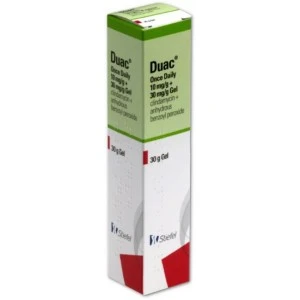
Duac is a combination gel that contains benzoyl peroxide and clindamycin. It fights bacteria which are commonly associated with acne. It's licensed to treat mild to moderate acne in adults and adolescents aged 12 and over, and is applied as a thin film to the affected area once daily.

What makes Duac effective is that it combines two active ingredients that work in different but complementary ways. Clindamycin is an antibiotic that stops acne bacteria from multiplying, while benzoyl peroxide kills bacteria and helps unclog pores. Pairing them means Duac tackles acne from more than one angle, while the benzoyl peroxide also helps reduce the risk of bacteria becoming resistant to the clindamycin, which can be a downside of using antibiotics on their own.

Duac 3% and Duac 5%: What's the Difference?

  • Duac 3%: Contains 1% clindamycin and 3% benzoyl peroxide.
  • Duac 5%: Contains 1% clindamycin and 5% benzoyl peroxide.

Benzoyl peroxide can cause dryness and irritation, which tend to be dose-dependent; higher concentrations are more likely to cause skin irritation. Because of this, a clinician will often start someone with more sensitive skin, or those new to benzoyl peroxide, on the lower-strength 3% gel to let the skin build tolerance. 

The 5% strength may be prescribed where stronger action is needed or where the skin tolerates benzoyl peroxide well. Both strengths are effective – your prescriber will recommend the one best suited to your skin and the severity of your acne.

How Does Duac Gel Work?

Acne develops when dead skin cells and excess oil (sebum) block hair follicles. Bacteria called Cutibacterium acnes feed on this trapped oil and multiply, leading to the redness, swelling, and spots that characterise acne.

Duac works by combining its two active ingredients:

  • Clindamycin is an antibiotic that inhibits the reproduction of acne-causing bacteria, helping calm the inflammation behind red, sore spots.
  • Benzoyl peroxide kills acne bacteria directly by releasing oxygen into the pore, and also has a keratolytic effect. This means it helps shed dead skin cells and clear the blackheads and whiteheads that block pores.

Together, these two ingredients fight the bacteria that cause acne, treat existing blackheads, whiteheads, and spots, and reduce the number of red, inflamed lesions. The benzoyl peroxide component also helps prevent the bacteria from developing resistance to the antibiotic, an important advantage of using a combination product rather than an antibiotic alone.

How Long Does Duac Take to Clear Acne?

Duac doesn't work overnight. It may take 2 to 5 weeks before you start to see an effect, so it's important to keep using it as prescribed. Some people see results sooner, others take a little longer.

Importantly, Duac gel shouldn't be used for more than 12 weeks at a time. Your prescriber will tell you how long your treatment should last and will review your progress along the way. Don't stop using it without advice, even if your skin clears, as stopping too soon can allow your acne to return.

Duac Once Daily Gel Results

Duac's combination of clindamycin and benzoyl peroxide is one of the most studied topical acne treatments, with strong clinical evidence behind it.

A randomised trial comparing Duac with adapalene (Differin) found that the combination of benzoyl peroxide and clindamycin improved both acne severity and quality of life in patients with mild to moderate acne over 12 weeks. Another placebo-controlled study showed that clindamycin 1%/benzoyl peroxide 5% gel significantly reduced inflammatory acne lesions over 11 weeks compared with placebo.

Finally, a review of benzoyl peroxide in acne found that combining it with a topical antibiotic produces greater lesion reduction than the antibiotic alone, while reducing the risk of antibiotic resistance.

Everyone's skin responds differently, but the evidence consistently shows that combining benzoyl peroxide with clindamycin is more effective than either ingredient alone. Duac works best with consistent, once-daily use over the full course your prescriber recommends.

How to Use Duac Gel

Duac gel is a topical treatment applied directly to the skin once daily, usually in the evening. Applying it correctly helps you get the best results while keeping irritation to a minimum:

  • Remove makeup first: Completely remove any makeup before applying.
  • Wash and dry: Wash the affected area well, rinse with warm water, and gently pat dry.
  • Apply a thin film: Using your fingertips, apply a thin film of gel across the entire affected area – not just on individual spots. If the gel doesn't rub in easily, you're using too much.
  • How much to use: For the face only, use a "fingertip" amount – the length of gel from your fingertip to the first crease. For the face and back, use a total of two and a half fingertips.
  • Wash your hands: Wash your hands after applying.
  • Makeup after: Once the gel has dried, you can apply non-greasy makeup.

If you experience dryness or skin peeling, you can use Duac Once Daily Gel less often to allow your skin to heal and adjust to the treatment. You can also use a gentle moisturiser to treat peeling or dry skin. When choosing a moisturiser, look for hypoallergenic creams that are free of oils and fragrances.

Avoid getting the gel in your eyes, mouth, lips, or nose. If you do, rinse with plenty of water. Try to minimise sun exposure and avoid sunbeds, as Duac can make your skin more sensitive to sunlight; use sunscreen and protective clothing when outdoors. Duac can also bleach hair and coloured fabrics, including clothing, towels, and bed linen, so take care to avoid contact.

What Happens When You Stop Using Duac?

Duac treats active acne but doesn't permanently cure the underlying tendency to break out. If you stop using it, your acne may gradually return. It's important to continue using Duac for as long as your prescriber recommends, and not to stop early just because your skin has improved. 

If your acne does come back after a course, speak to your prescriber about the next steps. They may suggest restarting treatment or a maintenance option.

What if I Forget to Use Duac Gel?

If you forget to use Duac Once Daily Gel, apply the next dose at the usual time. Do not use any more to make up for missed doses. Duac works best when applied consistently every day, so try to get back into your routine as soon as you remember.

What if You Apply Too Much Duac Gel

It’s important to note that applying too much Duac gel will not clear your acne any faster and may cause side effects, such as skin irritation. If you do use more than you should, use the treatment less often, or stop for a few days and then start again. 

If You Accidentally Swallow Duac Gel

In the rare event that you accidentally swallow Duac gel, seek medical advice. Because it contains an antibiotic, swallowing it may cause stomach and bowel effects similar to taking antibiotics by mouth, such as nausea, stomach cramps, or diarrhoea.

Duac Side Effects and Cautions

Like all medicines, Duac can cause side effects, though not everyone gets them. Most are mild skin reactions that appear during the first few weeks and settle as your skin adjusts. This section covers possible side effects, signs of a more serious reaction, and key precautions to take.

Duac Gel Side Effects

Most people get some skin reactions when using Duac, especially in the first few weeks. These are usually mild and tend to settle as your skin gets used to the treatment. The table below lists the most commonly reported side effects.
 

Very Common

(affects at least 1 in 10 people)

Common

(affects less than 1 in 10 people)

Uncommon

(affects less than 1 in 100 people)

  • Redness
  • Peeling
  • Dryness
     
  • Headache
  • Burning sensation
  • Pain
  • Sensitivity to sunlight
  • Tingling
  • Worsening acne
  • Red, itchy skin
  • Rash


More detailed information about potential Duac gel side effects can be found within the Patient Information Leaflet. If you experience any adverse reactions to the treatment, you can report them to the MHRA’s Yellow Card Scheme. 

Cautions When Using Duac Gel

Duac Once Daily Gel may cause serious side effects. If you experience any of the following, stop using the treatment and speak to your doctor immediately, as you may need urgent medical treatment:

  • Signs of an allergic reaction
  • Severe or prolonged diarrhoea or abdominal cramps
  • Severe burning, peeling, or itching

The signs of an allergic reaction to Duac gel include:

  • Swelling of your face, eyes, lips, or tongue
  • Nettle rash
  • Difficulty breathing
  • Collapsing

Duac Warnings and Interactions

Although Duac combination gel is an effective acne treatment, it is not suitable for everyone. For example, you should not use it if you are allergic to clindamycin, lincomycin, benzoyl peroxide or any of the other ingredients. If you are unsure about any of the above, speak to your clinician beforehand. 

Before You Use Duac Gel

Tell your prescriber before using Duac if any of the following apply to you:

  • You have ever had a gut condition such as regional enteritis (Crohn's disease), ulcerative colitis, or antibiotic-associated colitis.
  • You have recently used other clindamycin or erythromycin-containing medicines – this can make Duac less effective.
  • You have sensitive or easily irritated skin, or a tendency towards dryness.

Don't apply Duac to broken, cut, grazed, sunburned, or irritated skin, and keep it away from the eyes, lips, mouth, and nose. Avoid sunbeds and minimise sun exposure while using it, as Duac increases sensitivity to sunlight.

Duac Once Daily Gel and Other Medicines

Tell your prescriber about all medicines you're using, including those applied to the skin. The following are particularly relevant:

  • Other topical acne treatments, medicated or abrasive soaps, and strongly drying or alcohol-based products: Using these alongside Duac can irritate your skin over time.
  • Topical retinoids (tretinoin, isotretinoin, or tazarotene): These can be made less effective if applied at the same time as Duac. Your prescriber may suggest using one in the morning and the other in the evening.
  • Erythromycin-containing medicines: Duac shouldn't be used with these.
  • Dapsone or sulfacetamide: Applying these alongside Duac can cause a temporary yellow or orange colour change to skin or facial hair.
  • General anaesthetics: One of the ingredients in Duac can affect how certain anaesthetic medicines work, so tell your doctor if you're due to have surgery.

Pregnancy and Breastfeeding

Always tell your prescriber if you're pregnant, think you may be pregnant, or are planning a pregnancy before using Duac.

There's only limited data on using clindamycin and benzoyl peroxide during pregnancy. The amount of each ingredient absorbed through the skin is low, and animal studies haven't shown harmful effects, but the safety of Duac during human pregnancy hasn't been established. Your prescriber will only recommend it during pregnancy if they judge the benefit to you outweighs any potential risk to your baby.

If you're breastfeeding, check with your prescriber before using Duac. It hasn't been studied in breastfeeding. While the amount absorbed through the skin is low, it isn't known whether clindamycin or benzoyl peroxide passes into breast milk. Clindamycin is known to appear in breast milk when taken by mouth or injection. 

If you do use Duac, don't apply it to your chest, to avoid your baby accidentally swallowing any of the product.

There are no data on the effect of Duac on fertility in humans.

Where Can I Buy Duac Acne Gel?

Because Duac is a prescription-only medicine, you can't simply pick it up off the shelf – you'll need a prescription first. There are a couple of ways to get hold of it in the UK, whether through your GP or an online prescribing service like Prescription Doctor.

Can You Buy Duac Gel Over the Counter?

No. Duac is a prescription-only medicine in the UK, so you can't buy it over the counter. You'll need a prescription from a qualified healthcare professional, such as your GP or an online prescriber.

Can You Buy Duac Gel Online?

Yes, you can request a private prescription for Duac from Prescription Doctor following a short online consultation. One of our prescribers will review your information, and if Duac is suitable, your order will be dispatched from our UK-registered pharmacy. Orders approved before 3pm on a weekday are eligible for discreet next-day delivery.

Frequently Asked Questions About Duac Gel

Does Duac Help Acne Scars?

Duac Once Daily Gel is not specifically indicated for treating acne scars, though some users have reported that the appearance of scarring has diminished while using it. To prevent scarring, it is important not to pick or pop your spots. Acne scars usually fade over time.

Does Duac Cause Purging?

Most people notice some redness and peeling in the first few weeks of using Duac. This isn't the same as "purging" – it's a normal skin reaction to benzoyl peroxide that usually settles as your skin adjusts. If irritation is severe, you can use the gel less often, apply a moisturiser, or pause briefly.

Is Duac a Steroid Cream?

No. Duac doesn't contain any steroids. It's a combination of an antibiotic (clindamycin) and an antiseptic (benzoyl peroxide).

How Long Do You Leave Duac Gel on the Face?

Duac is a leave-on treatment, so you apply a thin film in the evening and leave it on the skin, rather than washing it off. Apply it after cleansing and let it absorb before applying any makeup.

Can I Drink Alcohol with Duac Gel?

Yes. Alcohol doesn't interact with Duac, as it's applied to the skin rather than taken internally. Just bear in mind that alcohol-based skincare products (like some toners) can add to skin dryness if used alongside Duac.

Does Duac Affect Contraceptives or Fertility?

Duac is applied to the skin and isn't known to affect hormonal contraceptives. There are no human data on the effect of Duac on fertility. If you're pregnant, planning a pregnancy, breastfeeding, or have concerns about fertility, speak to your prescriber.

Can I Wear Makeup While Using Duac Acne Gel?

Yes. Apply Duac after cleansing, let it dry fully, then apply a non-greasy, non-comedogenic make-up. Be aware that benzoyl peroxide can have a bleaching effect, so take care with coloured cosmetics and applicators.

What Should I Do if Duac Doesn't Work?

Give Duac time; it can take up to 12 weeks to show its full effect. If you've used it consistently and seen no improvement, speak to your prescriber. They may review your treatment and suggest an alternative or an additional therapy.

How Do I Store Duac Once Daily Gel?

Once dispensed, store Duac below 25°C and use it within two months. Keep the tube tightly closed, don't freeze it, and keep it out of the sight and reach of children. Don't use it after the expiry date.

Additional Resources

PAGE

What is dry skin brushing and what role does it play in acne?

Many natural health experts are true believers in dry skin brushing. Results have been shown to improve circulation throughout the body and even reduce the appearance of cellulite.But just how does dry skin brushing help improve acne?The idea is that increased circulation means increased blood and oxygen to your cells. This, in turn, helps the body detoxify itself more effectively.  If you rid the body of excess toxins, you may notice healthier skin.Due to a modern diet which is often lacking in fibre and nutrients, many people are constipated on a regular basis.  If the body does not rid itself of waste through its regular channels, you get a buildup of toxins in the colon.These toxins then enter the bloodstream and go to the liver for detoxification.  If your liver is overworked, then your skin and overall health will be affected.This is where dry skin brushing comes into play!Dry skin brushing can be beneficial because it gently removes the top layer of the skin.  It also improves the circulation in the body.  As a result, toxins are removed from the body and organs, including the skin.Here is how to dry brush the skin effectively:Remove all clothing. Using a natural, bristle brush, gently start brushing from the feet upwards.First, do both legs, moving in gentle, long strokes.Then move on to the arms.Then do the back.Finally, brush the abdomen and chest area.Tips:Use circular strokes and always brush upwards towards the chest area.It’s important to be gentle to avoid breaking the natural skin collagen.For best results, aim to dry skin brush at least once a day.Another option for increasing circulation to the face is to wet a muslin cloth in warm water and then gently rub it over the face in a circular motion. This will help regenerate skin cells and improve blood circulation.To summarise, dry skin brushing is recommended by many natural healthcare providers as a way to improve overall health.  It has been demonstrated to offer numerous benefits for both the body and the skin.  Many users report increased energy, healthier skin, and even weight loss. It's certainly worth trying to see what results you get and whether it improves your acne.
Read more →
What is dry skin brushing and what role does it play in acne?
PAGE

Natural ways to control your acne

Acne can be frustrating when you're a teenager in high school. However, as an adult, it just seems too cruel to be true. When you are a teenager, most people understand that hormones are responsible for the many changes going on, including the acne you may be experiencing.  However, in many cases, once your hormones stabilise, you will no longer experience as many problems with acne.It is more common than people realise, but adults do suffer from acne, too.  In many of these cases, hormones are still to blame.However, it is possible to improve adult acne.  It is important to look at what you are eating, and then the goal is to stabilise your hormones.Here are some ways to do this:Consume less meatSome meat is full of hormones that do not belong to you but instead come from the animal source.  Cut back on meat, and you will reduce the level of foreign hormones in your system.Consume less dairyDairy, like meat, is full of hormones that do not belong to you.  Avoid excess consumption of dairy products.  Nowadays, you can find dairy substitutions for most regular dairy products.Lessen your stress levelsReducing stress levels in your body can help regulate your hormones.  Exercise is a great stress reliever.  Meditation, prayer, or simply having quiet time to unwind can all improve stress levels in the body.Consume less sugarSugar can cause insulin spikes in the body.  This excess insulin can lead to numerous damaging conditions that are harmful to the body.  Avoid sugar and opt for natural sweeteners instead.  Agave nectar and stevia are good alternatives.  The less sugar you eat, the less you will need as your body adjusts to the changes.  Consume fresh whole foodsThe more natural your diet, the healthier you and your hormonal system will be.  Opt for whole grains such as brown rice, and eat plenty of beans and green vegetables. Opt for natural foods, such as vegetables, and avoid processed foods. Consume less saltToo much salt can be damaging to the body and, in turn, to your hormones.  Yes, you do need salt, but not in the quantities that us Brits are accustomed to in our diets. Excess salt can increase the risk of other health conditions, such as high blood pressure.  Gradually adjust your palate to eating less salt.  Like sugar, the less you eat, the less you’ll crave it.Improving adult acne is possible.  The key is to get your hormones under control, and the best way to do this is by eating less meat and dairy, reducing stress through several methods, and eating whole, unrefined foods.  If, for any reason, you continue to have problems with acne, then you should seek the help of a natural health practitioner or medical doctor.
Read more →
Natural ways to control your acne
PAGE

Control your hormones, control your acne

There is no doubt that out-of-control hormones can lead to acne. Hence, if you can control the hormones, it may also help control the acne.But just how do you balance the hormones in the body? Here are two big ways:1. DietMany of us have an excess of unhealthy hormones in our bodies.  Many of these hormones do not even belong to us!  Instead, we ingest them through our consumption of meat and dairy products.If you're serious about controlling your hormones, the first place to start is with your diet. By reducing the amount of meat and dairy that you consume, you can reduce the level of excess hormones.Instead of regular milk, opt for soy or rice milk, and include several vegetarian meals in your weekly diet.  Avoid using cheese, other dairy products, and meat on a regular basis. Instead, use meat and dairy in moderation.Additionally, be mindful of the foods you eat. Additives, chemicals, and preservatives can all be very damaging to your hormonal system.  Instead of eating junk food or pre-packaged foods, choose fresh, natural, whole foods. These foods will help keep your body functioning at its best and regulate your hormones.Reducing sugar is also necessary to help control the hormones. Excess use of sugar can cause severe insulin spikes in the body. This will lead to an overproduction of certain hormones, which have been shown to damage both the body and skin.2. Reduce stress in your bodyAnother way to regulate hormone levels in your body is through exercise. Many suffer from pent-up stress, and this stress can wreak havoc on the body's hormonal systems. Regular, vigorous exercise helps reduce stress and, in turn, controls the hormones in the body.Meditation has also been proven to reduce stress levels in the body. Start slowly and simply sit in a quiet space for a few minutes. Concentrate on your breathing, and imagine yourself relaxing into your body.  The idea is simply to let your body and mind rest for a few minutes each day.Prayer has also been shown to improve overall health. Like meditation, it allows you quiet time. By allowing a higher power into your life, you can let go of the things you cannot control.To conclude, getting your hormones under control means you can also manage your acne effectively. The above tips will help you get started.
Read more →
Control your hormones, control your acne
PAGE

How to avoid acne while wearing a face mask?

Due to the ongoing Coronavirus (COVID-19) outbreak, many people have been wearing protective face masks to help prevent the spread of the virus. As the UK reviews steps to ease lockdown, it has become mandatory to wear a face mask on public transport and when visiting the hospital.However, for people with sensitive skin, wearing a face mask can cause or exacerbate acne, rosacea, eczema, and other skin conditions.The moist, humid environment caused by wearing a face mask traps sweat, natural oils, and dead skin, leading to an outbreak of acne.Friction against the face, particularly around the chin, cheeks and bridge of the nose, can cause an itchy rash or exacerbate acne symptoms.The acne that develops has been nicknamed 'maskne' – a contraction of 'mask' and 'acne'. Acne is an unpleasant and often embarrassing condition which usually afflicts the face, causing itchy red blemishes.While wearing a face mask can hide your physical appearance, which can boost your confidence when you're out and about, it doesn't treat the underlying condition and can actually worsen the irritation.There are ways to prevent and even treat maskne, and, as with most skin conditions, it's a case of trying different things to find the one that works best for you.Here are some things to consider to prevent and treat maskne.Choosing the right type of face maskDoctors, nurses, and other healthcare professionals wear a specific type of medical-grade mask, referred to as an FFP3 face mask. However, for the public, many people are opting for more affordable options, such as surgical masks, paper masks, washable fabric masks, or homemade masks made from scarves, t-shirts, or bandannas.The different materials used to make face masks can impact people's skin in different ways. For example, paper masks can cause constant friction against your face, combined with the trapped warm air and moisture, which can create or worsen existing skin problems.On the other hand, reusable face masks can cause dryness, which leads to irritation, since many fabrics used for them absorb the natural oils on our skin.Additionally, the residue from laundry detergents and fabric softeners can also lead to clogged pores and irritation from contact. Also, if you are already prone to acne, avoid cloth masks made of rough fabrics and opt for ones made with cotton fibres instead.While it’s important to ensure a tight seal around the edge of your face mask, this can put pressure on your skin and cause discomfort, particularly on the nose.For many people, it will be a matter of trying out different face masks and finding the one that suits their skin type best.Aside from having the most appropriate mask for you, it's equally important to ensure you are wearing it properly. You should be careful when putting on and taking off your face mask to mitigate the risk of accidentally contaminating yourself and other surfaces. Check out our guide for putting on and taking off face masks for more information,Always wear a clean face maskSome people are using disposable masks that can be thrown away after each use, however the UK government has encouraged people to make their own masks.The danger with such fabric masks is that they can end up harbouring germs and dirt. This is why cleaning your mask is so important.If your face mask is reusable, you should wash it as soon as you take it off.For non-reusable masks, dispose of them after use.By doing this, you are reducing the risk of spreading germs and helping your skin from breaking out further. It is a good idea to have at least two face masks. This way, you will always have a fresh face mask on hand, even if one is in the wash.If your mask is washable, your choice of detergent matters. Consider washing your face mask in non-bio detergent if you have sensitive skin.Make sure to let your mask dry completely after every wear and then wash it to remove any sweat and dirt that may have been trapped inside.Please also be mindful that when wearing a face mask, avoid touching it throughout the day, as germs on the mask could be passed onto your hands.Apply moisturiser before wearing your face maskMoisturiser keeps your skin hydrated and acts as a barrier to friction from your face mask.Apply the moisturiser around your mouth and nose area, as well as anywhere the face mask is likely to rub against your skin, to help form a barrier.For the best results, choose a moisturiser which is fragrance and oil-free.Remove any make-up as soon as you take off your face maskIdeally, if you are wearing a face mask, it is best to avoid wearing make-up, or at least minimise the amount to avoid clogging the pores around the area where the mask sits.If you are wearing make-up, make sure you remove it as soon as you take your face mask off. As the mask has been on your skin for however long, it may clog your pores.Wash your face thoroughly once you remove the face mask to remove unwanted bacteria, dirt, and dust particles, which can all cause irritation and sensitivity.Opt for a gentle moisturising soap, such as Dove, to wash your face. You can also use an emollient designed for sensitive skin, such as Hydromol or Aveeno.It is also important to pat your face dry with a towel rather than rubbing your skin. This prevents unnecessary friction, which can irritate the skin and exacerbate symptoms further.Stick to a gentle skincare routineMake sure your skincare routine is gentle. Avoid fragrant products, as they can aggravate your skin further.Avoid washing your face more than once a day, as frequent washing of the skin can remove natural oils that keep your skin hydrated and can exacerbate your symptoms.For acne sufferers, products containing benzoyl peroxide usually help.Ask a pharmacist about over-the-counter treatments which can reduce your symptoms. They will be able to help you choose the most suitable treatment for you and your skin type.If your maskne is getting worse no matter what you try, make an appointment with your doctor, who will be able to advise you further on treatments which might be more suitable for you.For persistent acne, your GP may be able to prescribe an acne treatment such as Epiduo. You can buy acne treatments such as Epiduo online from Prescription Doctor.We offer a range of acne treatments which you can order online and have delivered to your door the next day.ReferencesNHS, 2019. Acne.British Association of Dermatologists, 2020. Acne.
Read more →
How to avoid acne while wearing a face mask?
BLOG

How to use Tea-tree oil for acne?

Acne is not just something that affects hormonal teenagers; adults can suffer, too. It has nothing to do with age, and there are a number of reasons for it. It can occur due to diet, hormone imbalances, skin bacteria, stress, and blocked pores. It could be a combination of these things or just one of them, but the result is the same – lots of spots that not only look unpleasant but can also be sore and itchy. Additionally, for those who suffer, it is crucial to take extra care of their skin.The truth is that tea tree oil may work – studies show that at 5% strength, it can have an effect – but it is often less effective than other medicines that are specifically designed to treat acne. However, since it is seen as a ‘natural’ product, many people still like to try it to treat their acne.It is finding the 5% concentration that often proves to be a problem. In most chemists and supermarkets, the concentration tends to be listed as around 0.5%, which is not concentrated enough to make any difference to your acne (even assuming tea tree oil makes a difference at all). You might have better luck searching in health food shops, where the concentration can be as high as 3%, but again, it might still not be enough.Be cautious when searching for higher concentrations of tea tree oil; selecting too high a concentration can irritate your skin even more, and rather than having a soothing effect, it may exacerbate the symptoms of your acne, leading to inflammation and soreness.How to use Tea Tree Oil?First, use a gentle cleaning wash to clean your face. This will leave the skin as fresh as possible, while removing any dirt and dead skin cells that would otherwise clog your pores, which can cause irritation. Exfoliation can also be beneficial, provided you don't use products that might further irritate your skin. If you suffer from recurrent acne, washing your face with a specialist formula daily is important, regardless of whether you use tea tree oil or not.Once you have washed your face, you can begin using tea tree oil. The amount and method of application will vary between brands and formulations. Some tea tree oil products may need to be diluted in water before use; others may be in gel form, which can be applied directly to the skin. Always check the label for instructions on how to use the product.A common instruction on how to use tea tree oil is to apply a few drops – diluted if necessary – of the oil onto a cotton wool pad and gently dab it onto your face. You should feel a soothing sensation when you do this. Alternatively, take some moisturiser and add a few drops of tea tree oil to it before applying it all over your face.If you notice signs of irritation or experience an allergic reaction to the oil, stop using it immediately. Wash the product off your face and consult your doctor for advice.It is also possible to buy tea tree oil that is already mixed into a facial wash. These do tend to have much lower concentrations but can be a good way to calm the skin if your acne is particularly sore and painful. Some of these products may also contain exfoliation beads, which gently scrub the skin to remove dead skin cells, which might further worsen your acne.There are many complimentary and natural "treatments" for acne, though they may not all work. Be sure to speak to your doctor or a dermatologist before using tea tree oil to treat your acne. Alternatively, your doctor may prescribe an anti-acne treatment that contains salicylic acid, which reduces oil production and skin shedding. You may find these prescription acne treatments provide more effective relief in a shorter space of time.Before using any new skin product, perform a patch test to determine if you are allergic to any of its ingredients. You should also consider consulting your doctor or a dermatologist for advice on how to reduce your acne symptoms in other ways, such as exercising, managing stress, or taking precautionary measures during certain seasons.
Read more →
How to use Tea-tree oil for acne?
BLOG

What is 'bacne' and how is it treated?

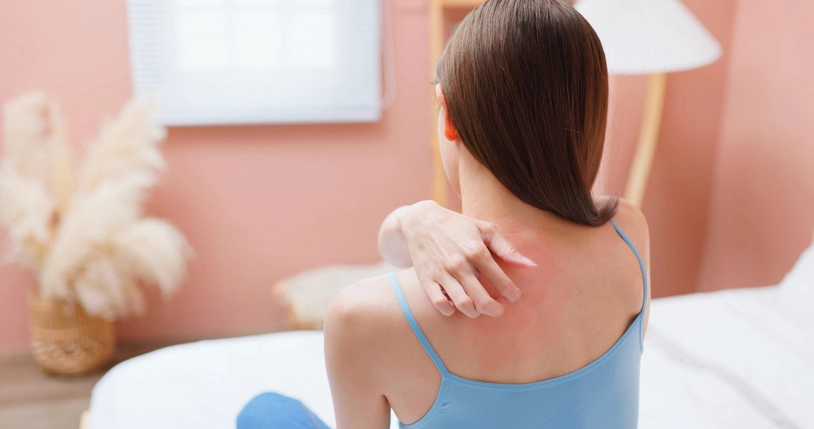
When you think of acne, you will probably think of spots and pustules on your face. However, this is not the only place where acne can appear; it can actually affect any area of the body that has hair follicles or oil-secreting glands. These areas include the chest, shoulders, and back.'Bacne', as back acne is colloquially known, affects as many as 60% of people, but it is not often discussed. Whereas facial acne (which affects up to 95% of people aged between 11 and 30) is obvious and cannot be hidden, back acne is easy to hide away and, therefore, can be forgotten about for the most part, or at least not dealt with. However, this ‘out of sight, out of mind’ mindset regarding back acne is not helpful; there are ways that back acne can be treated, and the sooner you start using them, the better.What Causes back acne?Just like your face, your back has many sebaceous glands. These glands secrete an oily substance called sebum, which helps to ensure the hair and skin remain properly moisturised. It is made up of free fatty acids, triglycerides, squalene, cholesterol, cholesterol esters, and wax esters. It is an invaluable part of the body.However, when sebum rises to the surface of the skin, it mixes with lipids, sweat, and various debris from the surrounding environment. When this happens, the oil starts to block the pores of the skin and the hair follicles on your body. When the hair follicles become too clogged, they form an acne lesion.Different Types of Back AcneThe term ‘back acne’ actually covers a wide range of different-looking spots and marks. Although they are all caused by blocked follicles and pores, the reasons they emerge differently are varied.WhiteheadsWhiteheads are the most common type of back acne. Rather than erupting, the blocked follicle remains closed and therefore resembles a white bump on the skin.BlackheadsConversely, when a follicle opens up, it forms a blackhead. The reason the head of the spot turns black is because the sebum is reacting with the air – it has nothing to do with dirt, and you cannot ‘scrub’ a blackhead ‘clean’.PapulesIf the acne you are experiencing is sore and appears as small, pink bumps, you have papules.PustulesAnother term for a pustule is a pimple, a term you may be familiar with. As the original name suggests, these are filled with pus, so they look white or yellow, and the base is red.CystsCysts are also pus-filled, but they are much larger than pustules and can be extremely painful. If treated improperly or if they are picked or scratched, they can leave scars.NodulesSometimes, acne lesions don’t make it to the surface of the skin, and those that form deeper down are called nodules. These feel like hard bumps, and they are rather large and painful.How To Treat Back AcneAs with most medical conditions, it is best to try to prevent back acne in the first place. Although this is not always possible, there are some measures you can take that may help.To start, check the leaflets and labels of any medications you are taking. Some drugs can list the development of acne as a side effect. If that is the case, it is best to consult a healthcare professional about alternative medications that you may be able to take. Remember, though, that although back acne can be uncomfortable, if the medication is doing you good, it might be something you choose to live with to feel better in every other aspect of your life.Oil-based skin care products can also be an issue, as adding more oil to already oily skin can cause your follicles to become blocked more easily. Search for oil-free products, including moisturisers and sun protection. Check the labels of anything you intend to use; if it claims to be non-comedogenic, it means that it won’t cause blackheads, for example.Pressure on your back from carrying a bag or sports equipment can also cause your hair follicles to become blocked. If you carry equipment or a backpack for long periods, try to reduce this.Good skin care is another way of reducing acne (and not just back acne, but wherever you happen to have it). Regularly use a gentle cleanser to wash yourself, and always take a shower after any form of exercise, particularly if you are sweaty.If you still experience back acne, there are over-the-counter treatments available that can help. These will include ingredients such as sulphur, resorcinol, salicylic acid, and benzoyl peroxide.If none of the above has helped you, you will need to seek advice from a dermatologist. They will be able to prescribe medication to reduce and even remove any signs of back acne.
Read more →
What is 'bacne' and how is it treated?

Treatment information

Product Name: Duac Once Daily Gel
Manufacturer: Stiefel (a GSK company)
Active Ingredient(s): Clindamycin and Benzoyl Peroxide
Administration: Topical
Presentation: Gel
Available Strength: 3%: clindamycin 10 mg/g + benzoyl peroxide 30 mg/g; 5%: clindamycin 10 mg/g + benzoyl peroxide 50 mg/g
Exemption: Prescription Only
Dosage: Apply once daily to the affected areas, usually in the evening
Description: Duac Once Daily Gel is a treatment for acne which contains an antibiotic (clindamycin) and an antiseptic (benzoyl peroxide) to clear the bacteria responsible for acne.
Drug Class: Topical antibiotic and benzoyl peroxide combination
Alcohol Consumption: No influence
When Pregnant: Speak to your doctor before using Duac Once Daily Gel if you are pregnant or think you might be pregnant.
When Breastfeeding: Speak to your doctor before using Duac gel if you are breastfeeding. Do not apply to the chest.
Prices From: 24.99 GBP

Click here to view the Duac Once Daily Gel - Patient Information Leaflet

Authored By

Sam

Sam Jeans

Medical Content Writer
Sam has been a freelance writer since 2015, with extensive experience in the medical, scientific, and technology fields. He holds an MSc in International Development and Social Anthropology, bringing

Published on: 29/10/2020 Re-Published on: 16/07/2026

Reviewed By

Mohamed Imran Lakhi

Mohamed Imran Lakhi

MPharm - Lead Pharmacist
Imran Lakhi is the superintendent pharmacist and founder at Prescription Doctor. He has been at the core of our team.

Reviewed on: 16/07/2026

Acne Alternatives

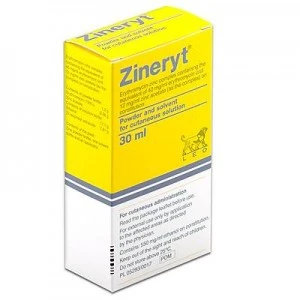
Zineryt

Zineryt

  • No Prescription Required
  • Registered prescribers are on hand
View Treatment
Differin (Adapalene)

Differin (Adapalene)

  • No Prescription Required
  • Registered prescribers are on hand
View Treatment
Epiduo

Epiduo

  • No Prescription Required
  • Registered prescribers are on hand
View Treatment
Customer Service