All inclusive service
No hidden fees

Prices from £6.99
Review More Prices
Your privacy is important, Prescription Doctor are committed to keeping your details completely confidential.
This is why we also take steps to conceal your prescription products under two layers of packaging.
We have a commitment to delivering a discreet service and understand your need for privacy. We ship all orders via a trackable courier using discreet, plain packaging.
Once your order is dispatched you will receive a tracking number via sms and email.
We deliver medications between Monday and Saturday. You can upgrade to Saturday delivery on Friday.
You should receive a tracking number with your order which you can use this number to track your parcel online. This should give you a clear indication of where your parcel is. If you haven’t received your parcel in the time frame given by our couriers, contact your local depot to find out where it is. You can also contact our support team who will do this for you.
On checkout you will be asked to leave your mobile number so our courier can text you about the delivery. This is also useful if the courier has problems finding your address. We will not use your mobile number for anything else.
You can pay for your order using credit, debit card or via bank transfer.
If you don’t have a credit or debit card you can pay via bank transfer. We will give you a unique reference number at checkout along with details of how to make the transfer. Once the money has cleared in our account, we will process your order.
We are a completely secure site and take many measures to ensure your details are kept safe. We understand that you have a right to extreme privacy when purchasing sensitive health medications. All information that you provide to us is stored on our secure servers. Any payment transactions will be encrypted using SSL technology.
You can pay for your order using credit, debit card and bank transfer.
Card Payment: Please notify us that you wish to cancel your order. Your refund will show available In 1 - 3 days.
Bank Transfer: A member of our team will contact you requesting for your bank details. These details are only used to transfer the funds back into your account.
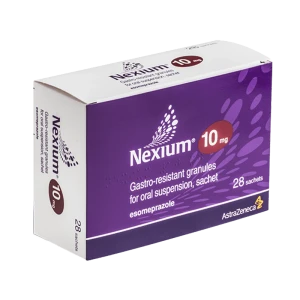
Nexium is a branded medication primarily used to treat acid reflux, a condition in which stomach acid travels up the oesophagus (food pipe) and causes discomfort. Manufactured by AstraZeneca, the treatment is an acid suppression agent, which means it works to reduce the amount of acid produced by the stomach.
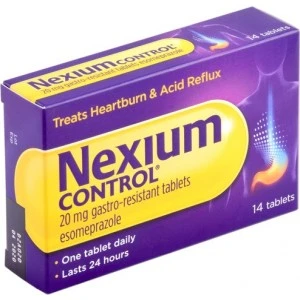
You're more likely to be prescribed Nexium if you're experiencing severe acid reflux symptoms or if excess acid has caused damage to your oesophagus. If you're dealing with minor heartburn discomfort, an over-the-counter solution like Nexium Control may be more suitable.
Nexium works by preventing proton pumps from secreting hydrochloric acid. Proton pumps are enzymes in the stomach that help produce acid to aid digestion. As such, Nexium is classified as a proton pump inhibitor (PPI). Its effect on the body reduces the likelihood of acid reflux and associated symptoms such as heartburn.
In addition, Nexium tablets and Nexium sachets help any damaged tissue in the oesophagus, duodenum, and stomach to heal. The medication's active ingredient, esomeprazole, can also be used to treat and prevent ulcers in the stomach and intestines, which may be caused by non-steroidal anti-inflammatory drugs (NSAIDs) or the bacterium Helicobacter pylori (H. pylori).
You should start to see an improvement in your symptoms within the first 2-3 days, though esomeprazole can take up to 4 weeks to reach its full effectiveness. Because of this, you may still experience bouts of acid reflux and discomfort during this period. Once at full strength, Nexium can offer relief for up to 24 hours.
If you're still having difficulties after a few weeks, it's important that you speak to a doctor, who may recommend an alternative medication.
Clinical trials show Nexium works well to heal the damage caused by acid reflux. In patients with reflux oesophagitis, where stomach acid has irritated or damaged the lining of the food pipe, the 40 mg dose heals the oesophagitis in around 78% of patients after four weeks of treatment, rising to 93% after eight weeks. For people with heartburn symptoms but no visible damage to the food pipe, the 20 mg dose is used to bring symptoms under control, and your doctor will assess your progress after four weeks to see whether more time is needed.
Nexium can also help when heartburn hasn't settled on another PPI. A UK study of patients whose symptoms persisted despite a full daily dose of a different PPI found that switching to Nexium 40 mg reduced the average number of heartburn days from 4.4 to 1 per week over eight weeks, with similar improvements seen across other reflux symptoms.
How to take Nexium depends on whether you're using tablets or sachets. That being said, both variations need to be taken with still water (not fizzy). You can also take them at any time of day, with or without food.
It's important to swallow Nexium tablets whole, so you should take care not to chew or crush them. This is because the pills contain coated pellets that stop the medication from being digested by the stomach. Damaging these will render the treatment ineffective.
Should you have difficulty swallowing Nexium tablets, you can put them in a glass of water and stir until they break up. Drink the mixture immediately, or at least within 30 minutes, stirring thoroughly just before consumption. Again, be careful not to damage the pellets. To make sure you have taken all of the medication, refill the glass with water and drink again.
Empty the Nexium granules into a glass of water. Use 15ml (3 teaspoonfuls) of water for each sachet. Stir the medication into the water and let the mixture sit for a few minutes to thicken. Once this has happened, stir again before swallowing. Be sure not to chew or crush the granules.
Your doctor will prescribe the number of sachets you will need to take. You should not allow the mixture to sit for more than 30 minutes before drinking. If any mixture remains in the glass, refill it with water and drink again.
The recommended Nexium dosage for heartburn and acid reflux depends on whether you're taking the tablets or sachets, as well as the severity of your condition. Either way, the medication is designed to be taken daily. Be sure to only take the correct dosage as prescribed by your doctor.
Nexium tablets are available in two strengths: 20 mg and 40 mg. Nexium sachets, meanwhile, just come in one dose.
If your doctor has found damage to your oesophagus, they may prescribe 1 40 mg Nexium tablet to be taken daily for 4 weeks. If there is no damage, the recommended dosage is one 20 mg tablet each day until the condition is under control.
If any oesophageal damage does not heal within the initial 4 weeks, your doctor may decide to keep you on a daily 40 mg dose for an additional 4 weeks to see how things go. Once the problem has been rectified, the recommended dosage will drop to 20 mg per day.
Each Nexium sachet contains 10 mg of esomeprazole. Your doctor will instruct you on the number of sachets to take each day and the duration of treatment. If you are ever unsure about what to do, it's essential to contact your GP immediately for further advice.
If you miss a dose of Nexium, take it as soon as you remember. This is unless it's almost time for your next dose, in which case you should just skip the one you've forgotten. You must never take a double dose to catch up.
If you take more Nexium than prescribed, speak to your doctor or clinician straight away for further advice.
Nexium sachets and tablets have the potential to cause side effects, much like any other medication. However, not everyone will experience them. Nevertheless, it's always a good idea to familiarise yourself with potential adverse reactions before starting treatment, so you have a good idea of what to expect.
Since both Nexium tablets and Nexium sachets contain the same active ingredient (esomeprazole), they are likely to cause similar side effects. If you find these difficult to manage, consult a GP, who may recommend an alternative treatment.
Examples of Nexium side effects include:
Common (may affect up to 1 in 10 people) | Uncommon (may affect up to 1 in 100 people) | Rare (may affect up to 1 in 1,000 people) |
|---|---|---|
|
|
|
Please note that the above information does not contain a full list of potential Nexium side effects. More details can be found within the Patient Information Leaflets for Nexium tablets and Nexium sachets. If you experience any adverse reactions, you can report them to your clinician or use the MHRA's Yellow Card Scheme.
If you take Nexium for three months or longer, there's a small risk of your magnesium levels dropping too low. This can cause:
Your doctor may check your magnesium levels before you start long-term treatment, and periodically afterwards, particularly if you also take other medicines that can lower magnesium, such as diuretics.
Long-term, higher-dose use has also been linked to a modest increase in fracture risk, so your doctor will usually recommend the lowest effective dose for the shortest time needed.
If you notice any of the following serious side effects of Nexium (esomeprazole), you should stop taking the treatment and seek medical assistance immediately:
More information about the serious Nexium side effects can be found within the Patient Information Leaflets.
It's possible for Nexium to hide the symptoms of other diseases or medical conditions. If you notice any of the following symptoms after starting treatment (or before you start), consult your doctor immediately:
Although Nexium tablets and sachets are effective treatments for heartburn, they may not be suitable for everyone. For example, you should not take the medication if you:
You should talk to your doctor before you start taking Nexium if you:
If you are due to have an endoscopy, you must follow the instructions of your clinician or endoscopy team about whether to continue or temporarily stop taking Nexium. This is because esomeprazole may mask some of the issues that would typically be identified during the procedure.
If you are unsure if any of these apply to you, or you'd like more information to determine whether Nexium is suitable for you to take, speak to a clinician before you start treatment.
It's essential to inform your doctor about any other medications you're taking before they prescribe Nexium. This is especially the case for treatments such as:
More information about the types of medication you should inform your doctor about is included in the Patient Information Leaflets.
Both Nexium sachets and Nexium tablets are available from pharmacies following a medical consultation to ensure the treatments are safe for you to use. They can be obtained both in person or online; however, the former will usually require making an appointment and a face-to-face consultation, which may put people off.
No, Nexium is classified as a prescription-only medication. This means it can only be authorised by a GP or clinician and is not available over the counter. If you have only mild heartburn symptoms, you may obtain Nexium Control without a prescription. However, a clinician will still need to review your information to determine if the medication is suitable for your circumstances.
Yes, you can buy Nexium online from reputable companies such as Prescription Doctor. With us, there's just a simple questionnaire to fill in, and no need to organise a doctor's appointment. Our process is as follows:
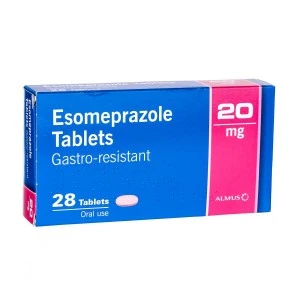
At Prescription Doctor, we also offer Nexium Control and generic esomeprazole to help treat heartburn and acid reflux.
Nexium 20 mg tablets can be prescribed twice daily to treat stomach ulcers caused by Helicobacter pylori. When it comes to acid reflux and heartburn, the recommended dosage is just one 20 mg tablet a day. Be sure to take the correct dose as advised by your doctor.
If your condition is severe or you've experienced damage to the oesophagus, you may be prescribed a 40 mg dosage instead.
You should inform your GP if you're pregnant, think you are pregnant, or are trying to have a baby before you take Nexium tablets or Nexium sachets. They will decide whether it's suitable for you to take the medication. Because it's not known if esomeprazole passes into breast milk, you should not use the treatment if you are breastfeeding.
The active substance in both Nexium tablets and Nexium sachets is esomeprazole. They also contain ingredients such as glycerol monostearate, magnesium stearate, hypromellose, methacrylic acid, polysorbate, and triethyl citrate. A full list can be found in the Patient Information Leaflets for each medication.
Although alcohol doesn't directly impact the way Nexium works, it can make the stomach produce more acid than normal. This could irritate the stomach lining and worsen your heartburn symptoms. It's therefore recommended to limit alcohol consumption while taking Nexium or avoid it altogether.
No, though they're closely related and work in a similar way to reduce stomach acid. Some people are prescribed Nexium after omeprazole hasn't worked well enough for them, or the other way round. You shouldn't switch between the two without speaking to your doctor first, as they'll want to check that the new dose and treatment plan suit you.
In practice, the two feel similar to take. Nexium tablets can be taken at any time of day, with or without food, while omeprazole capsules are usually taken in the morning. Both cause much the same common side effects, such as headache, stomach pain, and diarrhoea, since they work in the same way.
No, it's not recommended to take Nexium and Omeprazole at the same time. Doing so could make your side effects more severe. Taking two different Proton Pump Inhibitors (PPIs) may also alter or intensify interactions between them and other treatments.
Yes, and it's a common combination for managing breakthrough symptoms. It's best not to take them at exactly the same time, though, as antacids like Gaviscon can affect how well other medicines are absorbed. Try to leave a gap between the two where possible, and check with your pharmacist if you're unsure about timing.
However, evidence on how much extra benefit Gaviscon adds is mixed. A large UK trial found it improved symptoms in some patients, but wasn't significantly better than placebo overall, suggesting it may help more with some causes of breakthrough symptoms than others.
Yes, you should normally be able to drive or operate machinery while taking Nexium. However, potential side effects of the medication include dizziness and blurred vision. If you experience either of those symptoms, you must not get behind the wheel or use any form of machinery.
© 2013 - 2026 Al Muhsineen Limited. All Rights Reserved. Registered Pharmacy: 34 Halliwell Road, Bolton BL1 8RL. Registered Office: 254 First Floor, Shearbrow, Blackburn, England, BB1 8DS
Don't have an account?
Your account will be automatically created after placing your first order.