All inclusive service
No hidden fees

Prices from £12.99
Review More Prices
Your privacy is important, Prescription Doctor are committed to keeping your details completely confidential.
This is why we also take steps to conceal your prescription products under two layers of packaging.
We have a commitment to delivering a discreet service and understand your need for privacy. We ship all orders via a trackable courier using discreet, plain packaging.
Once your order is dispatched you will receive a tracking number via sms and email.
We deliver medications between Monday and Saturday. You can upgrade to Saturday delivery on Friday.
You should receive a tracking number with your order which you can use this number to track your parcel online. This should give you a clear indication of where your parcel is. If you haven’t received your parcel in the time frame given by our couriers, contact your local depot to find out where it is. You can also contact our support team who will do this for you.
On checkout you will be asked to leave your mobile number so our courier can text you about the delivery. This is also useful if the courier has problems finding your address. We will not use your mobile number for anything else.
You can pay for your order using credit, debit card or via bank transfer.
If you don’t have a credit or debit card you can pay via bank transfer. We will give you a unique reference number at checkout along with details of how to make the transfer. Once the money has cleared in our account, we will process your order.
We are a completely secure site and take many measures to ensure your details are kept safe. We understand that you have a right to extreme privacy when purchasing sensitive health medications. All information that you provide to us is stored on our secure servers. Any payment transactions will be encrypted using SSL technology.
You can pay for your order using credit, debit card and bank transfer.
Card Payment: Please notify us that you wish to cancel your order. Your refund will show available In 1 - 3 days.
Bank Transfer: A member of our team will contact you requesting for your bank details. These details are only used to transfer the funds back into your account.
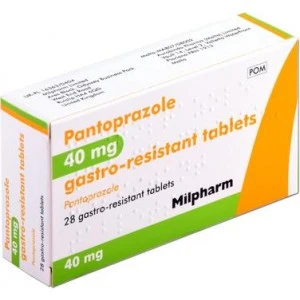
Pantoprazole belongs to a class of medications called proton pump inhibitors. These drugs reduce the amount of acid that the stomach produces.
Pantoprazole is used to lower the amount of acid the stomach produces. It’s often given to treat several acid-related conditions of the stomach and intestine, including gastro-oesophageal reflux disease (GORD), heartburn, stomach ulcers, and Zollinger-Ellison syndrome.
Pantoprazole can also be taken to help heal damage to the oesophagus and stomach caused by excess acid production and to prevent ulcer formation. You may also be prescribed a proton pump inhibitor to take alongside an anti-inflammatory, such as naproxen. This combination helps to prevent stomach irritation, ulcers, and bleeding that non-steroidal anti-inflammatory drugs (NSAIDs) can cause.
Pantoprazole works by reducing the amount of acid the stomach produces. It is a proton pump inhibitor (PPI), which means it blocks tiny pumps, called proton pumps, in the lining of your stomach that produce acid. Reducing stomach acid can relieve heartburn and acid reflux while allowing inflammation or ulcers in your oesophagus, stomach, or upper intestine time to heal.
The gastro-resistant coating protects pantoprazole from being broken down by stomach acid before it can be absorbed in your intestine. Once it is absorbed, it targets the specific enzyme system responsible for producing stomach acid, providing effective relief.
Pantoprazole is not designed to provide immediate relief. You should usually start to feel better within 2 to 3 days, although it can take up to 4 weeks to fully control your symptoms. You may still experience some heartburn or acid reflux during the first few weeks of treatment.
Continue taking pantoprazole as directed, even if it does not work straight away. If you bought it without a prescription and your symptoms have not improved after 2 weeks, or they have worsened, speak to your doctor before taking any more. Do not take non-prescription pantoprazole for longer than 4 weeks without medical advice.
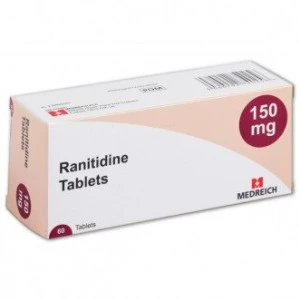
Pantoprazole is an effective proton pump inhibitor (PPI). One review found that healing rates after 4 weeks of pantoprazole 40 mg were between 54 and 95.1%, compared with 20 to 66.7% for ranitidine, a histamine H2-blocker that reduces stomach acid production.
Another meta-analysis concluded that 45% of people taking pantoprazole 40 mg once daily were healed after 4 weeks, and 70% after 8 weeks. The same analysis found that pantoprazole is well tolerated, with 90% of people experiencing no side effects during treatment.
Take pantoprazole tablets 1 hour before a meal and swallow them whole with water. You must not chew or break them. Your clinician will tell you exactly how to take them and what dose you need.
The usual dose for pantoprazole depends on why you are taking it. The table below shows the different doses for different conditions. If you are unsure about how much pantoprazole to take, speak to your doctor or pharmacist.
Condition | Dose |
|---|---|
Acid reflux | One tablet per day for 4 to 8 weeks. |
H. pylori infection in people with duodenal or stomach ulcer in combination with 2 antibiotics | One 40 mg pantoprazole tablet twice a day plus two antibiotics. |
Stomach and duodenal ulcers | One 40 mg tablet per day for 2 to 4 weeks for duodenal ulcers and 4 to 8 weeks for stomach ulcers. |
Zollinger-Ellison syndrome and any other condition where too much stomach acid is produced | Two 40 mg pantoprazole tablets per day to be taken one hour before a meal. |
If you have kidney or liver problems, you must not take pantoprazole to eradicate H. pylori, and if you have severe liver problems, you should not take more than one 20 mg pantoprazole tablet per day.
If you forget to take pantoprazole, take your next normal dose at the usual time. Do not take a double dose to make up for a missed dose.
Although there are no known symptoms of overdose with pantoprazole, you should contact your doctor or pharmacist if you take too much.
There is the potential for pantoprazole to cause side effects in some people. It is important to read the Patient Information Leaflet that comes with the medication and discuss any concerns with your clinician. Understanding what adverse effects pantoprazole may cause will better equip you to manage them and help you recognise when you may need medical attention.
Not everyone who takes pantoprazole will get side effects. One study found that 90% of people who took it experienced no adverse effects. However, if you do get side effects, most are mild, temporary, and easy to manage at home. If you experience adverse reactions that are difficult to manage, get worse, or concern you, speak to your doctor for advice.
Common (may affect up to 1 in 10 people) | Uncommon (may affect up to 1 in 100 people) | Rare (may affect up to 1 in 1,000 people) |
|---|---|---|
|
|
|
It’s important to be aware that the above table does not include a full list of possible Pantoprazole side effects. More details, including adverse reactions identified in blood tests and those with unknown frequencies, can be found in the Patient Information Leaflet that accompanies the medication.
If you experience any side effects while taking Pantoprazole, you can report them to your clinician or via the MHRA’s Yellow Card Scheme.
In some cases, pantoprazole can cause serious side effects. If you get any of the following, stop taking pantoprazole and speak to your doctor straight away. In an emergency, call 999 or get someone to take you to A&E:
Pantoprazole may not be suitable for everyone, as there are certain health conditions and medications that can make it unsuitable or unsafe. Tell your clinician about any medications or health conditions during your consultation so they can confirm pantoprazole is safe for you.
Do not take pantoprazole if you are:
Before taking pantoprazole, tell the clinician if you:
Tell the clinician before or after taking pantoprazole if you notice any of the following symptoms, which could be a sign of another, more serious disease:
Before taking pantoprazole, you must let the clinician know if you are taking any other medication, including any that are prescribed, over-the-counter, or herbal, because they may interact with pantoprazole. Tell the clinician before taking pantoprazole if you are taking:
If you are pregnant, think you might be pregnant, trying to get pregnant, or breastfeeding, speak to a doctor or pharmacist before taking pantoprazole. There is not enough data to know the full effects of pantoprazole in pregnant women. Pantoprazole can pass into your breast milk if you are breastfeeding.
You should only take pantoprazole if you are pregnant or breastfeeding and your doctor has told you to.
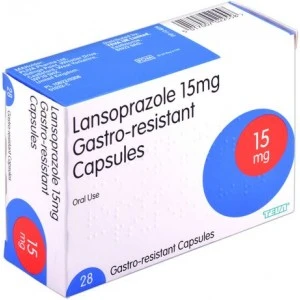
Pantoprazole and lansoprazole are proton pump inhibitors (PPIs) that reduce stomach acid and treat conditions such as acid reflux. They work similarly but contain different active ingredients and may differ in dosage, interactions and how well they suit you. Neither is generally considered more effective, so your prescriber will recommend the most appropriate option.
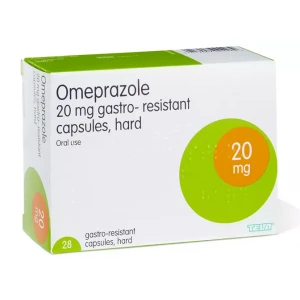
No, pantoprazole and omeprazole are not the same medication. Both pantoprazole and omeprazole treat the same conditions by lowering stomach acid and relieving acid reflux and GORD. Although they belong to the same drug family, they are not the exact same medication.
The main differences are that the different compounds have different prescription rules, dosing guidelines, and drug interaction profiles.
Pantoprazole does not have a proven link to increasing the risk of developing dementia. However, some population-based studies raise concerns. These have noted a small increase in the risk of dementia in people who are using proton pump inhibitors. If you are concerned about a possible link between pantoprazole and dementia, speak to your clinician for advice.
Yes, constipation is a listed side effect of pantoprazole. It is an uncommon side effect which affects up to 1 in 100 people. Proton pump inhibitors are reported to cause a number of changes to bowel action. Symptoms of constipation include bloating, passing hard stools, or difficulty passing stools.
If you get any of these symptoms, speak to your clinician or pharmacist for advice on how to manage them.
No, there is no established clinical proof that pantoprazole causes or reduces fertility according to clinical guidelines and official health bodies. Standard animal reproductive studies show no adverse effects on fertility, and it does not interfere with contraception. If you have any concerns about pantoprazole and fertility, speak to your clinician.
Yes, you can take pantoprazole at night if your clinician has advised you to. If you have been prescribed pantoprazole twice daily, take one dose in the morning and one in the evening. However, pantoprazole works best when taken one hour before breakfast. This is because your stomach makes the most acid right after you eat.
No, there is no direct interaction between pantoprazole and alcohol. However, alcohol can increase stomach acid production and relax the muscle at the top of the stomach, increasing the chance of acid reflux. So, alcohol could make your heartburn symptoms worse.
Yes, the lower-strength 20 mg pantoprazole tablets are available over the counter without a prescription, but you will need to answer a few questions from a pharmacist to ensure they are safe for you. Pantoprazole 20 mg is usually given only for short-term relief of acid reflux.
Yes, you can buy pantoprazole online from registered UK online pharmacy services like Prescription Doctor. You will need to complete a short online consultation consisting of a medical questionnaire for our clinicians to review and ensure the medicine is safe for you.
If it is, we will dispatch your medication in plain, discreet packaging to maintain your confidentiality, and you can receive it as early as the next day if your request is approved before 3 pm on Monday to Friday.
Store pantoprazole tablets below 30°C in their original packaging. Keep your medication in a dry place away from direct sunlight, moisture, and heat. Always store medication out of the reach of children. Do not take pantoprazole if it has passed its expiry date, which refers to the last day of the month.
If you no longer need to take pantoprazole or it is out of date, take the unused medication to your local pharmacy for correct disposal.
Sources
© 2013 - 2026 Al Muhsineen Limited. All Rights Reserved. Registered Pharmacy: 34 Halliwell Road, Bolton BL1 8RL. Registered Office: 254 First Floor, Shearbrow, Blackburn, England, BB1 8DS
Don't have an account?
Your account will be automatically created after placing your first order.