
Mounjaro Hair Loss: A Complete Guide
Table of contents:
- Does Mounjaro Cause Hair Loss?
- Can Mounjaro Cause Hair Thinning?
- Why Does Mounjaro Cause Hair Loss?
- Mounjaro Hair Loss Women vs Men
- How to Stop Hair Loss on Mounjaro
- Mounjaro Hair Loss: Will it Grow Back?
- Should I Stop Treatment if I Experience Hair Loss with Mounjaro?
- Frequently Asked Questions About Mounjaro Hair Loss
- Supporting Your Weight Loss Journey
A medicated weight loss programme with Mounjaro can offer significant benefits when used in conjunction with a healthy diet and regular exercise. However, it’s not a silver-bullet solution for shedding pounds, and starting treatment requires considerable thought.
Understanding the potential side effects of a medication and how long they last are just some of the key considerations that need to be made to determine whether Mounjaro is suitable for your circumstances. Other elements may include what food to eat while using the treatment, which exercises could be beneficial, or the dosage schedule.
In this article, we’ll discuss one potential adverse effect, namely the possibility of experiencing hair loss with Mounjaro. We’ll outline how common Mounjaro hair loss is, why it happens, and ways it could potentially be avoided. Let’s get started.
Does Mounjaro Cause Hair Loss?
The Mounjaro Patient Information Leaflet lists hair loss as a common side effect of Mounjaro. Research into this topic has identified hair loss as a potential side effect of GLP-1 therapies, and this symptom appears to be most common among individuals taking tirzepatide (the active ingredient in Mounjaro) and semaglutide (found in Wegovy).
Mounjaro treatment may be linked to hair loss, but how common is this side effect? Why do people lose their hair on weight loss injections? Is this side effect permanent, and is there any way to prevent it?
How Common is Hair Loss on Mounjaro?
Hair loss is listed as a common side effect of Mounjaro, meaning it may affect up to 1 in 10 users. The likelihood of hair loss may vary among GLP-1 medications; however, some studies have reported a potentially higher risk with tirzepatide than with other weight loss drugs. Findings from large-scale clinical trials of tirzepatide for weight management reported hair loss in 4.9% of patients receiving the injections, compared with 1% in those treated with placebo.
Can Mounjaro Cause Hair Thinning?
Mounjaro may cause hair thinning as a side effect. The type of hair loss usually associated with tirzepatide use is called telogen effluvium, which causes hair to shed across the whole scalp rather than in specific patches. Hair falls out naturally all the time, and it’s normal to lose 30-150 hairs per day. However, telogen effluvium can significantly increase shedding and cause hair to become noticeably thinner.
Why Does Mounjaro Cause Hair Loss?
The type of hair loss most commonly associated with Mounjaro, telogen effluvium, usually occurs when there is a disturbance to the hair cycle. Hair in the telogen phase is ‘resting,’ rather than actively growing. It usually stays attached to the scalp until a growing hair (an anagen hair) pushes it out of the follicle. In healthy individuals, around 15% of hairs are in the resting telogen phase.
In telogen effluvium, physiological stress abruptly increases this to 30% or more, causing hair to stop growing. After 1-6 months, the hairs re-enter the growth phase and the old strands fall out, resulting in increased shedding and thinning hair. This can happen when there is a ‘shock to the system,’ with potential triggers including childbirth, severe trauma or illness, high fever, stressful life events, surgery, and hormonal disruptions. However, the hair loss most commonly associated with Mounjaro is due to rapid weight loss and nutritional deficiencies.
Rapid Weight Loss
Mounjaro can cause rapid weight loss, with some users losing over 20% of their total body weight during treatment. Extreme calorie restriction and weight loss are known triggers for telogen effluvium, so the appetite-reducing effects of Mounjaro may directly contribute to hair loss.
Hair can become thinner when the body interprets sudden weight loss as a potential threat to its survival and diverts more nutrients to vital organs. This effectively ‘starves’ the hair follicles and pauses hair growth, which can lead to increased shedding. Weight loss-induced telogen effluvium typically occurs with significant weight loss, with one study observing hair loss after participants lost 15.21% of their total body weight.
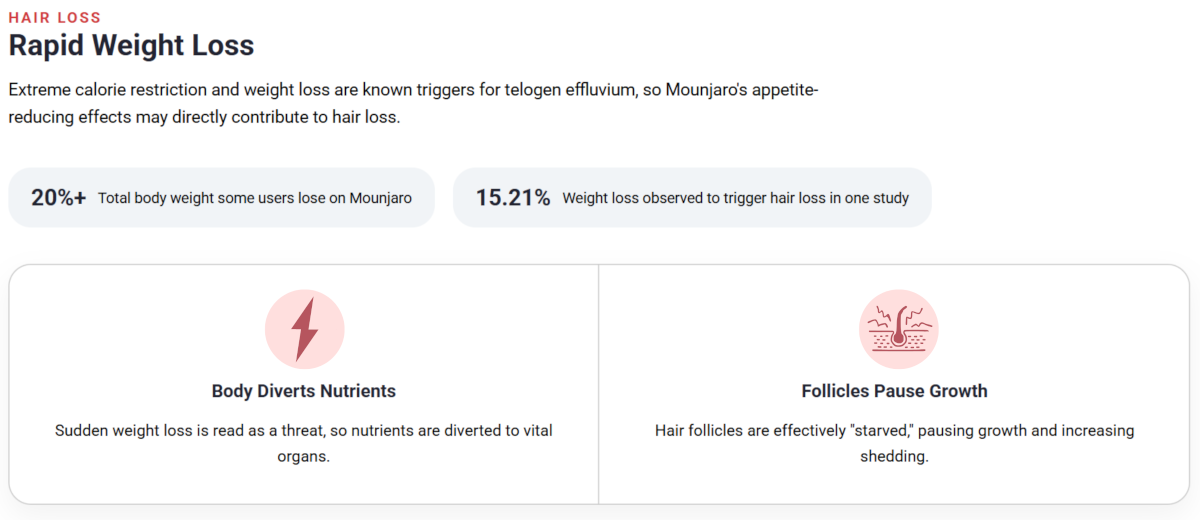
Hair loss is more common on Mounjaro than other types of GLP-1 therapies, possibly because tirzepatide has greater weight loss effects than semaglutide or liraglutide.
Nutritional Deficiencies
Mounjaro delays stomach emptying, which often causes a sharp decline in appetite and food intake. One study found that people using GLP-1 therapies reduced their caloric intake by up to 39%. Eating less often can lead to significant weight loss but also increase the risk of nutritional deficiencies.
Low levels of certain nutrients (including iron, zinc, vitamin D, biotin, and protein) are known to impact hair growth. Therefore, tirzepatide-induced deficiencies may be a driving factor behind hair loss during treatment.
Mounjaro Hair Loss Women vs Men
Women are far more likely to experience hair loss on tirzepatide treatment than men. This may be because women are more susceptible to drug-induced alopecia overall, especially when triggered by physiological stress (such as rapid weight loss). However, Mounjaro-related hair loss typically follows the same shedding pattern in both genders.
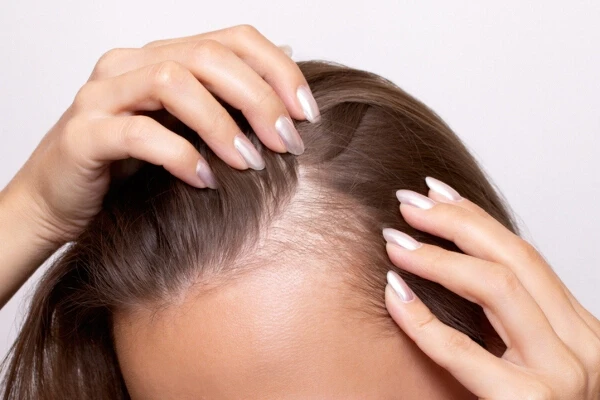
One study found that most participants, both male and female, who reported hair loss noticed this side effect within 1-6 months of starting injections. The majority of hair loss cases had characteristics of telogen effluvium, in which hair falls out from the roots across the whole scalp. This results in increased shedding and diffuse thinning of the hair, rather than bald patches.
Telogen effluvium is usually temporary, with hair re-entering the growth phase after around 6 months. This is often true for Mounjaro users, with a significant number reporting that their hair loss stabilised as their bodies adapted to treatment.
How to Stop Hair Loss on Mounjaro
Doctors often attribute hair loss on Mounjaro to the physiological stress associated with dramatic weight loss. Weight loss on tirzepatide is dose-dependent, with the largest reductions in body weight percentage (15-20%) seen among people using 10 mg or 15 mg per week. Further research has found that Mounjaro users most frequently experienced hair loss after losing around 15% of their total body weight. Therefore, it may be possible to reduce the likelihood of hair loss with Mounjaro by gradually increasing the dose to avoid rapid weight loss.
Nutritional deficiencies may also contribute to hair loss with Mounjaro, as the medication’s appetite-suppressing effects often lead many users to significantly reduce their food intake. Maintaining a balanced diet rich in protein, iron, zinc, and vitamins D, B12, and A can help promote hair health during treatment.
If you notice your hair thinning on Mounjaro, gentle hair care may help to mitigate shedding. To keep your hair healthy, avoid harsh chemicals and heated styling tools (like straighteners and curlers). Instead, opt for loose hairstyles and mild shampoos, and minimise brushing and combing.
Emotional stress is a major contributing factor to hair loss caused by telogen effluvium, and may increase your likelihood of increased shedding on Mounjaro. Taking steps to minimise stress and anxiety (such as reducing caffeine intake, prioritising sleep, and exercising regularly) may therefore help mitigate this risk. If you have questions about your Mounjaro dose, nutrition, or stress management, consult a healthcare professional for advice.
If you lose weight very quickly on Mounjaro, severely restrict your food intake, or find hair loss distressing, reach out to a licensed clinician. Always discuss your concerns with a healthcare professional before changing your dose or dosing schedule.
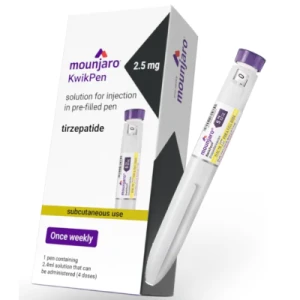
Mounjaro
- Approved Weight Loss Treatment
- Suitable for adults with a BMI of +30kg/m²
- Pre-filled injection pen
Mounjaro Hair Loss: Will it Grow Back?
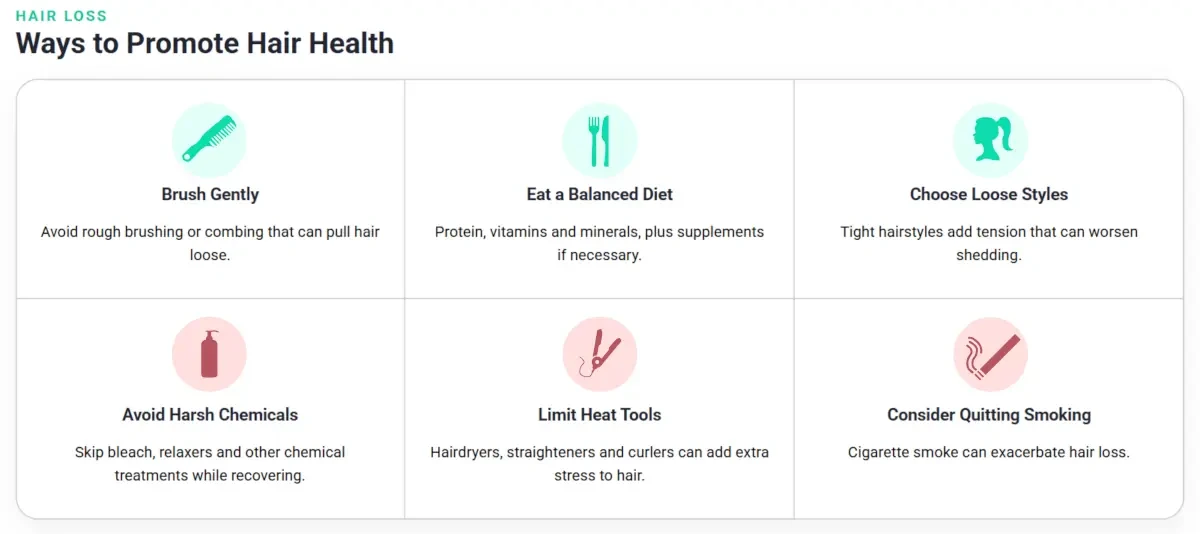
Hair loss on Mounjaro is usually attributed to telogen effluvium, in which physiological stressors (like rapid weight loss) cause increased shedding across the whole scalp. Fortunately, telogen effluvium is temporary, and hair will naturally grow back after 3-6 months without treatment. However, there are measures you can take to promote hair health, such as:
- Avoid rough brushing or combing
- Limit your use of heat-treatment tools (like hairdryers, straighteners, and curlers)
- Avoid using harsh chemicals on hair (like bleach or relaxers)
- Choose loose over tight hairstyles
- If you smoke, consider stopping, as cigarette smoke can exacerbate hair loss
- Eat a balanced diet rich in protein, vitamins, and minerals, and take supplements if necessary
Should I Stop Treatment if I Experience Hair Loss with Mounjaro?
Hair loss can be a distressing side effect of Mounjaro that may cause some to consider stopping treatment early. However, excessive shedding is usually the body’s response to the physiological stress of rapid weight loss, rather than a reaction to the medication itself. Discontinuing the injections may not reverse this type of hair loss and could hinder your weight loss efforts.
Telogen effluvium (the leading cause of hair loss among Mounjaro users) is a temporary condition, and regrowth usually begins after 3-6 months, whether you stop treatment or not. That said, shedding may continue if the underlying cause is not fully addressed.
If you’re concerned about hair loss or any other tirzepatide side effects, seek guidance from a licensed clinician, and don’t stop or change your treatment plan without medical supervision.
Frequently Asked Questions About Mounjaro Hair Loss
It is highly advisable to consider the potential side effects of any new medication before starting treatment, and hair loss is a concern for many people on Mounjaro. Here, we’ll cover some of the most common queries around Mounjaro-induced hair loss, such as when to seek medical advice, what to expect when stopping Mounjaro, and which vitamins and treatments can help to counteract thinning.
When Should I Seek Advice For Hair Loss Due to Mounjaro?
Most cases of Mounjaro hair loss are temporary and don’t require treatment, with hair regrowing naturally after 3-6 months. However, if you are worried about hair loss or any other side effects, discuss your concerns with your prescribing clinician. They will make recommendations or even amend your dosage if necessary.
You should also seek medical advice if you experience:
- Severe hair loss
- Hair loss that continues for longer than 6 months
- Extreme tiredness
- Heart palpitations
- Shortness of breath
- Headaches
- Brittle nails
Severe or persistent hair loss, or hair loss accompanied by other symptoms, may indicate an underlying health condition, such as a nutritional deficiency or a thyroid disorder. Seek medical evaluation so a doctor can diagnose and, if necessary, treat the root cause of your symptoms.
Will I Still Experience Hair Loss After Stopping Mounjaro?
You’re unlikely to still experience hair loss triggered by telogen effluvium after stopping Mounjaro, as the condition is typically temporary and resolves by itself within 3-6 months. After this period, hair will usually start to regrow even if you continue using Mounjaro.
If your hair loss continues for longer than 6 months or is accompanied by other symptoms, seek medical advice to rule out other underlying health conditions.
What are the Best Vitamins for Mounjaro Hair Loss?
Certain nutritional deficiencies may exacerbate hair loss, so it’s important to maintain a balanced diet on Mounjaro and take supplements where necessary. Some key vitamins and minerals to focus on include iron, zinc, vitamin D, biotin, niacin, omega fatty acids, and selenium. Protein deficiency can also cause hair loss and thinning, so lean protein sources (like poultry, fish, tofu, eggs, and legumes) should be an integral part of your diet.
If you are concerned about your nutritional intake while on Mounjaro, or suspect a deficiency, reach out to a doctor for medical assessment and further advice.
Are There Any Hair Loss Treatments Available?
Hair loss on Mounjaro is frequently a result of telogen effluvium, which doesn’t usually require treatment for hair to regrow. However, there are medications available for other hair loss conditions which may slow the rate of hair loss and encourage regrowth, such as:
- Regaine: Regaine (minoxidil) is a hair loss treatment for men and women that stimulates blood flow to the hair follicles and promotes hair growth.
- Propecia: Propecia contains finasteride, a medicine that blocks the conversion of testosterone to dihydrotestosterone (DHT), a molecule that causes hair loss in some men. This medication is designed for male patients only, and should not be used by women.
Supporting Your Weight Loss Journey
Losing weight safely and sustainably is no mean feat. It takes a great deal of dedication to accomplish and requires specialist support throughout the process to help keep you on the straight and narrow. This is where Prescription Doctor comes in.
Since 2019, we’ve helped countless individuals achieve their goals and have cultivated an impressive reputation for the quality of our service and advice. Our expert clinicians are available to assist with any queries you may have about your treatment plan, and will regularly check in with you to monitor progress.
In addition, we have a library of information about Mounjaro, including potential interactions with other treatments, if there’s a best time to take the medication, how to inject Mounjaro safely, and a guide to the various injection sites, so you have a wide range of knowledge at your fingertips. We also cover other potential side effects, such as sulphur burps. Whatever you need, we are here to help you succeed.
Ready to get started? Begin your Mounjaro consultation today and let us support you throughout your journey.

Sources
- EMC (2026): Patient Information Leaflet.
- EMC (2026): Mounjaro KwikPen 2.5mg solution for injection in pre-filled pen.
- Science Progress (2026): GLP-1 therapies and hair loss: A systematic review of current evidence and implications for counselling.
- Lilly (2023): FDA Approves Lilly's Zepbound™ (tirzepatide) for Chronic Weight Management.
- NIH (2024): Telogen Effluvium.
- British Association of Dermatologists (2025): Telogen effluvium.
- Wiley (2025): Weight reduction over time in tirzepatide‐treated participants by early weight loss response: Post hoc analysis in SURMOUNT‐1.
- Annals of Dermatology (2024): Telogen Effluvium Associated With Weight Loss: A Single Centre Retrospective Study.
- Cleveland Clinic (2025): Can Ozempic Cause Hair Loss?
- Wiley (2026): Predictors and Characteristics of Hair Loss Among Users of GLP‐1 Receptor Agonists: A Cross‐Sectional Analysis.
- JMCP (2025): Tirzepatide vs semaglutide and liraglutide for weight loss in patients with overweight or obesity without diabetes.
- Diabetes Therapy (2025): Insights into the Mechanism of Action of Tirzepatide: A Narrative Review.
- American Journal of Lifestyle Medicine (2025): Nutritional Priorities to Support GLP-1 Therapy for Obesity.
- DPC (2017): Diet and hair loss: effects of nutrient deficiency and supplement use.
- JCDR (2015): Telogen Effluvium: A Review.
- Cureus (2025): Dose-Dependent Efficacy and Safety of Tirzepatide for Weight Loss in Non-diabetic Adults With Obesity.
- AAD: Hair loss: Tips for managing.
- NHS (2024): Iron deficiency anaemia.
- British Thyroid Foundation: Hair loss and thyroid disorders.
Authored By

Kate Latham
Medical Content WriterPublished on: 09/06/2026
Reviewed By

Mohamed Imran Lakhi
MPharm - Lead PharmacistReviewed on: 09/06/2026
How We Are Regulated
Payment Options


© 2013 - 2026 Al Muhsineen Limited. All Rights Reserved. Registered Pharmacy: 34 Halliwell Road, Bolton BL1 8RL. Registered Office: 254 First Floor, Shearbrow, Blackburn, England, BB1 8DS


Patient Login
Don't have an account?
Your account will be automatically created after placing your first order.