
Orlistat vs Xenical: A Comparison
If you're looking into weight loss medications, you may have come across either Orlistat or Xenical and found yourself somewhat confused about whether there’s any difference between them. To muddle matters further, you might also have come across Alli – which also contains orlistat.
This uncertainty can raise several questions. Are these different medications? Is one better than the other? Should you be asking for a specific one? Luckily, the answers to all these queries are much more straightforward than you might think.
In this guide, we'll clear up any confusion you may have. We'll explain what these medications are, compare Orlistat vs Xenical in terms of effectiveness for weight loss, discuss what makes them similar (spoiler: almost everything), and help you figure out which one best suits your situation.
What are Orlistat and Xenical?
Orlistat and Xenical are essentially the same medication. Orlistat is both the active ingredient and a generic treatment in its own right, while Xenical is the brand name. Neither medication is more effective for weight loss than the other, though minor differences may lie in inactive ingredients or manufacturing processes.
Branded versions also tend to get patented earlier. Xenical was the original product, released in 1998, but its patent has since expired. This means other drug companies can sell it as their own, which is why Orlistat is available without a brand name. There is also a lower-strength version called Alli, which contains 60mg of orlistat (compared to 120mg in Xenical and Orlistat) and blocks about 25% of dietary fat. Alli is available over the counter without a prescription, while Xenical and Orlistat both require a clinician's approval.
How Do Orlistat and Xenical Work?
Orlistat is an anti-obesity medication that blocks digestive enzymes that break down fat. It is not a GLP-1 like other weight-loss medications such as Mounjaro or Wegovy, so you will still feel hungry at normal times. Instead, with these enzymes blocked or temporarily ‘arrested’, about one third of the fat you eat passes through your body instead of being absorbed.
The undigested fat then leaves your body when you go to the toilet, which can lead to unpleasant side effects if you eat too much fat while taking it. So, it should be combined with a healthier diet in general to work as an additional weight-loss aid.
How Effective are Xenical and Orlistat?
Clinical trials have shown that patients taking Orlistat for weight loss over six months lost an average of 5.6kg, whereas those in the placebo group lost an average of only 2.4kg. One major European study found that after a year, people taking orlistat lost 10.2% of their body weight compared to 6.1% in the placebo group. For someone weighing 100kg, that's the difference between losing about 10kg versus 6kg.
Another comprehensive review of multiple studies found that Orlistat, compared with placebo, helped an additional 21% of people lose 5% or more of their body weight, and an additional 12% lose 10% or more.
While this medication is highly effective for some people, it works best when combined with diet and exercise. If you're eating a high-fat diet and not exercising, you're unlikely to achieve the best results – and you'll likely experience more side effects.
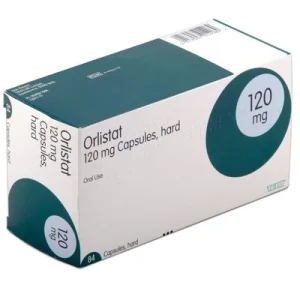
Orlistat
- Blocks up to 30% of dietary fat absorption
- Encourages healthier eating habits
- Cheaper than branded alternatives
Orlistat vs Xenical: At a Glance Comparison
The comparison between Xenical and Orlistat is straightforward, since they're essentially the same product under different names. Nevertheless, we will go through their similarities:
- Active Ingredient: Both contain Orlistat, so they work in the same way within your body
- Method: Both block the same enzymes that digest fat, preventing about one-third of dietary fat absorption
- Side Effects: Their side effects are similar because they contain the same active ingredient. Oily stools, possible stomach cramps, and increased bowel movements are common.
- Eligibility: Both are suitable for adults with a BMI of 30 or above, or 28 and above with weight-related health conditions like diabetes or high blood pressure
- Administration: Take one capsule up to 3 times daily with meals that contain fat, up to 1 hour after eating. Do not take the capsules if you don’t eat a fat-containing meal.
- Effectiveness: Both medications are equally effective because they contain the same active ingredient at the same strength. Individual results may still vary.
Orlistat vs Xenical: Which is Best?
Since both Orlistat and Xenical are therapeutically identical, there is no simple ‘which is best’ answer. However, there are still a handful of factors to consider when deciding which of the treatments is best suited to you:
- Dosage: Xenical and Orlistat are only available as 120mg prescription-only medications, but there's also the 60mg over-the-counter option, Alli.
- Efficacy: 120mg versions of Orlistat block about 30% of dietary fat. The 60mg over-the-counter version blocks about 25%, so it's less effective but doesn't require a prescription.
- Cost: Xenical is the branded version, so it's more expensive than generic Orlistat, though the difference is minor in many cases.
- Packaging and Appearance: Xenical comes in specific packaging, whereas generic orlistat may look different, depending on the manufacturer. The capsules might be different colours or shapes, but the active ingredients are the same.
- Prescription Requirements: Both Xenical and Orlistat require a prescription, while Alli is available over the counter.
If you're unsure, speaking to your clinician is always a good next step. They will be able to help you reach a decision.
Choose What Works for Your Situation
The choice between Orlistat and Xenical really comes down to whether you want the branded version or the generic equivalent. Do note, though, that they are not your only options. Weight loss treatments are more diverse and effective than ever, with Mounjaro, Wegovy, and Foundayo offering different mechanisms through different active ingredients. These are known as GLP-1 treatments, and they work by controlling appetite and blood sugar rather than blocking fat, often resulting in a greater amount of weight loss.
No matter which treatment you choose, the best option is whatever you can stick with consistently as part of a genuine commitment to changing your eating and exercise habits. Remember, these treatments are not miracle medicines and require healthy lifestyle changes, like an improved diet and regular exercise, to see their full effects.
Proper Care through Prescription Doctor
Confused about which weight loss medication might work for you? Prescription Doctor can support your decision-making process through our professional online consultation service. Our experienced medical team has been helping people achieve their weight loss goals since 2013. We understand that everyone is different, and that there’s no singular ‘best choice’ on the market. This is why our service is completely personalised and tailored to your specific situation and requirements.
As a fully registered UK pharmacy, we offer a trusted, professional service with fast, discreet delivery. Our clinicians also provide ongoing support to help you achieve the best results from your chosen treatment, monitoring your journey personally as you progress - whether that's managing side effects or adjusting your plan as you need.
Ready to find out which weight loss treatment could work for you? Start your confidential consultation today.
Sources
- StatPearls (2024): Orlistat - StatPearls
- EMC (2025): alli 60 mg hard capsules Patient Information Leaflet
- The Lancet (1998): Randomised placebo-controlled trial of orlistat for weight loss
- Vascular Health and Obesity Management (2007): Obesity management: Update on orlistat
- Indian Journal of Endocrinology and Metabolism (2011): Evaluation of efficacy and safety of orlistat in obese patients
- BMJ (1998): Obesity drug is licensed in the UK
- BMJ (2026): Comparative effects of drugs for adults with overweight or obesity: systematic review and network meta-analysis
Authored & Reviewed By

Mohamed Imran Lakhi
MPharm - Lead PharmacistPublished on: 26/11/2026 Reviewed on: 26/11/2026
How We Are Regulated
Payment Options


© 2013 - 2026 Al Muhsineen Limited. All Rights Reserved. Registered Pharmacy: 34 Halliwell Road, Bolton BL1 8RL. Registered Office: 254 First Floor, Shearbrow, Blackburn, England, BB1 8DS


Patient Login
Don't have an account?
Your account will be automatically created after placing your first order.