
What is the Best Contraceptive Pill for Acne in the UK?
Table of contents:
Did you know that certain contraceptive pills can be effective for acne? While they may not be first-line treatments for the condition, they can be extremely useful if you want to prevent pregnancy as well as clear up your skin.
But what is the best contraceptive pill for acne in the UK? Join us as we explore the various options and discover how they can help clear up the condition and how long they take to work. We’ll also discuss whether contraceptive patches are effective, too, so you can make a more informed decision about what might work for your circumstances. Let’s get started.
Does Birth Control Help Acne?
Oral contraceptives can be very helpful for treating acne in women, with research reporting that certain pills may significantly reduce the number of spots over several months of treatment. Improving the skin’s appearance can translate to a boost in self-esteem, reduced social anxiety, and overall better quality of life.
Doctors may prescribe birth control pills to treat cases of acne that are not improved by over-the-counter treatments. However, not all oral contraceptives are suitable for acne, and some types may even make spots worse. Here, we’ll discuss the different types of birth control pills used to treat acne, how they work, and how to use them alongside other acne treatments.
How Do Contraceptives Treat Acne?
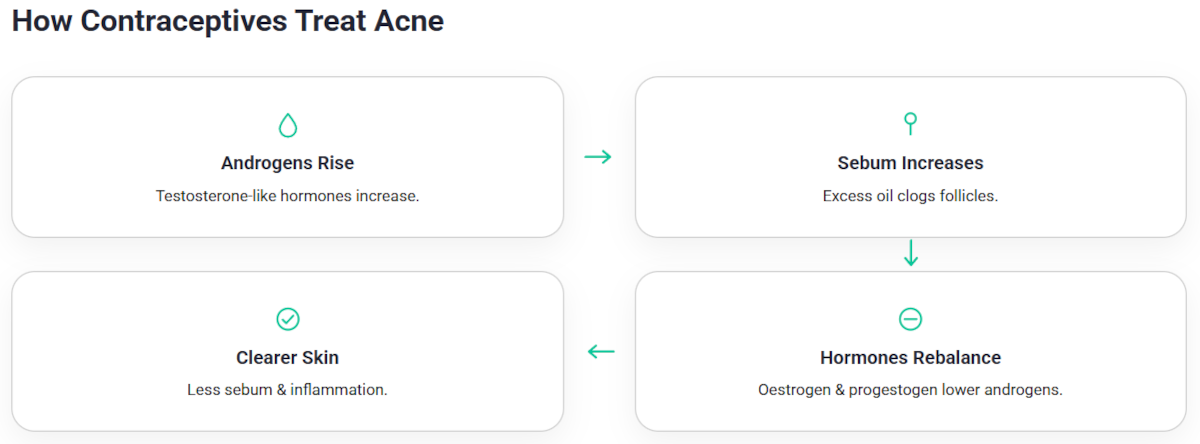
Oral contraceptive pills may help to treat acne by regulating the hormonal imbalances that contribute to spots. In women, male sex hormones called androgens (e.g., testosterone) can trigger conditions like acne, hirsutism, and baldness. The hormones in contraceptive pills can mitigate the effects of androgens on the skin by reducing testosterone levels. They can also inhibit sebum (oil) production in the skin, which is stimulated by androgens and contributes to the formation of spots.
Oral contraceptives that contain a hormone blocker, like cyproterone acetate, may further reduce androgen levels and address the hormonal irregularities that contribute to acne. They may be particularly beneficial for treating hormonal acne, which can occur alongside other symptoms like hirsutism (excess body hair) and light or irregular periods.
Doctors typically prescribe birth control pills in cases of moderate-to-severe acne that does not respond to topical treatments, as an alternative to antibiotics. If you have acne that doesn’t improve with over-the-counter treatments and would like to try birth control, consult a healthcare professional for advice.
Like all medications, oral contraceptives have the potential to cause side effects and may increase the risk of other health problems like blood clots, stroke and heart attack. Therefore, it is vital to seek medical assessment before taking birth control for acne.
Which Oral Contraceptive Pill is Best for Acne?
There is no single ‘best’ pill for treating acne, but some types may be better for improving spots than others. Birth control pills fall into two key categories, which are:
- Combined oral contraceptives (COCs)
- Progestogen-only pills (POPs)
COCs contain two hormones, oestrogen and progestogen, while POPs (also called the ‘mini pill’) only contain progestogen. Here, we’ll examine the difference between the two and their potential applications in the treatment of acne.
Combined Oral Contraceptives
Combined oral contraceptives (COCs), commonly called ‘the pill,’ contain two female sex hormones: oestrogen and progestogen. These two hormones work together to suppress androgens, high levels of which can increase sebum (oil) production in the skin and contribute to acne.
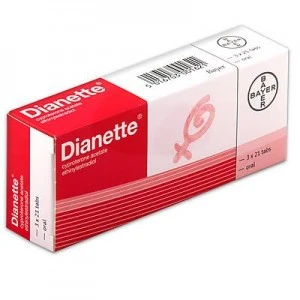
Some COCs, like Dianette, also contain a progestin called cyproterone acetate. This synthetic medication functions as a hormone blocker and can help to lower androgen levels, reducing their impact on the skin. Cyproterone acetate may be a highly effective acne treatment, with some clinical studies reporting improvement rates of up to 90% after 6 months of use.
Dianette functions as a birth control pill, but doctors usually prescribe it to treat severe acne, very oily skin, or excessive hair growth. Your doctor will only prescribe Dianette when other treatments, including topical medications and antibiotics, have failed.
Pills with cyproterone acetate may be particularly suitable for people with hormonal acne. This can be the case in women with hirsutism and polyendocrine metabolic ovarian syndrome (PMOS), formerly called polycystic ovary syndrome, or PCOS.
As Dianette is a birth control pill, you should not take any other form of hormonal contraception while using this medication. It can take at least 3 months for this treatment to improve acne symptoms, and your prescribing clinician will need to periodically evaluate whether you need to continue treatment. If you want to try Dianette or any other COC for acne, consult a healthcare professional for further guidance.
Dianette
- Helps prevent acne
- Available as a contraceptive
- Sent from a registered pharmacy
Mini Pills
Mini pills, also called progestogen-only pills or POPs, are not usually recommended for the treatment of acne. This is because some progestins have androgen-like effects that can trigger acne in some people, though evidence for this is limited and patient experiences can vary.POPs also lack oestrogen, which decreases testosterone levels and reduces sebum production driven by androgens, and is central to the efficacy of COCs for treating acne.
However, not all progestins worsen acne. Some (like desogestrel) have low androgenic properties and may not make spots worse. Only one, drospirenone, has mildly anti-androgenic properties. Studies have found that drospirenone-containing pills can significantly reduce acne in women with PMOS.
Therefore, doctors may prescribe drospirenone POPs as acne treatment for women who can’t or don’t want to take oestrogen. If you want to further explore your options for birth control as an acne treatment, discuss your symptoms and treatment history with a medical professional.
How Quickly Do Contraceptive Pills Work for Acne?
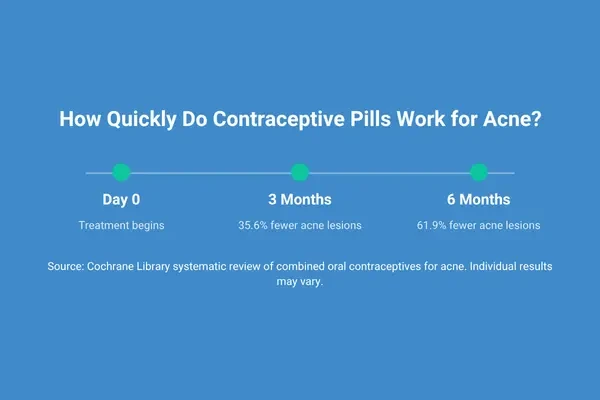
Contraceptive pills don’t immediately clear acne, and it usually takes at least three months to see the benefits. One meta-analysis found that oral contraceptives can reduce acne lesion counts by 35.6% after three months of treatment and 61.9% after six months. During this time, your doctor may also advise you to:
- Avoid over-cleaning the skin.
- Use a non-alkaline cleansing product on affected skin twice daily.
- Avoid oil-based skincare products.
- Resist picking or scratching at spots, as this may cause scarring.
Does the Contraceptive Patch Help Acne?
Contraceptive patches (like the Evra patch) can help to clear acne. This is because they contain the same hormones as the combined pill, which exert antiandrogenic activity and address the hormonal imbalances that contribute to spots. Studies have found that women using the contraceptive patch saw improvements after four months of treatment, with spots almost disappearing completely in some cases. However, the patch is not usually prescribed specifically to treat acne, and patient response can vary.
The patch is not suitable for everyone, so consult a healthcare professional if you would like to explore this option further. You should not use the patch if you are:
- Pregnant or breastfeeding
- Smoking and are 35 or older
- Aged 35 or older and stopped smoking less than a year ago
- Weighing 90 kg or more
- Using certain medications (such as some antibiotics, St John’s Wort, or drugs used to treat tuberculosis, epilepsy, or HIV)
Can You Use Other Acne Treatments With Contraceptive Pills?
You can typically use other acne treatments alongside contraceptive pills, and doctors often recommend patients use topical agents in combination with the combined pill. Topical treatments commonly recommended for people also taking the pill include:
- Benzoyl Peroxide: Benzoyl peroxide (found in Acnecide gel and face wash) works as an antiseptic, reducing the number of bacteria on the skin. It also has anti-inflammatory effects and can help to clear both whiteheads and blackheads.
- Retinoids: Topical retinoids, like tretinoin and adapalene (found in Differin and Epiduo), remove dead skin cells from the face. This can help to prevent the clogging of hair follicles and reduce acne.
- Topical Antibiotics: Antibiotic creams and gels kill bacteria that live on the skin’s surface and infect blocked hair follicles.
- Azelaic Acid: Doctors usually prescribe azelaic acid (found in Skinoren cream) to people who find the side effects of benzoyl peroxide and retinoids irritating or painful. It works by removing dead skin cells and bacteria from the face's surface, helping to reduce the conditions that contribute to spots.
All the above treatments can cause skin irritation as a side effect, and benzoyl peroxide and retinoids can make your skin more sensitive to sunlight. Speak to a healthcare professional before starting treatment for advice on the proper use of these products and how to mitigate side effects.
Dianette
- Helps prevent acne
- Available as a contraceptive
- Sent from a registered pharmacy
Frequently Asked Questions
Oral contraceptives can be highly effective for improving acne, but some women say the treatment initially makes their skin worse. Others report a recurrence of acne after stopping the pill, and some want to know if other forms of contraception, like the injection, can also reduce spots. We’ll examine the answers to these questions, and more, below.
Does Birth Control Make Acne Worse Before it Gets Better?
Some women find their acne gets worse before it gets better on birth control, though there is limited research on this topic. NHS guidelines state that, while oral contraceptives can take a while to work, acne typically improves after 2-3 months of treatment.
Acne flare-ups after starting oral contraceptives may be a side effect of your body adjusting to the hormones, which may also cause:
- Headaches
- Nausea
- Mood swings
- Weight gain
- Breast tenderness
These side effects, including acne, often improve within three months of starting treatment. If your acne worsens after starting birth control or does not improve after three months, consult a licensed clinician for further advice.
Will I Get Acne After Stopping Birth Control?
Your acne may return after stopping birth control, especially in cases with hormonal triggers. Oral contraceptives can improve acne by addressing hormonal imbalances in the body, suppressing androgen levels and mitigating the effects of male sex hormones on the skin. If you stop taking them, your hormone levels will return to their previous levels, and your spots may come back.
Speak to your doctor if you are concerned about rebound acne. There is no official maximum limit for how long you can use contraceptive pills, but they are not always suitable for long-term use. If you would like to stop taking the pill but have concerns about rebound acne, consult a healthcare professional for advice on alternative skincare treatments.
Does the Contraceptive Injection Help Acne?
The contraceptive injection does not improve acne, and some people report that it makes the condition worse. This may be because the injection contains progestogen, which can act like androgens in the body and contribute to the development of spots. However, current evidence is too limited to link the contraceptive injection definitively to acne. If you want to use a progestogen-only medication to treat acne, speak to your doctor about POPs containing drospirenone. This is the only approved progestin with anti-androgenic effects, and has been found to improve acne in clinical studies.
Is There a Hormonal Acne Treatment Without Birth Control?
There are many ways to treat hormonal acne that don’t involve birth control. Many people see improvements with topical medications like benzoyl peroxide, retinoids, topical antibiotics, and azelaic acid. Your doctor may also recommend a course of antibiotic tablets, usually tetracyclines, to use in combination with the gels and creams.
Help Banish the Blemishes with Prescription Doctor
Acne can be a difficult condition to manage and can cause issues such as low self-esteem and confidence. The good news is that you don’t have to go through this alone, as Prescription Doctor is here to help.
Since 2013, we’ve supported countless individuals just like you in obtaining the medication and assistance they need to overcome their ailments and get back on track. We have a wide range of contraceptive pills that can also help treat acne, so you can banish the blemishes and prevent pregnancy at the same time. If Dianette isn’t suitable for you, our experienced clinicians can prescribe Yasmin or Lucette as alternatives. They will also regularly check in with you to monitor progress and ensure that your treatment programme is going to plan.
We make it our mission to take the hassle out of healthcare, which is why you can start a consultation at any time from the comfort of your home; there’s no need for an appointment. Once your order is approved by our clinicians, your item is dispatched by our General Pharmaceutical Council-registered pharmacy in plain packaging for complete discretion to your designated UK address. Orders approved before 3pm Monday to Friday are also eligible for next-day delivery.
Ready to get started? Begin your consultation with Prescription Doctor today.
Sources
- Cochrane Library (2012): Combined oral contraceptive pills for treatment of acne.
- British Association of Dermatologists (2024): Acne Patient Leaflet.
- MHRA (2020): Cyproterone acetate: new advice to minimise risk of meningioma.
- Biochemistry and Biophysics Reports (2023): Acne vulgaris: A review of the pathophysiology, treatment, and recent nanotechnology-based advances.
- Clinical Endocrinology (1984): Androgen Levels During Cyproterone Acetate And Ethinyl Oestradiol Treatment Of Hirsutism.
- NHS (2023): Acne Diagnosis.
- WHO (2025): Oral contraceptives.
- Menopause Review (2018): Use of oral contraceptives for management of acne vulgaris and hirsutism in women of reproductive and late reproductive age.
- JCAD (2009): Hormonal Treatment of Acne in Women.
- EMC (2023): Dianette Patient Information Leaflet.
- Diagnostics (2022): Hirsutism, Normal Androgens and Diagnosis of PCOS.
- CCID (2016): Hormonal treatment of acne vulgaris: an update.
- Archives of Gynecology and Obstetrics (2025): Use of progestin-only drospirenone-based pills in hyperandrogenic women with polycystic ovary syndrome.
- Patient Preference and Adherence (2008): Safety, efficacy and patient acceptability of the combined estrogen and progestin transdermal contraceptive patch: a review.
- NHS Sexual Health Wirral: Contraceptive Patch.
- NHS Inform (2026): Contraceptive patch.
- NHS (2023): Acne Treatment.
- NHS (2024): Side effects and risks of hormonal contraception.
- Cureus (2025): Polycystic Ovary Syndrome-Associated Acne: The Interplay of Hyperandrogenism, Insulin Resistance, and Therapeutic Strategies.
- NHS (2024): Who can take the combined pill?
- StatPearls (2024): Progestins.
- NHS (2024): What is the contraceptive injection?
Authored By

Kate Latham
Medical Content WriterPublished on: 22/07/2026
Reviewed By

Mohamed Imran Lakhi
MPharm - Lead PharmacistReviewed on: 22/07/2026
How We Are Regulated
Payment Options


© 2013 - 2026 Al Muhsineen Limited. All Rights Reserved. Registered Pharmacy: 34 Halliwell Road, Bolton BL1 8RL. Registered Office: 254 First Floor, Shearbrow, Blackburn, England, BB1 8DS


Patient Login
Don't have an account?
Your account will be automatically created after placing your first order.