All inclusive service
No hidden fees

Prices from £54.99
Review More Prices
Your privacy is important, Prescription Doctor are committed to keeping your details completely confidential.
This is why we also take steps to conceal your prescription products under two layers of packaging.
We have a commitment to delivering a discreet service and understand your need for privacy. We ship all orders via a trackable courier using discreet, plain packaging.
Once your order is dispatched you will receive a tracking number via sms and email.
We deliver medications between Monday and Saturday. You can upgrade to Saturday delivery on Friday.
You should receive a tracking number with your order which you can use this number to track your parcel online. This should give you a clear indication of where your parcel is. If you haven’t received your parcel in the time frame given by our couriers, contact your local depot to find out where it is. You can also contact our support team who will do this for you.
On checkout you will be asked to leave your mobile number so our courier can text you about the delivery. This is also useful if the courier has problems finding your address. We will not use your mobile number for anything else.
You can pay for your order using credit, debit card or via bank transfer.
If you don’t have a credit or debit card you can pay via bank transfer. We will give you a unique reference number at checkout along with details of how to make the transfer. Once the money has cleared in our account, we will process your order.
We are a completely secure site and take many measures to ensure your details are kept safe. We understand that you have a right to extreme privacy when purchasing sensitive health medications. All information that you provide to us is stored on our secure servers. Any payment transactions will be encrypted using SSL technology.
You can pay for your order using credit, debit card and bank transfer.
Card Payment: Please notify us that you wish to cancel your order. Your refund will show available In 1 - 3 days.
Bank Transfer: A member of our team will contact you requesting for your bank details. These details are only used to transfer the funds back into your account.
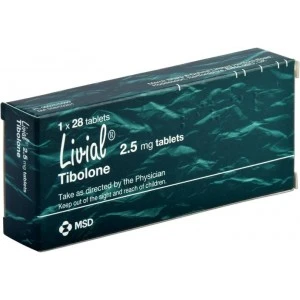
Livial is a brand name for tibolone, a prescription-only hormone replacement therapy that’s used to treat menopausal symptoms and help prevent osteoporosis. It is suitable for women who are postmenopausal or have not had a period for at least 12 months and can treat symptoms such as vaginal dryness, hot flushes, night sweats, and low mood.
Tibolone is a synthetic steroid that is broken down by the body to produce substances that mimic the natural hormones oestrogen, progesterone, and testosterone to provide relief from menopause symptoms.
It’s important to note that Livial is not a contraceptive. If you are aged under 50, or it has been less than 12 months since your last period, you may still have to use contraception to protect against pregnancy. Consult your clinician for further advice.
Menopause symptoms develop as levels of hormones such as oestrogen begin to change and decline. They often start during perimenopause, before periods have stopped completely, and may continue after menopause. Symptoms vary considerably: some women experience only mild changes, while others find that menopause affects their sleep, mood, relationships and everyday life.
Common menopause symptoms include:
Hot flushes cause a sudden feeling of warmth, usually across the face, neck and chest. They may be accompanied by sweating, reddened skin or a rapid heartbeat. When they occur at night, they can disturb sleep and contribute to tiredness and difficulty concentrating the following day.
Hormonal changes and night sweats can make it harder to fall asleep or stay asleep. Some women also experience low mood, anxiety, irritability, reduced confidence, poor concentration or problems with memory, sometimes described as “brain fog”. These symptoms can overlap and may feel worse when sleep is disrupted.
Lower oestrogen levels can make the tissues in and around the vagina thinner, drier and less elastic. This may cause vaginal dryness, itching, discomfort during sex or reduced sexual desire. Some women also experience urinary symptoms, including needing to urinate more often and recurrent urinary tract infections.
Other possible symptoms include:
Livial contains the artificial ingredient tibolone, which, unlike traditional HRT that often contains synthetic oestrogen or progesterone, is broken down in the body to produce substances that mimic the effects of oestrogen, progesterone, and testosterone, to restore hormone balance and relieve menopause symptoms.
Tibolone, by mimicking the effects of these naturally occurring sex hormones, also helps preserve bone mineral density (BMD), thereby preventing fractures and the onset of osteoporosis, which is common in postmenopausal women due to declining hormone levels.
Some people find that Livial starts to improve their symptoms within a few weeks of starting treatment. However, it can take up to 3 months to notice its full benefits.
If your symptoms haven’t improved after 3 months of taking Livial, you should contact your clinician as you may benefit from an alternative treatment.
Research shows that the active ingredient in Livial, tibolone, is particularly effective in relieving symptoms such as vaginal dryness, hot flushes, and sweating. It has also been shown to have a greater effect on increasing arousal and sex drive compared to oestrogen therapy alone.
Another study found that if 67% of people taking a placebo experienced vasomotor symptoms such as hot flushes and night sweats; 35 to 45% of people taking tibolone will. This demonstrates that Livial can reduce these symptoms in postmenopausal women.
Research also shows that a daily 2.5 mg dose of tibolone for 24 months increases bone mineral density in the lumbar spine and femoral neck (hip), which are risk factors for postmenopausal women.
Livial is available as an oral tablet to be swallowed. It comes in 28-tablet strips, with each pack containing 3 strips. Each Livial tablet contains 2.5 mg of tibolone. The recommended dose is 1 tablet daily for as long as your clinician tells you to. You should take Livial at the same time every day.
To take Livial, you should:
Your clinician will prescribe the lowest dose to treat your symptoms for as short as necessary. If you think the dose is too strong or too weak, speak to your clinician for advice.
You cannot take Livial if you are still having periods or you have had a natural period within the last 12 months. If you have started the menopause, you must wait until 12 months after your last natural period before starting Livial. Taking it sooner can cause irregular bleeding.
You can start taking Livial straight away if you:
You will need to wait for your next period and start taking Livial as soon as your period ends if you are changing from another type of HRT that causes you to have a period.
If you take too many Livial tablets, you may feel nauseous, vomit, or experience some vaginal bleeding. However, it is unlikely that taking more than one pill will do you much harm.
If you forget to take Livial HRT, take it as soon as you remember, unless you are more than 12 hours late. In this case, just skip the missed dose and take your next tablet at the usual time. Do not try to take a double dose to make up for the one you missed.
Because Livial can cause side effects, it is important that you are aware of potential adverse events and cautions, so that you know what to expect and when to get medical help.
Livial HRT tablets can cause side effects in some people, although not everyone will get them. Most side effects are mild and can be managed at home, but if you get any that are persistent, difficult to manage, or cause concern, speak to your clinician.
Common (may affect up to 1 in 10 women) | Uncommon (may affect up to 1 in 100 women) | Rare (may affect up to 1 in 1,000 women) |
|---|---|---|
|
|
|
Please note that the above is not an exhaustive list of possible Livial side effects. More information can be found in the Patient Information Leaflet included with the treatment. You can report any side effects you experience, including any that aren’t listed here, to the Yellow Card Scheme. This will give clinicians a better understanding of Livial's safety.
Sometimes Livial can cause serious side effects. If you get any of the following, see a doctor straight away as you may need to stop taking Livial:
Like all medicines, hormone replacement therapy (HRT) can cause side effects, although not everyone experiences them. Side effects vary depending on the hormones used, the dose and whether HRT is taken as tablets, patches, gels, sprays or another form. They are often mild and improve within the first 3 months as your body adjusts.
Common side effects of HRT can include:
Irregular bleeding or spotting is particularly common during the first few months of treatment. Speak to your doctor if bleeding becomes heavier, lasts longer than 6 months, begins after you have been taking HRT for some time or occurs after a period without bleeding.
There is little evidence that most types of HRT directly cause weight gain. Changes in weight and body shape commonly occur during menopause and as people get older, whether or not they use HRT. A balanced diet and regular physical activity may help you manage these changes.
Serious side effects are uncommon. However, some types of HRT can slightly increase the risk of breast cancer, blood clots or stroke. The level of risk depends on factors including your age, medical history, the type of HRT used and how long you take it. Your prescriber will assess your individual benefits and risks before recommending treatment.
Seek urgent medical help if you experience:
Speak to your doctor or pharmacist if side effects are persistent, troublesome or difficult to manage. They may recommend adjusting the dose or changing the type or method of HRT rather than stopping treatment completely.
Although Livial is an effective HRT, it may not be suitable for everyone. It can make some existing conditions worse or interact with other medications you may be taking. You should pay close attention to the warnings or precautions to help you make an informed decision about whether Livial is suitable for you.
You should not take Livial HRT if you:
If you get any of these for the first time while taking Livial, stop taking it and speak to a doctor straight away.
Although the risk of getting a blood clot in a vein is lower than with other types of HRT, it is important to be aware of the risks. Among women in their 50s who do not use HRT, around 4 to 7 in every 1,000 are expected to develop a blood clot in a vein over 5 years. Among those using combined oestrogen-progestogen HRT for more than 5 years, this rises to around 9 to 12 in every 1,000, which is approximately 5 additional cases.
Evidence suggests that tibolone can increase the risk of breast cancer, with the level of risk rising the longer it is used. Research into other forms of HRT shows that this additional risk falls after treatment stops, although it may remain for 10 years or longer after more than 5 years of use. It is not known whether this also applies to tibolone.
The breast cancer risk associated with Livial appears lower than with combined HRT and similar to that associated with oestrogen-only HRT.
Check your breasts regularly and contact your doctor if you notice:
You can find more information about the risks of taking Livial in the Patient Information Leaflet that comes with your medication.
Before taking Livial, speak to your clinician if you have ever had any of the following, as you may need more check-ups than usual to see how your body reacts to tibolone:
You should also let your doctor know if you are taking Livial and are going to have an operation. You may need to stop taking HRT 4 to 6 weeks before surgery to reduce the risk of a blood clot. Your doctor will tell you when it is safe to start taking HRT again.
Before taking Livial, tell your clinician if you are taking any prescribed, over-the-counter, or herbal medications. Some medicines can impact the effectiveness of Livial, which can cause irregular bleeding, such as:
Livial is for postmenopausal women only. If you become pregnant while taking Livial, stop taking it and contact your doctor immediately.
If you are pregnant, breastfeeding, think you might be pregnant, or planning to have a baby, speak to your clinician, doctor, or pharmacist before taking Livial.
No, Livial is not a conventional combined HRT because it does not contain separate oestrogen and progestogen hormones. Instead, it contains one active ingredient, known as tibolone. The body breaks down tibolone into substances with oestrogen-like, progestogen-like and androgen-like effects, giving it benefits similar to those of combined HRT.
No, Livial does not contain oestrogen itself. Its active ingredient is tibolone, a synthetic steroid that the body converts into substances that act similarly to oestrogen, progesterone and testosterone in certain tissues. These effects can help relieve menopause symptoms caused by falling hormone levels.
Livial can help prevent osteoporosis by reducing the bone loss that occurs after menopause. However, it is usually prescribed for this purpose only when someone has a high risk of fractures and cannot take other approved osteoporosis medicines. Your doctor will assess whether its potential benefits outweigh its risks for you.
Livial is used to prevent osteoporosis rather than rebuild bone that has already been lost. Your clinician may also recommend measures such as weight-bearing exercise, adequate calcium and vitamin D, quitting smoking, and limiting alcohol intake.
Acne is an uncommon side effect of Livial, affecting up to 1 in 100 people who take it. Because it is a synthetic steroid hormone, it has a weak androgenic (testosterone-like) effect that can increase oil production in the skin, leading to acne.
Speak to your clinician if you develop acne that is severe, persistent or troublesome. They can advise whether treatment or a review of your HRT is appropriate.
Livial is not a weight-loss treatment, and there is no good evidence that it directly helps people lose weight. Weight gain is listed as a possible common side effect. However, changes in weight and body shape can also occur naturally with ageing and menopause, making it difficult to identify a single cause.
Speak to your doctor if you experience a substantial or unexpected weight change. They can consider other possible causes and help you decide whether your treatment needs to be reviewed.
Menopause symptoms may begin to improve within the first few weeks of taking Livial, but the response varies among individuals, and it can take up to 3 months to notice its full benefits. Continue taking it as prescribed and speak to your doctor if your symptoms do not improve, become worse or remain difficult to manage.
Your doctor may check that you are taking Livial correctly, look for other causes of your symptoms or discuss whether a different HRT treatment would be more suitable.
You should store Livial below 25°C in its original packaging, with the blister strips kept inside the outer carton to protect them from light and moisture. Do not refrigerate the tablets. Keep them out of the sight and reach of children, and do not use them after their expiry date.
If you no longer need to take Livial, or the pills are past their expiry date, do not throw them in your household rubbish or down the toilet. Instead, take them to your nearest pharmacy to learn how to dispose of them properly.
Yes, you can buy Livial online from trusted and registered online pharmacies, such as Prescription Doctor. You will need to complete a short online health questionnaire for our clinician to review so they can ensure Livial is safe for you. If your order is approved before 3pm on a weekday, you can get your treatment as quickly as the next day.
Product name: Livial
Manufacturer: NV Organon
Active Ingredient(s): Tibolone
Administration: Oral
Presentation: Tablets
Available Strength: 2.5 mg
Exemption: Prescription Only
Application: Postmenopausal women who have not had a natural period for at least 12 months
Dosage: Take one tablet daily
Description: HRT for postmenopausal women
Drug Class: Hormone replacement therapy
Alcohol Consumption: No influence
When Pregnant: Do not take Livial
When Breastfeeding: Do not take Livial
Prices From: 54.99 GBP
© 2013 - 2026 Al Muhsineen Limited. All Rights Reserved. Registered Pharmacy: 34 Halliwell Road, Bolton BL1 8RL. Registered Office: 254 First Floor, Shearbrow, Blackburn, England, BB1 8DS
Don't have an account?
Your account will be automatically created after placing your first order.