
Mounjaro and Nausea: A Guide
Table of contents:
- Why Does Mounjaro Cause Nausea?
- When Does Mounjaro Nausea Start?
- How to Stop Nausea on Mounjaro
- What to Eat on Mounjaro to Avoid Nausea
- Can I Use Anti-Nausea Medication for Mounjaro?
- How Long Does Nausea Last With Mounjaro?
- When Should I See a Clinician About Mounjaro Nausea?
- Nausea and Mounjaro Frequently Asked Questions
- Still Cautious About Feeling Nauseous?
Mounjaro has found a firm place in the UK weight loss treatment market. Tested in extensive clinical trials, it has proven safe and effective and is one of the leading injections available, averaging around 20% total body weight reduction. However, when it comes to knowing which weight-loss treatment is best for you, there are more factors to consider than just effectiveness.
Other factors to consider when choosing the right treatment include whether it interacts with other medications you may be taking and how easy and accessible it is to travel with. A major factor for most, however, is the side effects.
Mounjaro has the potential to cause side effects like any medication does, and the most commonly seen one is nausea. Here, we will discuss Mounjaro and nausea in full: the science behind why, how and when it occurs, simple and effective ways to combat it, and answer any further queries you may have.
Why Does Mounjaro Cause Nausea?
Mounjaro contains the active ingredient tirzepatide, which slows down the rate at which food is digested in the stomach. This makes you feel fuller for longer, reducing snack cravings and portion sizes, but your body may experience discomfort during this process. If this discomfort mounts, it can lead to nausea, especially after meals.
Mounjaro is known as a ‘dual agonist’, meaning it targets two different hormones within the body at once: GLP-1 (glucagon-like peptide-1) and GIP (glucose-dependent insulinotropic polypeptide). GLP-1 affects the stomach, as mentioned, but GIP acts in the brain, specifically the part that controls appetite and the vomit reflex. The GIP alteration can actually help reduce levels of nausea, whereas GLP-1 is the main contributor to worsening nausea.
When Does Mounjaro Nausea Start?
Mounjaro typically begins to cause nausea within days after your first injection. Your body needs time to adjust to the new chemicals within it, and with the treatment affecting both the stomach and the part of the brain that controls your vomit reflex, nausea becomes a particularly immediate issue. This is why the initial dosage is low and builds up over time - to allow your body to adjust.
This is also why the recommended dosage schedule is what it is. If you were to take Mounjaro more frequently, the effects would likely be a lot worse. When your dosage increases, it can bring on stronger nausea effects again, just like when you first started the treatment, but this should decrease in severity with time.
How to Stop Nausea on Mounjaro
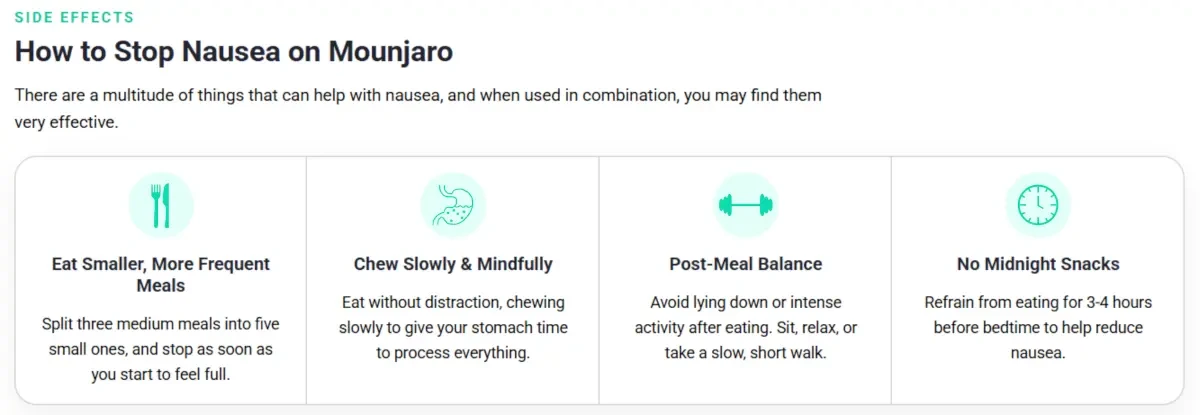
There are a multitude of things that can help with nausea on Mounjaro, and when used in combination, you may find them very effective:
- Eat Smaller Meals: Splitting your meals into smaller, more frequent ones can help with nausea on Mounjaro. For example, instead of eating three medium-sized meals a day, you could distribute the intake into five small meals. This will ease the load on your stomach as it digests.
- Eat the Right Amount: Eat slowly and stop when you start to feel full. While this may sound obvious, you may find that it is difficult to adjust to a smaller appetite. It is easy to prepare an amount of food you’re used to having, only to feel full partway through. This is perfectly normal as you break overeating habits. So, if you start to feel full, stop.
- Chew Slowly: Your meal is not a race, and eating too quickly can overload your stomach. Remember, Mounjaro slows digestion, so chewing slowly gives your stomach time to process everything, even if it means spending longer at the dining table.
- Mindful Eating: Expanding on slow chewing, mindful eating is the practice of being fully aware of your eating habits during meals. It is a way to be in touch with your body by eating without distraction - no phone, no music, no TV. Focus on how quickly you eat, and pace yourself by breathing deeply between mouthfuls.
- Post-Meal Balance: Avoid lying down immediately after eating and intense physical activity. Sit, relax, and let your stomach work through the food. You may also go for a slow, short walk, but nothing too strenuous, like jogging or going to the gym.
- No Midnight Snacks: Avoiding late-night snacks will also help reduce nausea. It's best to avoid eating for 3-4 hours before bedtime.
If you have tried all these fixes and still encounter nausea, you may want to consult with your clinician for advice. It may just be that Mounjaro simply isn’t for you. Since the treatment works differently for everyone, some will encounter side effects that are too severe to manage. In this case, you may be advised to try a different weight loss treatment that responds better in your body.
What to Eat on Mounjaro to Avoid Nausea
Beyond how and when you eat, what you eat can also reduce the effects of nausea. The contents of your dietary plan must be considered not only to help reduce side effects but also to ensure you’re getting the most out of the Mounjaro treatment as a whole.
What to Eat
It is advisable to prioritise plain, more digestible foods to ensure the digestion process runs as smoothly as possible, such as:
- Toast
- Rice cakes
- Crackers
- Tofu
- Plain pasta
These are all efficiently broken down in the stomach. If solid foods in general are making you nauseous, try liquids that go down easily, such as peppermint tea or soup. Drinking a glass of water one hour before and after meals will aid digestion and keep you hydrated during treatment, too.
What Not to Eat
There are a few food and drink types you should avoid if you want to reduce nausea, too, such as:
- Spicy foods
- Alcohol
- Acidic foods
- High-fat foods
- Fizzy/carbonated drinks
- Sugary foods
Consume these in moderation while on Mounjaro overall, not only if they cause nausea. Cutting them out entirely may help ease any sickness you may experience.
Can I Use Anti-Nausea Medication for Mounjaro?
Yes, you can take anti-nausea treatments to combat nausea while on Mounjaro, and Prescription Doctor offers a range of options. Speak with your clinician first, as they can advise you on what may suit you best.
Motion sickness tablets and some antihistamines can reduce nausea severity. Stronger medications are available, too, but these require a prescription and can’t be bought over the counter.
When taking nausea medication and Mounjaro on the same day, leave enough time between doses; we recommend roughly 2 hours before or after. This allows your body to process the treatments without being overwhelmed, which could worsen symptoms. After all, what use are anti-nausea medications if they make you even more nauseous?
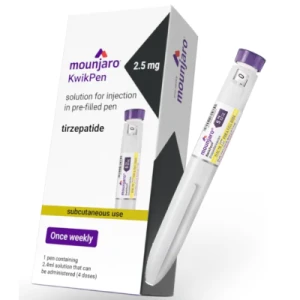
Mounjaro
- Approved Weight Loss Treatment
- Suitable for adults with a BMI of +30kg/m²
- Pre-filled injection pen
How Long Does Nausea Last With Mounjaro?
Mounjaro-induced nausea can last for varying amounts of time, but it should not last long overall and is worst around the first few days of dosage escalation; this should also level out in time. As you progress through the treatment, the effects should become less severe. If you find your nausea effects last longer than a few weeks or increase in severity, you should contact your clinician.
When Should I See a Clinician About Mounjaro Nausea?
Like any medication, Mounjaro has the potential to react badly with your body. Contact a clinician if your Mounjaro-induced nausea is:
- Persistent: Lasting more than the first few weeks of treatment, at a moderate severity.
- Dehydrating: Your urine is dark, you experience dizziness or extreme thirst.
- Accompanied: If vomiting, an inability to keep fluids down, or a rapid drop in weight also accompanies your nausea.
- Worsening: Your symptoms worsen over time rather than easing off.
- Abdominal: If severe and constant pain occurs in your abdomen with or without nausea, it may indicate more serious health issues. Seek medical assistance as soon as possible.
Nausea and Mounjaro Frequently Asked Questions
We are often asked about nausea on Mounjaro, as it is a common side effect of the treatment. Here are some of the most frequent queries we receive, but if you have a question that isn’t answered here, our clinicians are available for help.
Why Do You Get Nausea After A Mounjaro Dose Increase?
When your Mounjaro dosage increases, it raises tirzepatide levels in your body, slowing digestion and reducing appetite signalling in your brain. This increased activity can cause queasiness, but it's normal, and your body will adjust over time. Until it does, you may be more susceptible to nausea.
How to Stop Mounjaro Nausea After Eating?
There are several ways to stop Mounjaro nausea after eating. For example, after a meal, avoid lying down or doing too much physical activity. A short, slow walk may help, however. It’s also recommended to remain seated upright to aid digestion and reduce acid reflux.
What If I Get Constant Nausea on Mounjaro?
Constant nausea may be caused by your diet being too intense, so smaller meals and more plain foods may help. If your nausea is persistent, contact your clinician. From there, they can assess the root cause.
If you find your nausea will not go away, then an alternative treatment may be better suited for you, rather than bearing through the side effects of Mounjaro. Everyone reacts to the treatment differently, and you may find that the nausea is simply too much for you - and that’s nothing to be ashamed of.
There are several other weight-loss medications available at Prescription Doctor, such as:
- Nevolat: A daily injection, with the active ingredient liraglutide.
- Mysimba: A multi-daily tablet, with the active ingredients naltrexone and bupropion.
- Wegovy: Either a weekly injection or a daily tablet, with the active ingredient semaglutide.
- Foundayo: An oral GLP-1 tablet from the manufacturers of Mounjaro. Contains the active ingredient orforglipron.
Different active and inactive ingredients mean the side effects of the various treatments will differ, and your clinician may recommend switching to one to see how you respond. If your body reacts much better to an alternative, that can become your full-time treatment.
How Do I Handle Mounjaro Nausea in the Morning?
Morning nausea may stem from foods consumed the night before. Avoid having heavy meals too late in the evening, and try not to eat anything for 3-4 hours before bedtime. When you wake up, keeping dry foods like rice cakes or crackers on hand can help fill your stomach.
Nausea effects can be worse on an empty stomach, so the ‘little and often’ approach to eating is advised.
What is the Best Time to Take Mounjaro to Avoid Nausea?
You can take Mounjaro at any time of day, and you should take it at the same time every week. Taking the injection before bed may let you sleep through the nausea, rather than be affected by it during the day. You may prefer to inject as soon as you wake up, to get the nausea out of the way early so you can continue the day uninterrupted. However, neither of these is guaranteed to work, as nausea will occur differently for everyone.
The best thing to help reduce it is to follow a consistent schedule. This can help to minimise the treatment’s side effects.
What is the Best Place to Inject Mounjaro to Avoid Nausea?
Clinical trials have been carried out to determine the variety and severity of side effects based on where you inject Mounjaro, though the trial was small, so the figures should not be taken as exact amounts. Of the three injection sites, they rank as follows:
- Upper thigh: the injection site that results in the least amount of nausea, an average of 44% less than the stomach
- Upper arm: somewhere in the middle of the three sites; it gives an average amount of nausea
- Stomach: the most nausea-inducing area, with highs of up to 37%. However, the stomach also has the highest rates of appetite suppression
It’s worth noting that the clinical trial that produced these results was small, so evidence remains limited. Use these figures as a rough guide, rather than a universal ranking.
Still Cautious About Feeling Nauseous?
If you have any further questions or concerns about Mounjaro and nausea, you can contact Prescription Doctor directly via email - one of our dedicated clinicians will be there to help however we can. We’ve been helping people on weight loss medications since before Mounjaro even existed, and we have plenty of articles that delve into other aspects of treatment, such as cost and dosage schedules.
We will support you 100% throughout your Mounjaro journey and can offer advice on a range of topics. Our clinicians are experts in the medications we offer, knowing the treatments inside and out, and they’re always happy to lend an ear and help with whatever you need. We also compare the treatment to its contemporaries on the UK market, such as Wegovy and Nevolat, to ensure you’re as informed as possible when choosing your treatment. No matter what, they’ll be monitoring your progress regularly to make sure everything is running smoothly.
If you would like to begin your Mounjaro treatment, you can do so through our online consultation. There’s no need for a phone call or an appointment. Alternatively, if you’ve reached this point in the article and still have a question about Mounjaro and nausea, please do get in touch, and we’ll assist you in any way we can.

Sources
- NEJM (2022): Tirzepatide Once Weekly for the Treatment of Obesity.
- Frontiers in Endocrinology (2025): The role of GIPR in food intake control.
- ADA (2017): Mindful Eating: The Art of Presence While You Eat.
- NIH (2023): A Study of Tirzepatide at Different Injection Sites in Participants With Different Body Sizes.
Authored & Reviewed By

Mohamed Imran Lakhi
MPharm - Lead PharmacistPublished on: 26/08/2026 Reviewed on: 26/08/2026
How We Are Regulated
Payment Options


© 2013 - 2026 Al Muhsineen Limited. All Rights Reserved. Registered Pharmacy: 34 Halliwell Road, Bolton BL1 8RL. Registered Office: 254 First Floor, Shearbrow, Blackburn, England, BB1 8DS


Patient Login
Don't have an account?
Your account will be automatically created after placing your first order.